The Uzbekistan Migration Agency issued an official statement regarding the checks conducted on July 27 at a construction site in the Ochakovo-Matveevsky district of Moscow.
The Uzbekistan Migration Agency issued an official statement regarding the checks conducted on July 27 at a construction site in the Ochakovo-Matveevsky district of Moscow.
After video footage of the control measures appeared in the media, employees of the Migration Agency's representative office in Russia immediately went to the site to clarify the circumstances. Preliminary data indicates that over 320 foreign citizens were working at the construction site, including citizens of Uzbekistan.
The Agency reported that it is currently conducting a legal assessment of the incident together with the Embassy of Uzbekistan in the Russian Federation. More detailed information about the results of the inspection will be provided later.
The Migration Agency reminded that it is the authorized state body responsible for protecting the labor and other legal rights of Uzbek citizens abroad. Citizens who believe their rights were violated during the checks or for other reasons are advised to contact the agency.
If necessary, attorney fees can be reimbursed from the Migration Fund up to $3,000. According to the department's data, the agency cooperates with more than 15 law firms across Russia. Additionally, citizens may be provided with free temporary accommodation for up to 30 days.
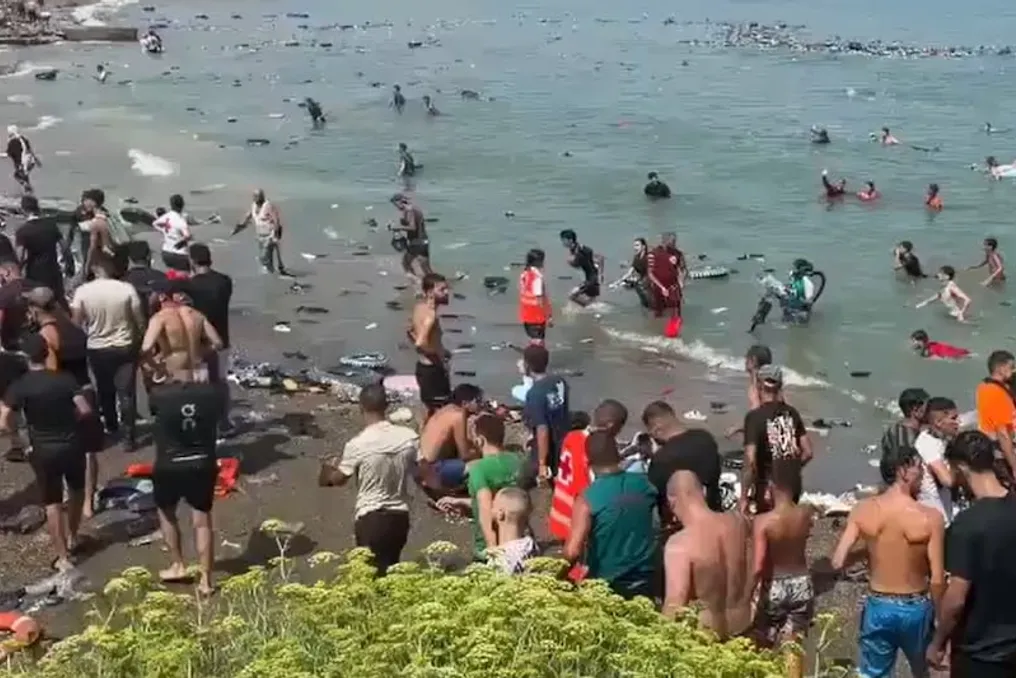
Thousands of Moroccan residents illegally enter Spain by crossing the sea border, leading to an unusual situation in the city of Ceuta. People from Morocco arrive in Spain chanting slogans in support of Spain and enter via the sea, while Spanish border guards are unable to take countermeasures other than demanding they leave.
Due to thousands of migrants entering this small Spanish region, Spain has announced the deployment of its military forces in Ceuta to restore order. Nine people died during these events. The question arises as to why this happens every year, and why thousands of people from Morocco, including youth, children, and women, seek to enter a European country.
To understand this situation, it is necessary to examine the unique geographical position of Spain and Morocco. Spain is a European country, whereas Morocco is located on the African continent, separated by the sea. Nevertheless, Moroccans reach Spain. The answer lies in the historical and geographical position of these two countries.
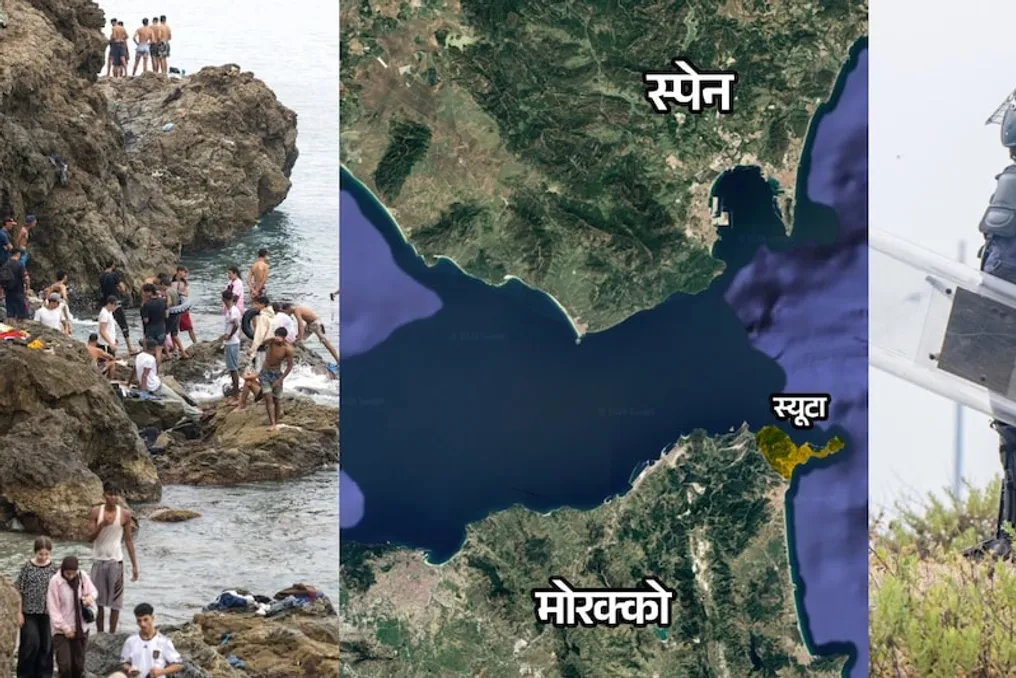
The city of Ceuta, located on the northern coast of Africa in Morocco, is near the Strait of Gibraltar, between Europe and Africa. History shows that Ceuta has been under Spanish control since 1580; previously, this area was controlled by Portugal. After the unification of Portugal and Spain, Ceuta became a Spanish enclave and remains so to this day.
This city, under Spanish jurisdiction, borders Morocco by land. However, due to strict land border security, people cannot enter this area. Where the border between Morocco and Ceuta runs by land, the sea begins, and passages into Ceuta open up across the sea.
Ceuta's geographical location is isolated from mainland Spain, but due to its location in Africa, it is connected to Morocco by land. This has made it an entry point for migrants who have long tried to reach Europe.
If you look at a map of Ceuta, you can see entry points from Morocco by sea. These include Tarajal beach, located at the southern end of Ceuta, and Benchouica beach, through which one can also enter the Spanish region.
The crowd that arrived in Ceuta on Thursday entered specifically through Tarajal beach. Videos show a gathering of people around embankments at Tarajal beach, most of whom were Moroccans. Although young men predominated among them, families with women and small children were also present.
Representatives of the Spanish government reported that at least nine people died as a result of the chaos on Thursday. It is not yet clear what caused such a large number of migrants heading to Ceuta. However, this is not the first case. Local authorities note that dozens of people have died this year trying to reach Ceuta.
According to a CNN report, official representatives of Morocco did not publicly comment on these border crossing incidents, and the Ministry of the Interior did not respond to requests for comment.
The Spanish Ministry of the Interior stated that the Moroccan government is cooperating with Spain to solve this problem, and Moroccan police stop many people attempting to cross the border.
The Japanese Embassy in Tashkent reported that the Immigration Services Agency of Japan conducted the deportation of two citizens of Uzbekistan who were illegally in the country.
According to the embassy's data, both individuals entered Japan on short-term visas but remained in the country after the expiration of these visas. Subsequently, they were detained by Japanese authorities and deported at the expense of the Japanese government.
The diplomatic mission reminded citizens that individuals caught in illegal stay or employment in Japan face strict measures. These measures include police arrest, placement in an immigration detention center, and subsequent deportation.
It was also noted that Japanese authorities transmit information about violators of immigration legislation to the Government of Uzbekistan, which may lead to appropriate measures being taken against them upon their return home.
The embassy strongly urged citizens to exercise caution when receiving offers for illegal work and not to trust promises about the possibility of working in Japan without a permit.
Furthermore, the embassy emphasized that applying for refugee status cannot serve as a means to obtain long-term residency or the right to work. If the application is rejected, the applicant may be placed in an immigration detention center or deported. Providing false information or using fraudulent methods when applying can also entail serious legal consequences.
In the city of Ceuta, considered a gateway to Europe, sounds of gunfire are heard. Thousands of migrants from North Africa cross the border, striving to reach this small city in search of a better life, but they encounter harsh actions from the police and security forces.
As a result of these clashes, 32 people have died, raising serious questions about human rights observance worldwide. Notably, the city that has become the center of this conflict is surrounded by Moroccan territory but is under Spanish administration. Questions arise regarding the ancient history that made Ceuta part of Europe, and why Morocco considers it its territory.
Over the past week, thousands of migrants from Morocco have arrived in the Spanish enclave of Ceuta, located in North Africa. The President of Ceuta reported that about 60,000 migrants from Morocco entered Ceuta, which accounts for 70 percent of the city's total population. The President of Ceuta, Juan Jesús Vivás, noted that the current situation is unprecedented. During the riots, drownings, and actions of security forces, 34 people died.
Spain has deployed the army and additional police forces to stabilize the situation. According to media reports, attempts by thousands of migrants to cross the border in one day have become the largest crisis since 2021. Ceuta is the closest route to reaching Spain; people can get there by swimming, climbing fences, or breaking through checkpoints.
Photos and videos from Ceuta are shocking: when checkpoints open, crowds of people run, ignoring all security measures and crossing the border. Young people predominate among them. Hundreds of people swimming towards Spain were spotted in Reuters posts.
The minimum sea distance between Spain and Morocco is about 14 kilometers, between Punta de Tarifa in Spain and Punta Sireas in Morocco in the Strait of Gibraltar. However, the situation is different when talking about Ceuta. Ceuta borders Morocco directly, having a land border of about 8.2 kilometers. Therefore, migrants often try to enter Ceuta by jumping over fences or across the seashore.
The main reason is that Spain is a wealthy European country with job opportunities and a better future, whereas Morocco is a poor country from which young people leave in search of employment.
A recent decision by the Spanish Supreme Court is explained by the court ruling that migrants detained at sea near Ceuta cannot be immediately deported under old rules, unlike the former 'border refusal' practice. This gave migrants hope of settling in Spain, prompting them to enter the country by any means.
Furthermore, Spain is working on a plan to grant legal status to approximately 500,000 undocumented migrants. Spanish Prime Minister Pedro Sánchez maintains a relatively liberal policy towards migrants, supporting legal immigration, refugee reintegration, and granting permanent status to long-term undocumented residents.
After the incident, Prime Minister Pedro Sánchez stated on X that the government guarantees the safety of Ceuta's residents and will increase the presence of security forces and the Corps in the city streets. He also announced that a physical barrier would be established in the sea to facilitate the deportation of people in accordance with the Supreme Court's ruling. Additionally, cases for the return of migrants who arrived without permits will be expedited, and cooperation with Moroccan authorities in combating human trafficking will continue.
Ceuta officials link this wave of migrants to a ruling by the Supreme Court of Spain made at the beginning of this month. It stated that migrants arriving by sea cannot be immediately deported across the border without proper legal procedure. In contrast, people entering by land, for example, by climbing over the border fence, are immediately sent back.
Some Moroccan human rights activists have expressed doubt that the Spanish court ruling caused a sudden increase in the number of migrants. They argue that most migrants are unaware of such legal decisions.
Another reason is the Schengen system of Europe. The Schengen area is a system of open borders covering 29 European countries. These countries have officially abolished their internal borders. Thus, Spain becomes the first gateway to Europe for these migrants. Residents of Morocco arrive in Ceuta seeking better economic opportunities or to escape violence in their home countries, and then continue their journey to other European countries in search of a better life.
How do migrants reach Ceuta?
To reach Ceuta, located on the northern African coast, migrants often swim about 5 kilometers from the town of Fnideq in Morocco and reach Spanish territory. Some other people try to cross the border from the nearby town of Melilla, where the distance is shorter.
Scenes of crowds at the border resemble the crisis of 2021, when more than 8,000 migrants arrived in Ceuta in just two days. At that time, accusations were made that Morocco had weakened border control and allowed migrants to enter Ceuta.
This happened because Spain allowed Brahim Ghali, the leader of the Polisario Front, to receive treatment in a Spanish hospital, which caused a diplomatic crisis between Rabat and Madrid. For decades, the Polisario Front, advocating for independence, has presented itself as the legitimate representative of the Sahrawi people, a disputed region of Morocco. Thus, the Moroccan government sometimes unofficially allows its citizens to enter Europe, while suffering people from Africa rush into the sea in search of entry into Spain for a better life.
Geographically, Ceuta is located on the northern coast of Morocco in Africa, but politically it is an autonomous city of Spain. The history of this place spans about 600 years. In 1415, Portugal captured Ceuta. Later, in 1580, Portugal and Spain entered into a union monarchy. When Portugal separated in 1640, the local rulers of Ceuta decided to remain with Spain. After the 1688 treaty, Ceuta officially became part of Spain. Today, it is also part of the European Union, although located on the African continent.
Morocco claims that Ceuta and Melilla are colonial remnants on its territory that were seized by Spain and should be returned. Spain, in turn, insists that Ceuta is an integral part of it for centuries, and most residents there also wish to live with Spain. Because of this, the issue remains a source of constant diplomatic tension between the two countries.
Ceuta is not just a border city of Spain; it is the external border of the European Union, its gateway. Consequently, any major wave of illegal migration here affects the immigration policy, border security, and asylum system of the entire European continent.