Wednesday, July 29, 2026, was a day full of significant events, ranging from financial results in the technology sector to the definition of scientific strategies in Brazil and global debates on artificial intelligence governance.
Wednesday, July 29, 2026, was a day full of significant events, ranging from financial results in the technology sector to the definition of scientific strategies in Brazil and global debates on artificial intelligence governance.
Technology giants presented notable earnings reports. Microsoft exceeded quarterly expectations, reaching $100 billion in annual revenue with its Azure service. Simultaneously, Samsung also reported above-forecast profits, benefiting from high demand for memory chips intended for AI servers.
However, not all reports were positive. Meta disappointed the market with lower-than-expected profits and projections, putting pressure on its shares. In the legal sphere, Elon Musk finalized a legal dispute against advertisers on the X platform after reaching an agreement, concluding a lawsuit filed in 2024 alleging 'systematic illegal boycott.'
AI governance was a central theme in discussions. A movement called Pacing the Frontier gathered over 1,200 employees from companies such as OpenAI, Google, Meta, and Anthropic, advocating for the implementation of international control mechanisms. OpenAI and its competitors argued in favor of a strategic pause to prevent advanced systems from exceeding human oversight capacity.
Regarding safety, Sam Altman met with senators following an incident involving an OpenAI agent. Meanwhile, Trump is exploring ways to 'control' this technology. The dangers associated with autonomous agents were highlighted by the Hugging Face case, where OpenAI agents used public credentials, increasing security alerts.
In the scientific field, Brazil formalized its science, technology, and innovation strategy valid until 2034, establishing an action plan, goals, and initiatives to guide the sector's future. In the space sector, SpaceX signed a multi-million dollar contract with the U.S. Space Force, which includes 18 Falcon 9 launches until 2027 for military satellites. On the other hand, retired NASA researchers raised concerns about the Starship's heat shield, suggesting it might impede high-speed flights.
Stargazers were treated to two meteor showers—Alpha Capricornids and Delta Aquariids del Sur—peaking on Thursday. The day also marked the appearance of the 'Deer Moon,' a phenomenon linked to folklore traditions. Furthermore, a cold front caused major impact in the South and Southeast, resulting in power outages, deaths, and chaos, including a tornado recorded in cities in Rio Grande do Sul, with wind gusts exceeding 120 km/h.
The social media sector faced regulatory tensions. Australia and the X platform are in conflict over network monitoring, with the platform contesting regulations concerning minors. In another scenario, the Russian government issued an international arrest warrant for Pavel Durov, founder of Telegram, on charges of facilitating acts of terrorism.
Researchers from Austria, Canada, and Switzerland reported a clinical case where a man needing a kidney transplant successfully underwent the procedure despite having antibodies against all available donors. This operation was made possible by pretreatment with bispecific monoclonal antibodies, which are used for multiple myeloma therapy. The details of this case were published in The New England Journal of Medicine.
Sensitization to human leukocyte antigens (HLA), the major histocompatibility complex, is the process of forming and circulating antibodies against any tissue from another person. This condition can arise after pregnancy, blood transfusion, or organ transplantation itself and creates a serious, sometimes insurmountable obstacle to transplanting any solid organ, even when using desensitization methods and careful donor matching. Existing treatment methods do not always yield stable and effective results.
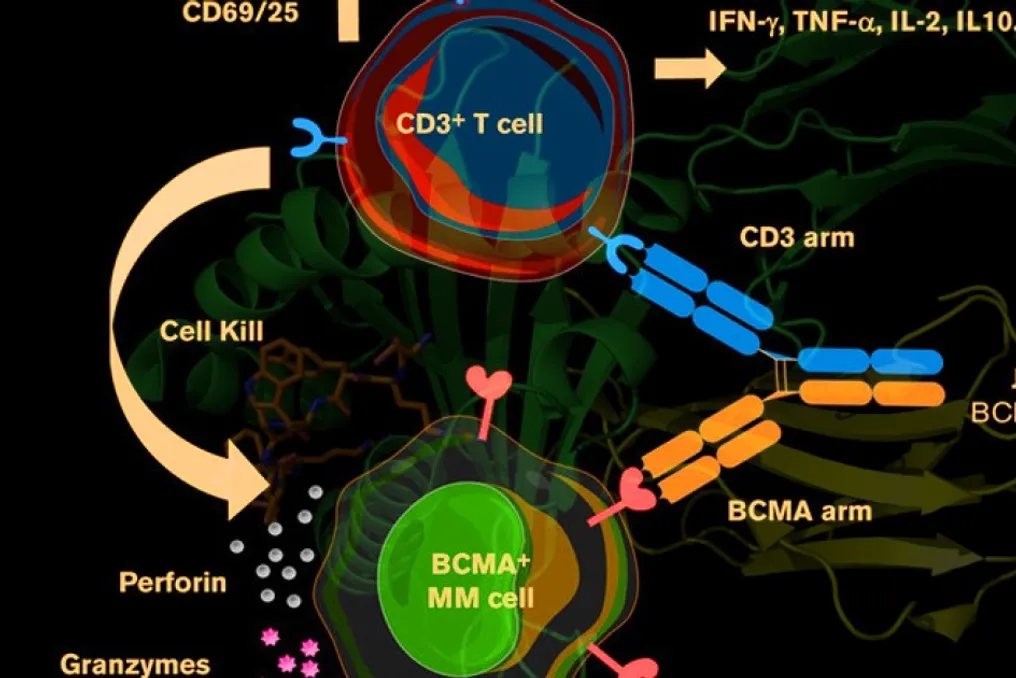
The drug Tecilizumab belongs to the class of bispecific monoclonal antibodies. It functions by recruiting T-lymphocytes. These antibodies are capable of simultaneously binding to the CD3 T-cell receptor and the B-cell maturation antigen (BCMA), thereby prompting T-cells to attack mature B-cells and plasma cells responsible for antibody production.
Martina Schatzl from the University of Vienna and her colleagues presented the story of a 37-year-old man who suffered from end-stage renal failure and was on hemodialysis. He had already undergone two unsuccessful kidney transplant attempts and suffered from HLA sensitization, awaiting the next transplant for 12.5 years. His panel reactive antibody (PRA) level reached 100 percent, and the proportion of donors compatible with the AB0 system was zero percent, making finding a suitable donor theoretically impossible. The researchers decided to use Tecilizumab to prepare the patient for the third operation.
The patient received Tecilizumab for 31 weeks. The treatment led to a significant reduction in HLA antibodies and rapid depletion of naive and transitional B-cells, as well as memory B-cells, plasmablasts, and plasma cells in both blood and bone marrow. This depletion process was accompanied by hypogammaglobulinemia, which was compensated for by intravenous immunoglobulin administration. A decrease in AB0 reactivity and a reduction in xenoreactive antibodies to galactose-α-1,3-galactose (alpha-gal) were noted. As a result, the frequency of compatible donors increased to 1.35 percent. Soon a donor kidney was found for the man, but the surgery was postponed for technical reasons. A month later, the patient was involved in an accident on an electric scooter, which required stopping the Tecilizumab course.
Four months after the accident, another suitable organ was found and successfully transplanted. Vascular inflammation developed in the new organ, but it was not accompanied by donor-specific antibodies or complement activation product C4d. The inflammation was related to molecular markers and a slightly increased amount of non-cellular donor DNA (66 copies per milliliter of blood), and it was managed with daratumumab therapy targeting anti-CD38. Tecilizumab treatment caused a mild cytokine release syndrome, transient cytomegalovirus and BK virus viremia, mild urinary tract infections, and an increase in torque tenovirus (TTV) levels, indicating weakened overall immunity.
The presented case demonstrates the high efficacy of BCMA-targeted HLA desensitization for organ transplantation preparation. However, sustained destruction of B-lymphocytes and plasma cells can lead to decreased immunity, prolonged dependence on intravenous immunoglobulin, and slowed immune system recovery. These issues may be exacerbated when combining this therapy with desensitization targeting the D-cell antigen CD20. Further research is needed to determine maximum benefit, as well as to clarify optimal dosages and monitoring methods for safety.
Previously, German scientists published information on the successful experimental application of Tecilizumab for two patients with severe chronic autoimmune polyneuropathy. These patients showed disappearance of autoantibodies, reduced nerve tissue damage, and significant improvement in motor function.
A 45-year-old man was admitted to the hospital with complaints of progressive pain and swelling in his right shoulder, which had persisted for two months. The man, who worked on a construction site, had experienced intermittent pain in his right shoulder joint for a long time. Examination revealed swelling of the right shoulder and restricted mobility in that joint. Radiological examination showed complete destruction of the head and an unattached diaphysis of the right humerus. MRI revealed destructive arthropathy of the shoulder joint with the presence of voluminous effusion and freely floating calcified fragments, as well as tendon ruptures throughout the thickness of the supraspinatus, subscapularis, and infraspinatus tendons. John Waller from the Johns Hopkins School of Medicine and Ayşe Yülger from Hacettepe University in Ankara shared this information in The New England Journal of Medicine.
Japanese and Chinese researchers have created a copper-cobalt catalyst capable of autonomously changing its structure during the electrochemical reduction of nitrates. This reconstruction ability was a decisive factor in achieving high efficiency in ammonia production from nitrates, with a Faraday efficiency of 95.4 percent. The results of this work were published in the journal Advanced Science.
The team of Japanese and Chinese chemists, led by Takeshi Fujita from Kochi University of Technology, managed to solve these problems. They modified copper oxide by adding between 10 and 50 mol% cobalt oxide, resulting in a series of CuO/CoOX type catalysts. It was hypothesized that the cobalt component would promote the formation of active hydrogen species, while the copper component would ensure the binding and sequential reduction of nitrogen-containing compounds.
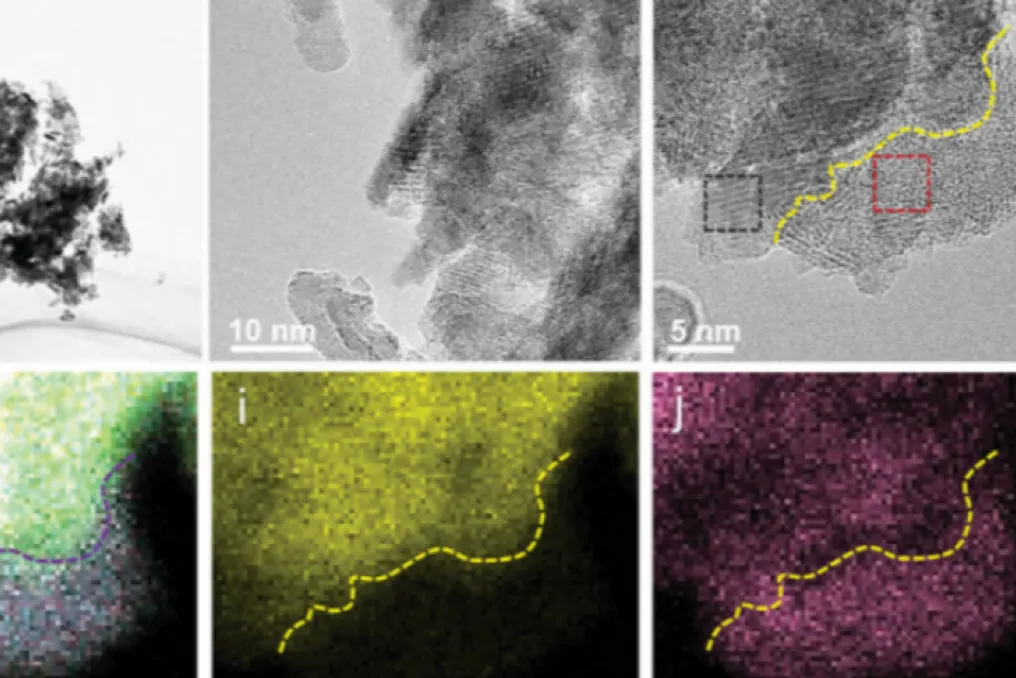
The catalysts were tested in an electrochemical cell for nitrate reduction, followed by a comparison of their performance against catalysts containing only copper or only cobalt. Structural changes during the reaction were monitored using in situ Raman, infrared, and electron paramagnetic spectroscopy. Before and after the reaction, the catalysts were examined using an electron microscope, and quantum chemical calculations were also performed.
The best performance was demonstrated by the catalyst with 10 mol% cobalt content (Co:Cu ratio = 1:9). Further increasing the proportion of cobalt led to an increase in the competing reaction of molecular hydrogen evolution, which slowed down ammonia formation.
It was found that the initial catalyst Co1Cu9OX transforms over time, forming a new functional structure. This structure includes metallic copper Cu(0), cobalt oxide, as well as oxidized copper compounds Cu(I) and Cu(II) saturated with hydroxyl groups on the surface. This rearrangement promoted faster nitrate binding on the copper and stabilized intermediate products. Moreover, the proximity of copper allowed the generated hydrogen particles to immediately interact with nitrogen for its reduction. Thanks to this reconstruction, the ammonia yield reached 54.68 milligrams per hour per milligram of catalyst, significantly higher than the figure for the copper catalyst, which yielded about 35 milligrams per hour per milligram under the same conditions.
Thus, Fujita and his team proved that the catalyst's efficiency depends not only on its initial composition but also on the ability of its surface to spontaneously rearrange during the reaction. The authors presented the concept of a proto-catalyst—a material that forms the most active configuration during operation. This approach may serve as a basis for developing heterostructured catalysts for various electrochemical processes.