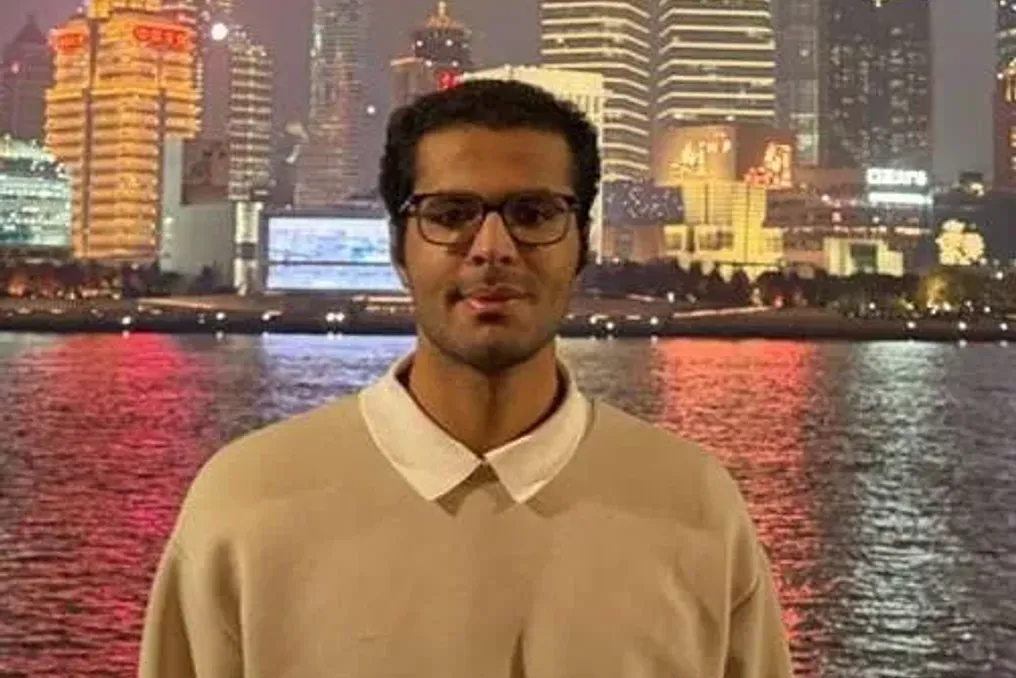
Nureldin Mohamed is studying bioengineering and computer science at Harvard University. Before he began attracting venture capital in Silicon Valley, conducting research at Harvard, or speaking alongside robotics pioneers, he was a student at Durban High School (DHS) in Durban. There, he taught computer science to his classmates to fill gaps in technological education.
Educational Initiatives
Since many students lacked access to formal computer science education, the former chairman of Iqraa Trust invited Mohamed to collaborate. They launched an initiative at the Iqraa Trust Knowledge Center to teach coding, programming, and computational thinking to underprivileged students.
Technology Research and Development
After enrolling at Harvard, Mohamed began conducting master's level research in Professor George Church's laboratory, who is an innovator in modern synthetic biology and a scientist included in Time magazine's list of the 100 most influential people. Today, Nureldin is the founder of Lupa Robotics—a Physical AI company from Silicon Valley that tackles one of the most complex challenges in modern robotics: creating general intelligence capable of controlling any robot and performing any task in any environment.
Despite the rapid progress of artificial intelligence, from ChatGPT's mastery of language to the advent of self-driving cars, a difficult problem remains—teaching robots to use their hands. As Elon Musk noted, 'Robot hands are undoubtedly the most challenging engineering problem.'
A New Approach to Robotics
Mohamed believes the industry is asking the wrong question. He explains that most robotics systems try to predict the actions a robot should take. Instead, they aim to predict how the world works. If a robot understands object behavior and the laws governing interactions, this knowledge can be transferred across different robots, tasks, and conditions.
He emphasizes that the main weakness of current systems is that they 'see.' When a person opens a can, the contact between the hand and the object ceases to be visible. If a model relies solely on vision, its understanding of the world begins to break down precisely when interaction is most critical. Touch helps the brain stay grounded in what is actually happening.
Developing Large Robotic Models
This concept lies at the core of what Mohamed calls Large Robotic Models. To create them, he developed a sensory glove that records both hand movements and touches, generating data necessary for machines to learn the basic physics of dexterous manipulation, rather than just the movements of some specific robot.
Through Lupa Robotics, Mohamed has attracted over $1.5 million from prominent Silicon Valley investors, including Arielle Zuckerberg and Cian Bannister (one of the first investors in Uber, Google DeepMind, and SpaceX), and assembled a team of robotics researchers and engineers from institutions such as Stanford, Harvard, Waymo, and the Boston Dynamics AI Institute.
Recognition and the Future of AI
His work has received official recognition from leading organizations in robotics and new technologies. Mohamed was selected as a recipient of the Mitsubishi Electric and Mass Robotics Innovation Award, the world's largest independent robotics center, for his promising achievements in robotics. Recently, Mohamed was invited to speak at the Boston Robotics Summit in 2026. Among other speakers was Nolan Arbon. Mohamed notes that large language models may eventually be remembered not as the culmination of the AI revolution, but as its prologue. Although they have transformed intellectual labor, 70% of human labor still exists outside the screen: in factories, hospitals, farms, warehouses, and construction sites. Many researchers believe that unlocking the potential of universal robotics could trigger the next industrial revolution, and through Large Robotic Models, Mohamed is moving toward that future.