A recent tragic incident in Gqeberha, where a police officer allegedly killed his wife and then committed suicide, demonstrates why SAPS can no longer ignore the issue of mental health among its employees.
A recent tragic incident in Gqeberha, where a police officer allegedly killed his wife and then committed suicide, demonstrates why SAPS can no longer ignore the issue of mental health among its employees.
The growing mental health crisis within SAPS is leading to the deaths of police officers, and in some cases, their loved ones. According to the latest data, an average of one SAPS employee dies by suicide every week. This alarming trend is exacerbated by cases where active police officers allegedly killed their spouses or partners before committing suicide or facing criminal prosecution.
While each situation has its unique characteristics, all these cases raise serious questions about the adequacy of mental health support systems, early intervention mechanisms, and risk management within SAPS. Sincere condolences are extended to the families of all affected employees and victims, as these tragedies leave behind broken children, families, colleagues, and communities.
Police officers work under extreme pressure, constantly encountering scenes of violent crime, domestic violence, fatal accidents, and human suffering. Too often, warning signs go unnoticed because trauma debriefing, mental health screening, and wellness support are not provided consistently.
This is a matter of public safety. SAPS must identify stressed employees in a timely manner and intervene before untreated trauma leads to devastating consequences for the officers themselves, their families, colleagues, and society as a whole.
Therefore, the DA calls on the National Commissioner to take urgent action:
Abdulla Azizov, Director of the Agency for the Development of the Medical and Pharmaceutical Sector, held a meeting with representatives of the Indian network Apollo Hospitals Enterprise Limited (AHEL) in Tashkent, Uzbekistan.
The parties discussed opportunities for interaction in the field of medical institution management and the implementation of international standards in the healthcare system of Uzbekistan. During the negotiations, issues were considered regarding the modernization of the national healthcare system, improving the management of medical organizations, and applying international experience to enhance operational efficiency.
Particular attention was paid to the organization of activities of medical institutions operating under the auspices of the holding company Health Invest. Participants exchanged views on how to improve managerial leadership, increase the quality and efficiency of medical services, and develop the management competencies of specialists and industry leaders.
According to the Agency's data, Apollo Hospitals Enterprise Limited is one of India's largest private healthcare networks. Its infrastructure includes 73 hospitals with a total capacity of over 10,000 beds, and the company also provides management services.
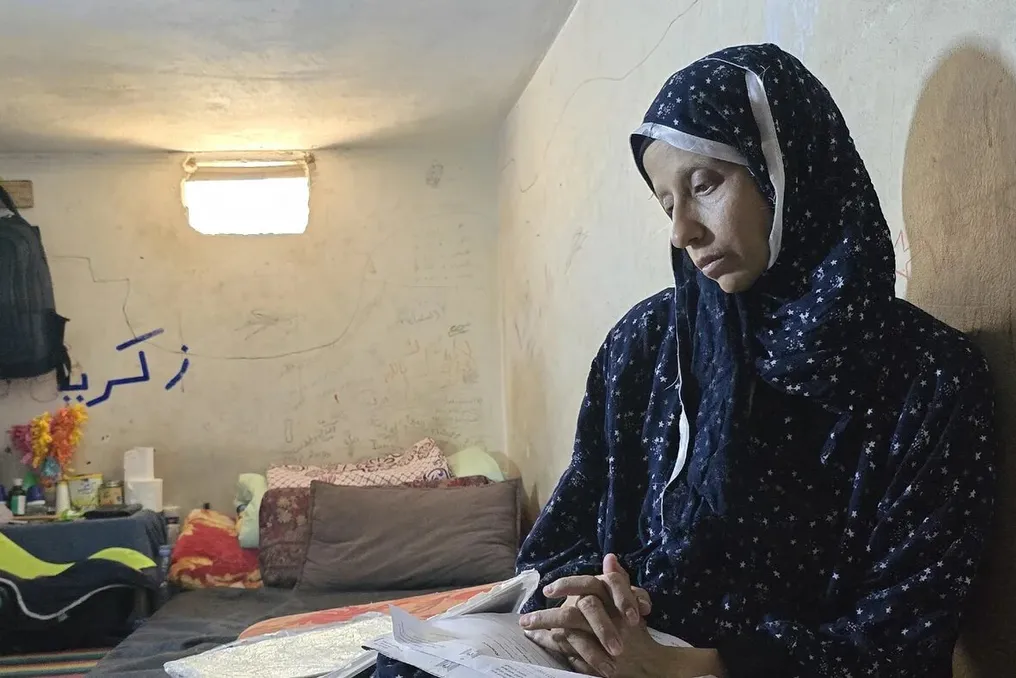
Professor Holoud Abu Sahmad from southern Gaza is slowly fading while battling cancer, residing in a cramped shelter under a school staircase. After fifteen courses of chemotherapy, she was informed that further treatment is impossible because the medications available in the war-affected enclave are not suitable for her type of cancer.
The 33-year-old Palestinian mother of two told Middle East Eye that she was diagnosed with liver cancer approximately nine months ago, immediately after giving birth to her daughter. Despite several rounds of chemotherapy, her condition only worsened. According to Abu Sahmad, the doctor stated that the treatment was ineffective for her body and condition, and chemotherapy only caused hair and nail loss.
Nearly ten months after the ceasefire agreement in October 2025, Israeli authorities continue to restrict the import of vital medicines and medical supplies into Gaza, including anti-cancer drugs, chemotherapy agents, antibiotics, anesthetics, laboratory consumables, diagnostic equipment, and surgical supplies. According to UN agencies and international organizations, by March, stocks of essential medicines had decreased by approximately 46 percent, and medical consumables by 66 percent.
This month, the Ministry of Health in Palestine in Gaza announced that the treatment for several types of cancer, including breast, colorectal, and gastrointestinal cancer, head and neck tumors, as well as sarcomas, has practically stopped due to critically low levels of specialized oncological drugs. The Ministry reported that out of nearly 11,000 cancer patients in Gaza, at least 4,000 have received medical referrals but are still awaiting permission to leave the Strip for treatment.
Dr. Mohammed Abu Nada, director of the Gaza Cancer Center, told MEE that due to acute shortages, even expired medications had to be used, and these supplies have also run out. He emphasized that this clearly increases the mortality rate. Abu Nada noted that Gaza is facing the worst shortage of chemotherapy drugs in recent years, and the existing drugs for breast cancer barely suffice for current patients, leaving new patients without treatment.
Instead of following standard treatment protocols, doctors are increasingly resorting to monotherapy, which, according to Abu Nada, reduces therapy effectiveness, worsens outcomes, and can lead to additional complications. Furthermore, there is a shortage of immunotherapy drugs, which increases risks for patients.
Abu Sahmad's medical referral was approved shortly after her diagnosis because the necessary treatment is unavailable in Gaza, yet after nine months, she is still waiting to leave. She told MEE that doctors indicated the availability of necessary treatment in Jordan or Turkey, and her condition cannot be improved there. She has been awaiting urgent medical evacuation for nine months.
Medical referrals allow patients from Gaza to receive specialized treatment unavailable within the Strip, with routes leading to hospitals in the occupied West Bank, East Jerusalem, Egypt, and Jordan. Although referrals are usually processed and funded by the Palestinian Authority Ministry of Health, patients still require exit permits through checkpoints controlled by Israel or Egypt. Since the genocide in Gaza began in October 2023, Israel has significantly restricted medical referrals and evacuations from the Strip, preventing thousands of seriously ill and wounded Palestinians from receiving necessary care.
Four months after the October ceasefire agreement, Israel partially restored the Rafah crossing with Egypt for medical evacuation under a strictly controlled mechanism, allowing about 50 patients to leave daily subject to Israeli approval. According to the Palestinian Ministry of Health, over 20,000 people in Gaza, including about 4,000 children, are awaiting urgent medical evacuation. Since Rafah resumed operations in February, only 1,655 patients have been evacuated as of June 30, and since October 2023, more than 1,570 people have died while waiting for exit permission.
Abu Sahmad shared that her health deteriorates every day due to endless waiting. She suffers from shortness of breath and abdominal bloating due to fluid retention, and her weight has dropped abnormally—she has lost about 20 kg. Due to fluid accumulation in her abdomen, there are long periods when she cannot eat, and food causes fluid retention. The mother of a five-year-old boy and a nine-month-old girl recounted that since childbirth, she has been unable to hold her younger daughter. Due to her illness, she has become bedridden and never gets up, unable to exert the slightest effort. She added that even short walks cause extreme fatigue, and she is slowly dying.
Many patients awaiting evacuation are seeing their condition worsen because Israeli attacks have undermined Gaza's healthcare system and forced them to move repeatedly into overcrowded shelters with limited access to clean water and sanitation. Abu Sahmad reported that her home was destroyed since the start of the genocide, and she has been forcibly displaced about 30 times. Recently, she was forced to move to a tent in Mawasi al-Karara, west of Khan Younis. Shortly after moving, her health began to decline, and she sought help from her older sister, who lives under the staircase of Ahmed bin Abdul Aziz School, because the conditions in the tent were extremely unhealthy.
Currently, two families, totaling about 10 people, live together. Abu Sahmad described the environment as completely unsuitable for someone in her condition. Next to her mattress is a box of medicine carefully protected from rats, and next to it is a bag containing almost 50 academic certificates earned over the years. Before cancer changed her life, family and friends knew her as a 'book lover.' After graduating with a Master's degree from the Islamic University of Gaza, she became the first student in the university's history to complete a two-year master's program in just one year and four months. She then began doctoral studies and became an assistant professor at the same university, specializing in teaching methods and curricula. She always loved learning and dreamed of becoming a professor. However, illness has deprived her of all these aspirations, and the hardest part is the seemingly endless wait for treatment.
A 41-year-old woman, identified as Mariana dos Santos Cândido, died on Wednesday afternoon after suffering an intestinal perforation during a routine colonoscopy examination performed at a hospital in São Paulo, Brazil.
The incident occurred at the Municipal Hospital of Ermelino Matarazzo, where Mariana had scheduled the procedure. Her aunt, Mara Aparecida, told the local press that the family was notified that about half of the woman's intestinal organ had been perforated during the exam. Despite being taken to emergency surgery to close the lesion, she did not survive and passed away on Wednesday afternoon.
Mara Aparecida clarified that Mariana had no known health history problems and that this was her first colonoscopy, performed upon medical recommendation. The family performs this check-up every two years after age 40 due to the father's death from intestinal cancer, but Mariana presented no prior conditions.
According to the aunt, the hospital informed that the colonoscopy was carried out by a outsourced service, but refused to provide the name of the laboratory or the responsible professional. The family was informed that the responsibility would not be the hospital's. The Civil Police registered the case under the classification of homicide by negligence, and the body was sent to the Medical Legal Institute (IML) for autopsy and determination of the causes of death.