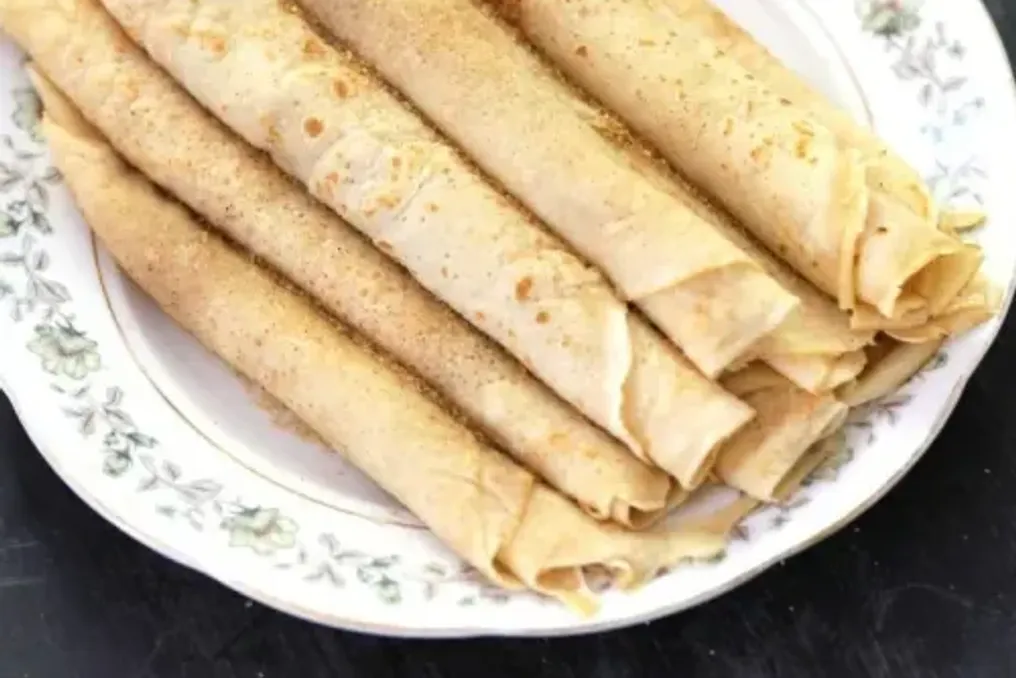
Warm pancakes sprinkled with a mixture of cinnamon and sugar are very popular in South Africa. They can often be seen in queues at markets, school fairs, or church bazaars.
Warm pancakes sprinkled with a mixture of cinnamon and sugar are very popular in South Africa. They can often be seen in queues at markets, school fairs, or church bazaars.
These pancakes differ from thick American pancakes or thin French crepes. They turn out soft, delicate, and are perfect for rolling up. Although there are many sweet and hearty fillings, the traditional version with cinnamon and sugar remains a favorite in many families.
The batter is liquid enough to spread easily on the pan, creating light and elastic pancakes that can be rolled without damaging them. Some prefer to complement them with fresh lemon juice, while others add whipped cream for a more luxurious taste.
To make the batter, you will need: 2 large eggs, 1 teaspoon of vanilla extract (optional), 2 cups (500 ml) of milk, ½ cup (125 ml) of water, 2 cups of cake flour or all-purpose flour, 1 teaspoon of baking powder, ½ teaspoon of salt, and 3 tablespoons of melted butter or vegetable oil.
For the topping, you need: ½ cup of white or light brown sugar and 1 tablespoon of ground cinnamon, or more to taste.
First, beat the eggs with vanilla extract in a large bowl. Then add the milk and water and mix until smooth. In a separate bowl, mix the flour, baking powder, and salt. Gradually add the dry ingredients to the liquid mixture, stirring constantly until you have a smooth batter with minimal lumps. Add the melted butter or vegetable oil.
For the best texture, it is recommended to cover the batter and leave it in the refrigerator for about 30 minutes before starting to cook. Heat a large non-stick skillet over medium heat. Mix the sugar and cinnamon and keep them nearby. Prepare a plate for rolling and another one to keep warm.
Grease the pan if necessary. Pour about a third of a cup of batter onto the pan, immediately rotating so the mixture evenly covers the bottom. Cook until the edges begin to lift. Flip the pancake and cook for a few more seconds on the other side. Transfer it to a plate, generously sprinkle with the cinnamon and sugar mixture, roll it up, and place it on a serving plate. Cover while the rest cooks.
They can be served warm, topped with fresh cream and a little lemon juice. To ensure the pancakes are soft, it is important not to overmix the batter; mix only until the ingredients are combined. It is also helpful to let the batter rest in the refrigerator for about 30 minutes, which promotes full hydration of the flour and makes the pancakes softer. Cooking over medium heat ensures even cooking without drying out.
If the pancakes stick, the pan is likely not hot enough or has a poor non-stick surface. You need to allow the pan to heat up well before pouring the batter, and immediately rotate it to form a thin layer. Only flip them when the edges naturally start to lift. A very light brushing of oil between batches is usually sufficient.
Soft, thin South African pancakes, lightly dusted with cinnamon and sugar, demonstrate that complex ingredients are not required to create a dish people are willing to queue for.
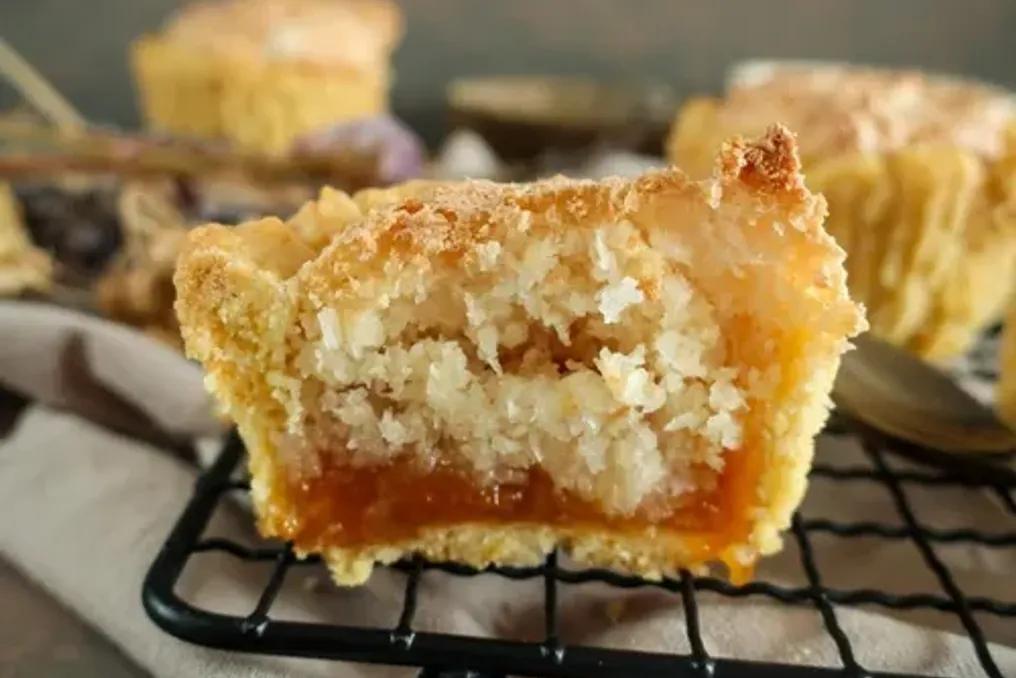
These traditional South African tartlets are easily recognizable by their crispy base, generous layer of apricot jam, and lightly toasted coconut topping. The Hertzoggies recipe is worth saving as it suits various occasions, such as church tea, family gatherings, or weekend baking.
Unlike ordinary jam tarts, Hertzoggies combine three distinct layers. The pastry must be both tender and crisp, the apricot jam must be thick enough to hold its shape, and the coconut meringue should be browned to a light golden color while remaining soft inside. The apricot jam retains its traditional role, as its slight acidity balances the sweetness of the coconut filling.
Preheat the oven to 180°C (350°F). Grease one or two 12-cup muffin tins with butter or non-stick spray. Separate the eggs, keeping the yolks for the pastry and the whites for the topping.
To make the dough, mix the flour, baking powder, and salt in a large bowl. Rub the softened butter into the flour mixture using your fingertips until it resembles fine crumbs. Beat the egg yolks, water, and icing sugar. Add this mixture to the flour mixture and mix with a fork until a soft dough forms.
Lightly dust a work surface with flour and roll out the dough to a thickness of about 3–5 mm. Cut circles slightly larger than the muffin tin cups and press them firmly into each cup, ensuring the dough evenly covers the bottom and sides.
Spoon about one tablespoon of apricot jam into each base and spread it gently, avoiding overflowing. For the topping, beat the egg whites, gradually adding the icing sugar until a glossy mass with soft peaks is achieved. Stir in the coconut dessert until evenly mixed. Spoon about one tablespoon of the coconut mixture over each tartlet, spreading it so that it completely covers the jam and adheres to the edge of the pastry.
Bake for 20–25 minutes, or until the coconut topping is lightly browned. Let the Hertzoggies cool in the tins for several minutes before transferring them to a rack to cool completely. The jam will need time to set as the tartlets cool.
Before starting, consider a few simple recommendations. Use room temperature butter so that it mixes easily with the flour and provides a tender dough. Avoid using too much jam, as it expands when heated and may leak out the edges, making the tartlets difficult to remove.
When whipping the egg whites, continue the process until the sugar is dissolved and a glossy appearance is reached. Soft peaks are suitable for a lighter topping, while firmer peaks will create a slightly higher top. After applying the coconut mixture, be sure to spread it right up to the edges of the pastry. This will help hold the jam during baking.
It is necessary to let the Hertzoggies cool before serving. The jam remains very hot long after being removed from the oven and requires time to properly set. These classic South African tartlets store well in an airtight container for several days, making them a convenient dish for preparing ahead of guests or afternoon tea. Hertzoggies remain one of the simplest options for getting acquainted with traditional South African baking, as they use everyday ingredients and do not require complex techniques.
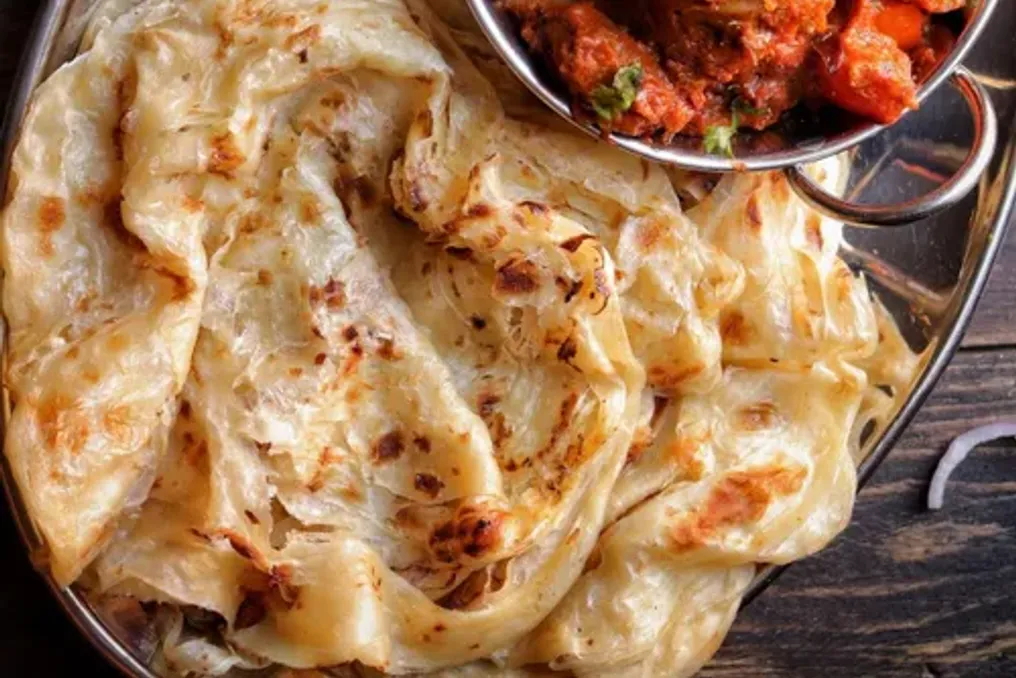
Although curry may be the main dish, lovers of authentic Cape Malay cuisine emphasize that roti plays an equally important role. A good roti should be soft enough to tear by hand, sturdy enough to hold thick curry, and layered enough to flake with every bite.
This recipe, developed by late Fatima Sidou, allows for the preparation of light, buttery rotis, perfect for serving with chicken, lamb, beef, or vegetable curries. It is sized for a small family and requires only a few pantry staples.
To begin, mix flour, salt, and warm water in a large bowl until a soft dough forms. If the dough seems too sticky, add another two or three tablespoons of flour. Knead the dough for about a minute until smooth. Then, divide the dough into small balls.
Each ball is rolled out into a thin disk on a lightly oiled work surface. A thin layer of room-temperature butter is applied to each disk, after which the disk is rolled into a long sausage shape. Starting from both ends, the dough is rolled towards the center, forming an S-shape, and then one side is folded over the other.
The rolled dough is covered with plastic wrap and placed in the freezer for 30 minutes or in the refrigerator for several hours. Afterward, each piece of dough is rolled out again to the size of a plate. A pan heated over medium heat is used to fry each roti for about 50 seconds on one side. Then, it is flipped and cooked the second side until light golden brown.
After removing the roti from the pan, it is gently slapped with hands to separate the layers. The finished roti is served warm with your favorite curry.
Fatima Sidou advises rolling the dough as thinly as possible on a lightly oiled surface and always using room-temperature butter. These two simple steps contribute to creating a light, flaky, and crisp roti.
Slapping the roti after cooking is not just a tradition, but a final step that helps separate the delicate layers formed during the rolling and shaping process. As soon as the roti is removed from the hot pan, it must be gently slapped several times with the palms. The trapped steam loosens the layers, giving the roti its characteristic flaky texture while maintaining softness inside.
The secret to flakiness lies in technique, not ingredients. The thinner the dough is rolled, the more layers will form after folding. Butter acts as a barrier between these layers, so even distribution of butter is crucial. Resting the dough before the final rolling also makes a noticeable difference. Chilling allows the gluten to relax and the butter to firm up, which facilitates rolling without losing layers. Finally, the roti should be cooked on a properly heated pan: too high a heat will cause browning on the outside before it is cooked through inside, and too low a heat will make the roti dry instead of soft and flaky.