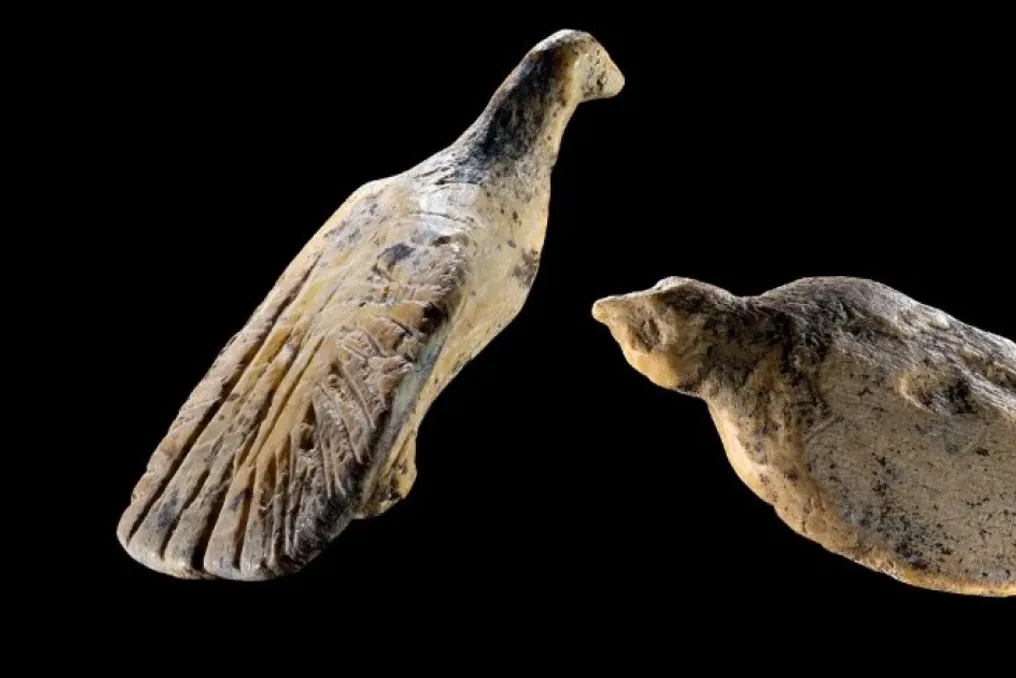
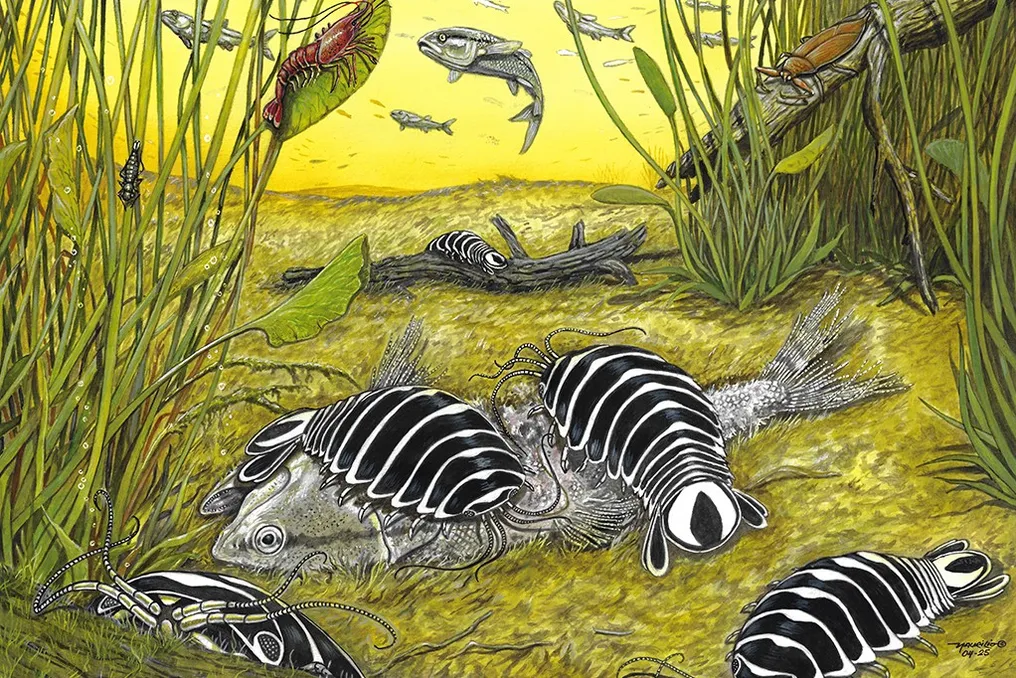
The recent repatriation of thousands of fossils includes the crustacean Cicero spectabilis, which helps study the history of life's evolution and continental drift.
Geological History of the Region
Approximately 120 million years ago, the territory of modern Seara, in the Araripe basin, looked completely different. The climate was warm and humid, and pterosaurs flew over numerous lakes. Humans did not yet exist at that time, and the landmasses were part of the supercontinent Gondwana. During the Gondwana period, the sea began to separate the lands that would later become South America and Africa, and saltwater flooded the Seara lakes.
Scientific Discovery and Significance
Paleontology, the science that studies traces of ancient animals, discovered a new important find—a perfectly preserved crustacean, Cicero spectabilis. It was an isopod, an invertebrate animal that lived on the bottom of the lakes in the Araripe basin. This is the first case of finding a free-living isopod of this era on lands that were part of Gondwana. A more ancient relative of this species was known in Laurasia, which covered North America, Europe, and Asia.
Migration and Scientific Explanation
This discovery suggests that these animals migrated over millions of years across the Tethys Sea, which separated Gondwana and Laurasia. Daniel Lima, a professor at the Regional University of Cariri (Urca) and lead author of the study published in Nature Communications, explained that the find not only records the isopod species but also carries the entire evolutionary history for understanding the distribution of the isopod group.
Dedication and Uniqueness of the Specimen
When describing a new species, researchers often choose people, institutions, or places to honor. Allison Pinheiro, director of the Placidus Sidade Nuvens Paleontology Museum (MPPCN) at Urca, said that the name Cicero spectabilis was given in honor of Padre Cisero, who is an important and charismatic figure for the residents of Northeast Brazil. The prefix 'spectabilis' reflects the impressive nature of the fossil, as this organism is extremely rare in paleontological records and is preserved in a unique form.
Heritage Preservation Issue
The Cariri region, part of the Araripe basin, is rich in exceptionally high-quality fossils. Planetary changes turned the lakes into a kind of time capsule. However, due to decades of lack of oversight and underestimation of the fossil heritage, tons of Brazilian fossils ended up in museums and collections around the world. In Brazil, all fossils are the property of the Union and cannot be sold, and holotypes used for species description cannot leave the country.
Repatriation Movement
Since 2020, Brazilian scientists have led a global movement condemning neo-colonial relations in this field and demanding the return of Brazilian fossils. This movement has achieved significant successes, including the return of the dinosaur Ubirajara jubatus in 2023. Cicero spectabilis is one of the latest examples of such achievements. The specimen was kept at the Illinois Center for Paleontology in the USA but was never properly studied or described.
International Cooperation and Future
The return began after Lima learned from a student about the presence of the isopod from Cariri in the American institution. As a crustacean specialist, he decided to look into the matter. The result was an academic and diplomatic collaboration. Researchers from foreign institutions participated in the study alongside Brazilian colleagues, and the fossil will be returned to MPPCN, where it can be visited, just like Ubirajara, nicknamed the museum's 'Mona Lisa.'
Museum Collection Expansion
The museum will also soon receive more than ten species of butterflies that lived in the Araripe basin about 120 million years ago. These specimens were stored in the State Museum of Natural History in Karlsruhe, Germany, where Ubirajara and other Brazilian fossils were also located. Scientists note that thanks to awareness campaigns and repatriation efforts, many foreign institutions are showing greater willingness to return illegally held fossils.
New Approach to Scientific Exchange
MPPCN Director Pinheiro mentioned the arrival of five boxes with over 70 fossils from Switzerland and two tons from France, as well as fossils from Great Britain and New Ireland. He emphasized that negotiations have become more political and governmental than purely scientific. In Seara, the success of Ubirajara and MPPCN contributes to the development of regional tourism and culture, attracting political investment in scientific research.
Digitization and New Names
The museum recently acquired a state-of-the-art microtomograph, allowing for the creation of three-dimensional digital copies of fossils. This format allows researchers worldwide to analyze the details of the specimen without needing its physical presence. Pinheiro explains that an alternative can now be offered: 'Don't you find tomography interesting? I will give you the tomography, but return the fossil to me.' In light of these changes, one of the recently described grasshoppers being returned to Seara received the symbolic name Auroralocusta restituta. The article authors in the journal Zootaxa explain that the epithet 'restituta' comes from the Latin verb 'restituere' (to restore, to return) and means 'restored' or 'returned,' thereby honoring the act of restitution.