FlySafair is planning the next phase of its expansion, considering a range of new domestic and international destinations, with particular attention given to regions in Southern and Eastern Africa.
FlySafair is planning the next phase of its expansion, considering a range of new domestic and international destinations, with particular attention given to regions in Southern and Eastern Africa.
Kirby Gordon, FlySafair's Marketing Director, presented the airline's ambitions at a recent media roundtable. Among the routes under consideration is the expansion of the existing flight between Johannesburg and Harare, given the high demand. Gordon noted that the route to Zimbabwe currently provides about 8,000 seats weekly and shows good results since launch.
The possibility of opening a direct link between Johannesburg and Windhoek is also being studied. Although FlySafair already serves the Namibian capital from Cape Town, adding a connection from Gauteng could strengthen the company's regional network.
Potential additions to the list include flights to Lusaka (Zambia) and Nairobi (Kenya). Despite Gordon acknowledging Nairobi as a highly competitive market, it remains an attractive destination for this low-cost carrier.
Gordon also highlighted the future Cape Winelands airport as a significant development for South Africa's aviation sector. This R8 billion airport is under construction and undergoing environmental approval, although its opening is still several years away. Once operational, it could become an important alternative airport for diverting flights destined for Cape Town.
Currently, aircraft unable to land in Cape Town are forced to divert to airports such as Johannesburg or Durban, requiring them to carry extra reserve fuel for longer flights. Having a diversion airport closer to Cape Town can reduce operating costs and increase airline efficiency, while also generating revenue for the new airport through diversion agreements. Furthermore, the airport is expected to serve the rapidly growing Cape Winelands region, thereby strengthening the aviation infrastructure of the Western Cape.
Despite regional aspirations, Gordon emphasized that regulatory restrictions prevent the airline from operating flights exclusively between foreign countries; its international network must include South Africa either as a departure point or a destination. He also commented on the planned acquisition of FlySafair by Harith Aviation, which awaits approval from the Competition Tribunal and the South African Reserve Bank. Gordon stated that the deal should not lead to a significant influx of cash, describing Harith as a long-term investor focused on supporting the airline's continued growth.
In the long term, FlySafair is expected to receive Boeing 737 MAX 8 aircraft starting in 2028. Gordon clarified that these aircraft were ordered before the announcement of the proposed acquisition.
A training seminar was organized in Namangan by the Department of Currency Regulation and Control of the Central Bank of the Republic of Uzbekistan. Relevant structural units and specialists from commercial banks involved in foreign economic activity and currency operations took part in the event.
Employees of the Department of Currency Regulation and Control of the Central Bank discussed current problems faced by entrepreneurs conducting export operations to foreign countries and generating income for the country's economy. Opinions on practical difficulties and possible solutions were presented.
At the conference held at the Namangan Branch of the Central Bank, detailed explanations were provided regarding recent changes in legislation regulating currency operations. The procedure for applying regulatory legal acts, as well as issues concerning the acceptance and official documentation of damaged or unusable foreign currency banknotes, were also reviewed.
As part of the seminar, an open dialogue was held with representatives of exporters and manufacturing enterprises in the Namangan region. During this meeting, information was provided about the favorable conditions created by the state, support measures for the industry, and changes being made to regulatory legal documents.
Proposals and problems raised by entrepreneurs during the discussion were carefully discussed, and corresponding recommendations for practical solutions were given. At the end of the seminar, participants received detailed answers to their questions, and the high significance of such practical events was noted.
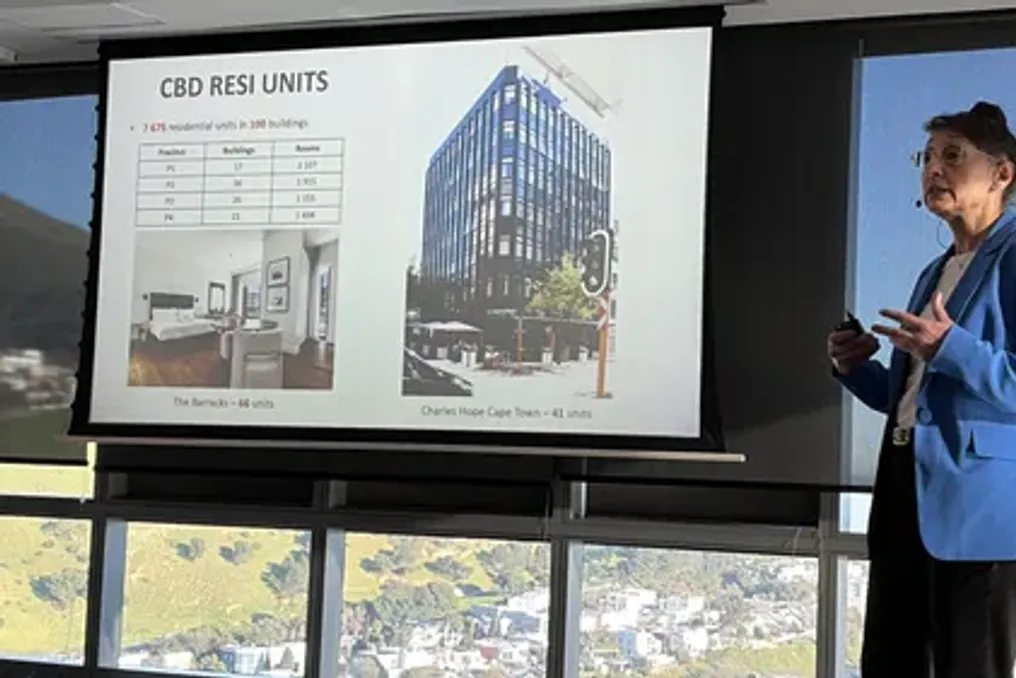
Investor confidence in the Cape Town Central Business District (CBD) has reached an unprecedented level, as the total value of development projects exceeded R12.8 billion during the 2025/26 period. This figure demonstrates a 41 percent increase compared to the previous year, 2024.
These figures were presented in the fourteenth edition of the Cape Town City State of the City Report (SCCR), which was released by CCID at the Portside building in Cape Town on Wednesday. CCID Communications Manager, Sharon Sorur-Morris, presented the key highlights of the report, including information on 29 real estate projects currently underway in the CBD.
Of the total number of projects, eight have been completed, 14 are under construction, five are in the planning stage, and two are proposed. A significant portion of these investments is directed towards residential construction, with R6.2 billion allocated to new housing developments. Among the major projects are the conversion of the Golden Acre office tower into 450 apartments valued at R1.2 billion and the redevelopment of the former Christiaan Barnard hospital site valued at R1.3 billion, highlighting the trend towards mixed-use living spaces.
The report also showed exceptional results in the retail sector: 172 new retail outlets opened in 2025. The sector maintained an employment rate of 88 percent. The CCID business confidence index for the fourth quarter of 2025 reported that 98 percent of retailers positively assessed the business conditions, which is a noticeable improvement from the previous year.
Key sectors contributing to this growth include legal, medical, and professional fields, as well as the creative economy and tourism. The Cape Town CBD has the lowest office vacancy rate in South Africa, providing a stable environment for businesses. CCID Council Chairman, Rob Cain, noted that the investment figures serve a dual function: they reflect current market confidence and stimulate further investment.
He linked the CBD's success to 26 years of consistent efforts by CCID to maintain a clean, safe, and attractive city center, supported by the Cape Town City leadership. Cain added that strong investor confidence in the CBD is the result of 26 years of CCID's work in creating and preserving a safe, clean, and more appealing city center. He also mentioned that 'Cape Town Executive Mayor Jordyn Hill-Lewis has also played an important role in boosting confidence and creating an environment where investments can thrive.'
Mondi's dividend for the first period significantly decreased to 9.42 euro cents per share compared to 23.33 euro cents the previous year. This was due to margin pressure in the sustainable packaging and paper segments, caused by increased raw material costs and lower selling prices.
The UK-based group, listed on the JSE and London exchanges, which operates in approximately 30 countries, reported on Thursday that its earnings before interest, taxes, depreciation, and amortization (EBITDA) for the first half of the year fell to 379 million euros. This figure includes a loss on the fair value of forestry amounting to 35 million euros, compared to 564 million euros the previous year, which included a capital gain of 18 million euros.
CEO Andrew King noted that the company has made significant progress in strengthening performance, cash generation, and competitiveness. He emphasized that decisive pricing actions have been taken and cost discipline maintained, alongside the advancement of a production network optimization program.
Although growth in sales volumes and price increases partially offset margin pressure, paper product prices declined in the second half of 2025 and early 2026. Consequently, in 2026, the group began operating at prices below the average levels observed in the first half of the previous year.
King stated that while price increases were implemented, the initial benefits have not yet been fully realized, and the full effect of these increases is expected in the third quarter of 2026. Cash generated from operations amounted to 347 million euros (compared to 416 million euros), supported by a strong focus on working capital management.
Planned capital expenditures for the entire year 2026 are expected to decrease to approximately 500 million euros from the previous 550 million euros. Progress has been made in network optimization: six sites have been closed or are in the process of being closed. A preliminary tax write-off of 320 million euros to cover impairment and restructuring had an expected cash impact of 24 million euros.
King explained that heightened geopolitical tensions in the Middle East led to supply chain disruptions and increased raw material costs. The group's teams have taken action to maintain operational continuity, support customers, and implement price increases for packaging and paper products.
The CEO also mentioned an improvement in trading momentum and higher prices for packaging paper in the second half, aided by strong orders. However, an increase in timber costs in Central and Eastern Europe is anticipated, and management of volatile energy-related costs continues. Major expansion investments are largely complete, and the focus is now on disciplined growth and strengthening price competitiveness.
As part of measures to strengthen productivity and competitiveness, network optimization, workforce reductions, productivity improvements, working capital management, debt maturity extensions, and disciplined capital allocation have been implemented. Network optimization included three additional closures in April, bringing the total to six recently announced closures in the corrugated and flexible packaging segments.
Of the six closed sites, four production facilities—one in Germany, one in Poland, and one in Turkey, as well as a consumer flexible plant in Hungary—were planned for closure by the end of the year. These six closures are expected to lead to the reduction of approximately 580 jobs by year-end. Furthermore, the Group's organizational structures were optimized by merging Corrugated Packaging and Unbleached Fine Paper, and the staff in Group Functions was reduced by approximately 70 employees.