A ceremony was held for the signing of a memorandum between the Uzbekistan Weightlifting Federation and the Institute of Advanced Training for Physical Culture and Sports Specialists.
A ceremony was held for the signing of a memorandum between the Uzbekistan Weightlifting Federation and the Institute of Advanced Training for Physical Culture and Sports Specialists.
During the event, scientists and members of the institute's scientific council familiarized themselves with the activities of the Uzbekistan Weightlifting Federation. They inspected modern sports halls and the conditions created for athletes, as well as the existing infrastructure.
According to the signed memorandum, there are plans to improve the qualifications of coaches and specialists working in the field of weightlifting. Furthermore, within the framework of cooperation, scientific and methodological interaction will be developed, seminars and master classes will be organized, scientific research will be supported, and the modern educational and methodological base will be strengthened.
It was emphasized that as a result of discussions between scientists and Federation specialists, joint projects will be implemented. These projects are aimed at exchanging experience among coaches and specialists, organizing practical classes, implementing scientific developments into practice, and widely promoting a healthy lifestyle among youth. It was noted that new approaches and joint work will contribute to achieving new victories in the country's sports and help in raising a generation of champions.
The sports tournament started in the Moynoq district of the Karakalpakstan Republic. This Uzbekistan Youth Wrestling Championship gathered young wrestlers from various regions of the country.
About 300 athletes joined the competition from Tashkent, provinces, and the Karakalpakstan Republic itself. Within the framework of the tournament, boys will compete for the title of champion in 13 weight categories, and girls—in 9.
During the traditional opening ceremony, representatives noted the reforms being implemented in the country aimed at developing sports, particularly wrestling, attracting youth to a healthy lifestyle, and providing comprehensive support to talented athletes. All participants were wished fair competition, great victories, and high results.
This championship is organized as part of the 'Dolzarb 90 Days' project, which was initiated by the President. It serves the goals of popularizing sports among youth, organizing their free time meaningfully, and further developing wrestling traditions. It is stated that this tournament in the Moynoq district will become an important platform for discovering future champions and strengthening the spirit of friendship and sport.
The Uzbekistan Youth Wrestling Championship will last until July 19.
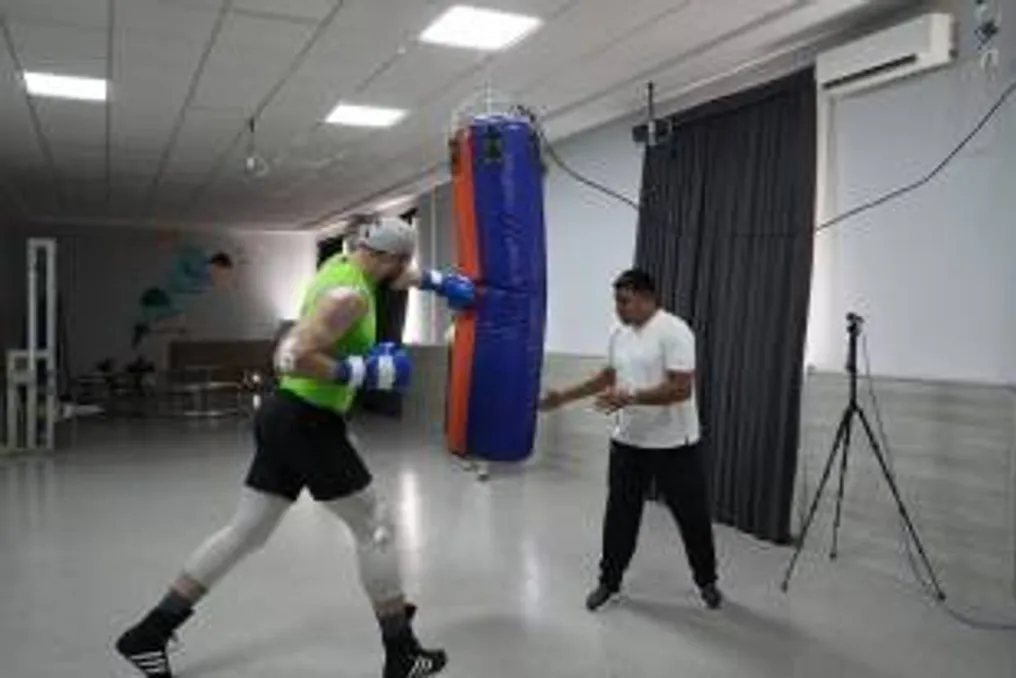
Modern biomechanical studies involving highly qualified boxers were conducted in the sports biomechanics laboratory at the University of Physical Culture and Sport of Uzbekistan.
As part of these studies, conducted under the supervision of Professor Soyib Tajiboyev, athlete Bakhodir Jalolov, a two-time Olympic champion and multiple world champion, was analyzed using a corresponding scientific system in three dimensions to study his technical movements.
Furthermore, a comprehensive assessment of parameters such as reaction speed, coordination abilities, functional state of the respiratory system, muscle strength, and body composition was carried out using special equipment and devices.
During the scientific research, the biomechanical execution of punches by the boxer, his motor coordination, balance, speed, as well as the kinematic connections between body segments were deeply studied. Based on the findings, scientific recommendations were developed aimed at further improving the athlete's technical skills, increasing sporting results, and reducing the risk of injury.
It is important to note that these studies provide a new impetus to the development of sports education in the country and scientific analysis in the field of sports biomechanics. The integration of artificial intelligence, digital motion analysis, and modern biomechanical technologies into the sports training process lays the foundation for developing new approaches to assessing and developing the functional capabilities of highly qualified athletes, such as Bakhodir Jalolov, on a scientific basis.
The sports biomechanics laboratory, established at the University of Physical Culture and Sport of Uzbekistan, is of great importance as it aims to scientifically support the success of the country's athletes on the international arena, improve their technical readiness, and develop sports science itself.
According to doctors' advice, sports activities or simply walking can strengthen the body and improve mood. The author shares a personal experience when, during a walk, he noticed discarded pieces of bread near his house. He picked up these remnants, which were found both in ovens and in cardboard boxes.
At that moment, a young woman came out of the house, looked at him in surprise, and pointed to the bread, saying they didn't need it, and offered to take it. The author realized there was nothing to explain, and he took the bread without saying a word. He wondered whether this was arrogance or ignorance, as well as a weakness in upbringing within the family or in the young wife's household.
The author emphasizes that there are blessings in life that cannot be measured by money. Bread is one of such great blessings. In the culture of the Uzbek people, bread is revered not only as a daily food product but also as a symbol of prosperity and abundance, being part of a centuries-old way of life, customs, and spiritual heritage.
It should also be noted that the process of bread appearing on the table involves the hard work of many people: the sleepless nights of the farmer, the laborious process of turning grain into flour, and the efforts of mill workers. In the Uzbek nation, the attitude towards bread is valued as an indicator of a feast, family integrity, wealth, and hope for the future. Even if all earthly treasures are placed on the table, happiness will not come if there is no bread. Many do not realize how many resources—water, electricity, fuel, transport, and labor—are spent preparing bread that brings joy to our table.
Respect for bread ensures the well-being of the people. This is a life truth proven over hundreds of years. Traditions, such as saving bread for a traveler or a new wife entering a home with bread, as well as starting a meal with bread, reflect the people's high regard for this blessing.
The author recalls an incident about fifty years ago when he went to the Chorsu market with his father to buy school supplies. During the lunch break, they found a spot where pieces of bread remained in a basket. After lunch, his father began collecting these leftovers. The author objected, fearing the judgment of others, but his father replied: 'Who cares what people say? This is our lot. If we don't take it, they will throw it away. Let those who criticize, criticize.' The author felt ashamed then, but later understood that it was the highest form of upbringing. Since then, he has tried not to leave bread crumbs in places where he is with family or friends, believing that one should fear not hunger, but condemnation.
Another incident occurred when his father worked in a store in the Sergeli district of Tashkent. One day, an elderly man of Russian national origin entered the store. The bread cost ten kopecks, and the man gave five kopecks. His father cut the loaf in half. The author was surprised and asked his father, whereupon he explained: 'There are poor and needy people living on the other side of the street. This will be enough for them. They can take the other half in the evening. The main thing is not to allow waste.'
However, today, due to globalization, excessive consumption, and wastefulness, the true value of bread is sometimes forgotten, leading not only to moral but also to economic and environmental problems. This issue is relevant globally. According to FAO data, almost a third of produced food is lost or wasted. This is a serious problem against the backdrop of millions suffering from hunger.
Various print publications constantly discuss the most pressing global issues, such as water scarcity, fuel resources, including natural gas and electricity, which are vital resources. Today, food waste, including bread, is becoming a serious problem worldwide.
In the coming years, the country is focusing on state policy to reduce waste and recycle waste. Specifically, under the President's Decree of January 1, 2024, 'On Measures to Improve the Waste Management System and Reduce Negative Impact on the Environmental Situation,' broad tasks have been defined, emphasizing waste sorting and recycling, increasing the recycling share, and improving the environmental culture of the population.
Educators and psychologists assert that the sense of thrift and respect for blessings is formed primarily in the family, as children observe adults. Children learn much from the behavior of their elders, and this remains in their minds for a long time. The formation of an attitude towards every thing happens quickly in youth. Respect for bread originates in the family. A child sees the attitude of adults at the table. If bread is not thrown away and not bought in excess at home, and leftovers are used wisely, this will become a life habit for future generations.
Simple, yet time-tested rules always bear fruit. It is enough to follow them. For example, buying bread as needed, not overdoing it because of the heat, using leftovers to prepare national dishes or croutons, and giving surpluses to those in need—such simple habits have great social and economic significance.
Today, in New Uzbekistan, increasing environmental culture, transforming principles of thrift into a lifestyle, and rational use of natural resources are sustainable directions of state policy. The conscious attitude and personal responsibility of every citizen play a decisive role in achieving these goals.
Respect for bread is respect for the farmer's labor. Not wasting it means valuing the land, water, and other natural resources, and instilling a sense of thrift and responsibility in future generations. Because in a home where one respects their lot, prosperity reigns, and a society that values labor moves confidently toward progress and prosperity.