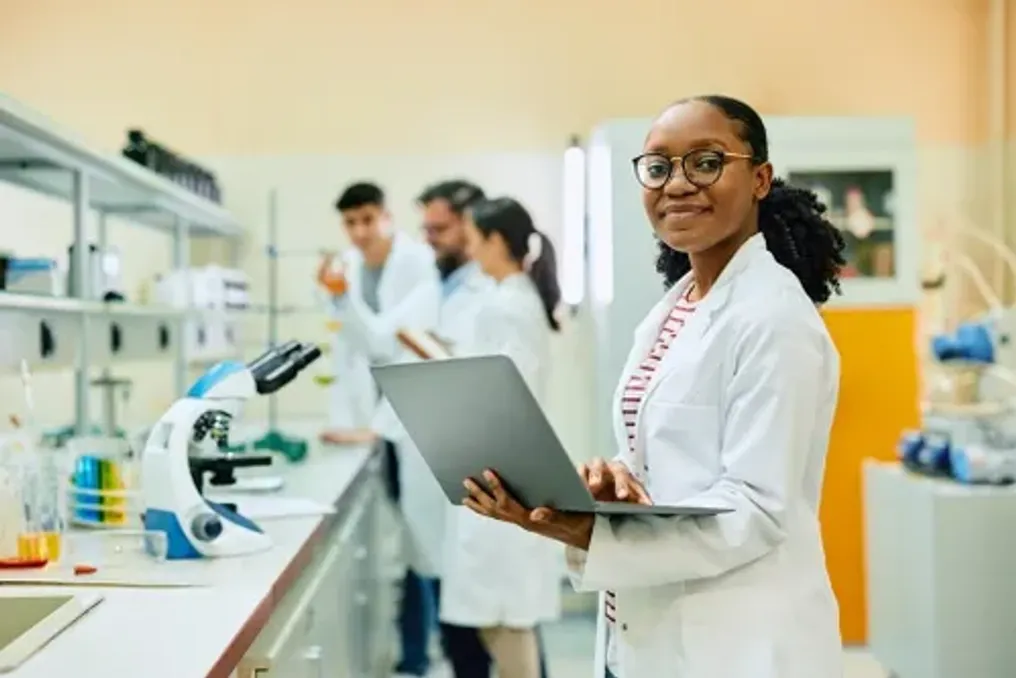
According to Cassius Selala, when South African women hold leadership positions in science, they contribute not only to the transformation of laboratories but also to the transformation of industries, strengthening the economy, inspiring future generations, and building the inclusive, capable, and prosperous South Africa envisioned by the Constitution.
The Importance of Gender Equality for Development
South Africa is at a crucial stage of its democratic journey. In the process of creating an inclusive economy, ensuring sustainable employment, reducing poverty and inequality, and strengthening the potential of a developing state, it has become clear that the country's progress depends on unlocking the full potential of all its citizens, especially women and girls.
During Women's Month, under the national theme 'Empowering women empowers the nation,' it is reminded that supporting women is not just a constitutional requirement or a matter of social justice, but a central element of South Africa's development plan. This is most evident in the fields of Science, Technology, Engineering, and Mathematics (STEM).
Economic Future Through Innovation
The future of the South African economy will be determined by innovation, research, and technological progress. The industries that will shape tomorrow's economy—such as artificial intelligence, biotechnology, renewable energy, advanced manufacturing, digital technologies, medical sciences, and climate innovations—require a skilled workforce capable of solving increasingly complex challenges. Women and girls must be at the center of this transformation.
The National Development Plan until 2030 recognizes the need to expand the country's skills base, invest in innovation, and strengthen research capacity to achieve inclusive economic growth. Similarly, the Medium-Term Strategic Framework (2024–2029) emphasizes inclusive growth, job creation, poverty reduction, and combating the high cost of living, as well as building a capable, ethical, and developed state. None of these goals can be fully achieved without a significant increase in the participation and leadership of women in science and innovation.
Women's Contribution to Scientific Achievements
Science extends far beyond laboratories and research institutions; it is the foundation upon which nations build competitive economies. Every medical breakthrough, agricultural innovation, clean energy solution, engineering achievement, and digital technology begins with scientific inquiry. When women participate fully in these fields, they contribute not only to scientific excellence but also to economic expansion, industrial development, and improved public service delivery.
South African women scientists continue to demonstrate outstanding leadership in critical sectors. They advance vaccine research, enhance food security through agricultural science, develop technologies to address water scarcity, drive innovation in mining and manufacturing, and lead research helping communities adapt to climate change. Their work directly contributes to achieving national priorities and improving the daily lives of millions of South Africans.
Barriers and the Need for Strategic Investment
Despite these successes, women remain underrepresented in many STEM disciplines, particularly in leadership roles, research funding, and commercial innovation. Many girls still face obstacles that prevent them from building careers in science and technology. Gender stereotypes, unequal access to quality education, limited mentorship opportunities, workplace discrimination, and uneven burdens of unpaid care continue to limit their potential.
For a country facing persistent unemployment, especially among women and youth, this represents a missed economic opportunity. Therefore, empowering women in science must become a strategic investment in South Africa's economic recovery and development. Every girl who succeeds in mathematics, coding, engineering, or scientific research strengthens the country's ability to compete in the rapidly changing global economy. Every woman who starts a tech enterprise, leads scientific research, or develops innovative solutions contributes to job creation, productivity, and inclusive growth.
Requirements for the Education Ecosystem
This requires targeted investment across the entire education and innovation ecosystem. Girls must have equal access to quality STEM education from an early age. Universities and Technical and Vocational Education and Training (TVET) colleges must expand opportunities for women in research and innovation. The public and private sectors must invest in scholarships, mentorship, research funding, entrepreneurial support, and leadership development to enable women scientists to thrive.
International Commitments and Conclusion
The Department of Women, Youth, and Persons with Disabilities continues to advocate for gender-oriented policies aimed at dismantling structural barriers and promoting equal participation in all spheres of society. By collaborating with government departments, academic circles, scientific councils, industry, and civil society, it is essential to ensure that women are not merely participants in South Africa's innovation ecosystem, but its leaders, shaping its future.
Empowering women in science also advances South Africa's international commitments, including the African Union's Agenda 2063, the United Nations Sustainable Development Goals, particularly SDG 5 (Gender Equality), SDG 8 (Decent Work and Economic Growth), and SDG 9 (Industry, Innovation, and Infrastructure), as well as commitments under the Beijing Declaration and Platform for Action.
The country's development plan cannot succeed if innovation excludes half its population. Inclusive growth requires inclusive innovation. A capable developing state needs the talents of female researchers, engineers, data scientists, inventors, and entrepreneurs. Our industrialization requires women to design the technologies of the future. Our response to climate change depends on women developing sustainable agricultural systems and clean energy solutions. Our healthcare system relies on women to advance vital research.
By investing in women in science, the country strengthens institutions, makes industries more competitive, improves community health, and enhances economic resilience. Opportunities are created not only for individual women but also for families, communities, and future generations.
On the occasion of Women's Month, South Africa must renew its commitment to creating an environment where every girl can dream without limits, every young woman can build a scientific career without discrimination, and every female scientist can lead, innovate, and contribute fully to national development. The success of South Africa's development plan will ultimately depend on whether we can harness the talents of all our people. Thus, empowering women in science is not just a matter of representation; it is an acceleration of economic transformation, the advancement of innovation, the strengthening of our developing state, and the building of a prosperous nation for all.