Meta Platforms reported a sharp decline in free cash flow in the fourth quarter, reflecting financial pressure caused by the costly development of artificial intelligence (AI) within this major social media company.
Meta Platforms reported a sharp decline in free cash flow in the fourth quarter, reflecting financial pressure caused by the costly development of artificial intelligence (AI) within this major social media company.
The company, which owns Facebook and Instagram, reported free cash flow of $784 million for the second quarter ending June 30. This amount is significantly less than $8.55 billion the previous year, leading to a 10% drop in the company's stock during extended trading.
Meta's cash flow decline mirrors Alphabet's results, which recorded negative cash flow for the first time last week, surprising even the most optimistic Wall Street investors who were selling shares of Google's owner.
Meta CEO Mark Zuckerberg stated during the earnings conference call that a significant portion of computing power will be directed towards training models, developing core business, as well as providing personal agents and new products. He also expects growth in the large enterprise business serving significant clients.
Responding to numerous analyst questions about the AI strategy and how to monetize huge investments, Zuckerberg emphasized that these expenses are part of the company's bet that personal AI agents will become a major consumer business. He argued that the company has unique opportunities to commercialize this technology at scale, despite short-term costs.
Meta's free cash flow reached its lowest level since late 2022, a period when the company faced similar investor scrutiny due to ambitious metaverse investments. The Reality Labs division reported operating losses exceeding $80 billion. While Microsoft reported a 23% decrease in free cash flow in the June quarter compared to last year, concerns about its spending pace were alleviated by the growth of its high-margin cloud business, and the company's stock rose by 4.4% after market close.
The active expenditure on AI infrastructure occurs against the backdrop of Meta's attempts, which remains primarily an advertising business, to diversify its revenue streams. The company reported second-quarter earnings per share of $6.18, which was below the average analyst forecast of $7.22, according to LSEG data.
According to Mike Pruks, a senior executive at the research firm Forrester, 'Meta's AI spending was easier to note when margins were growing. It's harder to note now when costs appear in the numbers.' He added that Meta is spending billions on AI infrastructure not just to improve Facebook and Instagram, but because the company believes AI can create entirely new types of businesses.
Meta plans to spend up to $145 billion on AI infrastructure this year, roughly double the investment from last year. This also accounts for a significant portion of the projected over $700 billion that Big Tech plans to spend on this technology in 2026. The company intends to double its total computing power to 7 GW this year, and then double it again to 14 GW next year. It currently has 32 data centers operational or under construction worldwide.
On Wednesday, the company raised the lower bound of its capital expenditure forecast. It now expects capital expenditures in 2026 to range from $130 to $145 billion, compared to the previous forecast of $125 to $145 billion. At the beginning of the year, the spending forecast was between $115 and $135 billion.
One positive aspect of the report was Meta's revenue growth, which increased by 28% to $60.8 billion in the second quarter. This is the fastest growth rate since the fourth quarter of 2021, excluding the first quarter of 2026. User activity on Meta's apps recovered after a dip in April. The company reported 3.6 billion daily active users, a 3% increase compared to last year.
Luke Stillman, managing director at the research firm Madison and Wall, noted: 'Meta's core advertising business, which funds everything else, continues to perform well and remains our main focus.'
Despite intense investor scrutiny of Meta's AI spending, the company faces legal risks related to its core business. In a lawsuit filed this month, the company stated that four states are demanding $1.4 trillion in fines over allegations that it designed the Facebook and Instagram platforms to induce addiction in young users and misled the public regarding their safety.
In April, Meta warned that legal and regulatory consequences in the EU and US regarding youth social media 'could significantly impact' its business and financial results. On Wednesday, the company confirmed that it continues to monitor this attention closely.
Furthermore, the company incurred layoff costs associated with the massive restructuring it is undertaking to reorient internal operations around AI. In May, approximately 10% of employees, or about 8,000 people, were laid off as part of this reorganization.
Meta CFO Susan Li reported on the conference call that operating income for the second quarter would have increased by 9% year-over-year if not for legal costs and company layoffs. In fact, operating income decreased by 8%.
Amid the rise in electric vehicle sales, which accounted for over 25% of total vehicle sales in 2025, Revoy offers an alternative approach. Revoy has raised $27 million, betting on the possibility of electrifying freight transport without needing to replace the existing fleet of diesel trucks.
Standard Capital led the round, with participation from XYZ Venture Capital, Doerr Capital, Time Ventures, Y Combinator, Leap Ventures, and Y Combinator co-founder Paul Graham. In total, the San Francisco-based company has now raised $41 million across previous rounds.
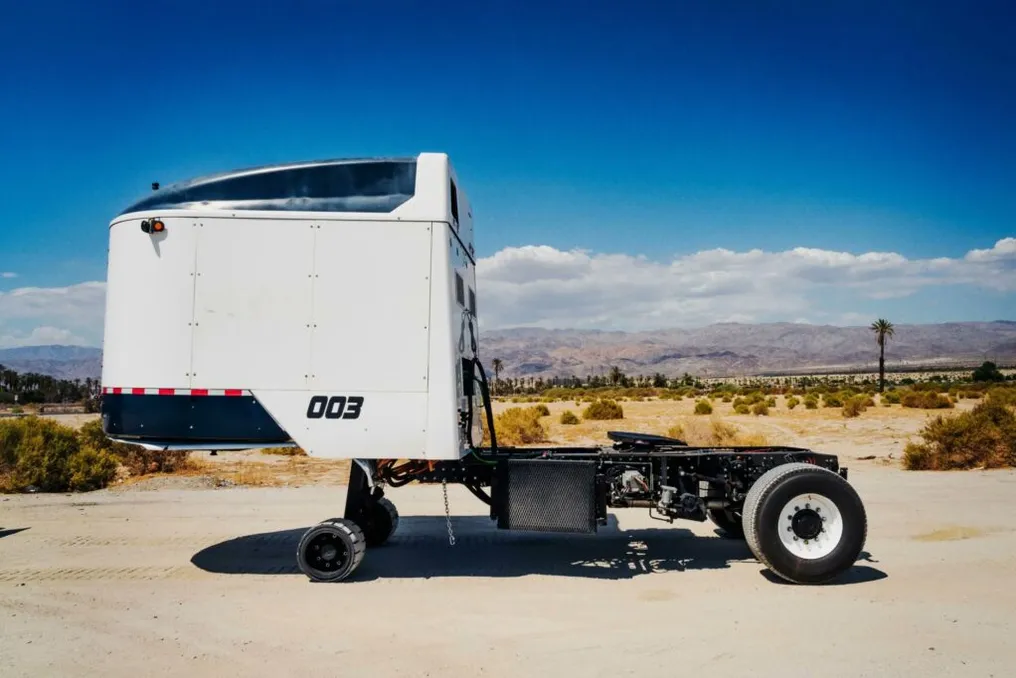
The device's concept is mechanically quite simple: it is powered by a motorized trolley installed between the truck cab and its trailer. Instead of completely replacing the engine, it uses electric assistance for the diesel engine. This is achieved with a device that attaches to a standard fifth wheel coupling in just a few minutes, without the need for a new truck or additional wiring.
The Revoy trolley is equipped with its own motor and a 575 kilowatt-hour battery, comparable in size to the battery of a fully electric semi-trailer. The battery powers the truck via its own drive axle. According to the company, when fully charged, the trolley can haul a loaded three-ton train for over 200 miles, reducing diesel consumption by up to 95% and emissions by up to 85%. Furthermore, regenerative braking recovers energy during descent, shortening the braking distance by 30%.
Revoy designed the device so that it requires no modifications to the truck or trailer. The trolley reads data from the driver's accelerator and brake pedal presses, adds torque during acceleration, and switches to charging mode during braking. Notably, all these functions operate automatically, without driver intervention. The device also includes driver assistance systems such as blind spot detection and rollover correction.
Existing battery semi-trailers are expensive, and fleets are replaced slowly, forcing most heavy freight transport to continue operating on diesel fuel. Revoy aims to eliminate the need to purchase such equipment. Since the company owns the trolleys and rents them per mile, the freight carrier only needs to keep its existing diesel tractors and pay only for the miles driven in electric mode.
CEO Peter Reinhardt previously created and then sold the customer data company Segment to Twilio for $3.2 billion. He asserts that this technology allows competition with diesel, and currently, no other electric truck in the US can boast such an advantage. Co-founder and CTO Ian Rust, Revoy's first employee and former engineer at the autonomous driving startup Cruise, described this approach more directly: instead of removing the driver, Revoy uses robotics to replace the fuel source.
Revoy plans to begin commercial operation later this year on a freight route of about 200 miles near Portland, Oregon. Four trolleys, assembled from components sourced from China, will be used for this. While this may seem like a small start, it is intentional. Reinhardt stated that one commercially viable line requires about two dozen trolleys—a production volume the company deems achievable without prior scaling.
Part of the new investment will be directed towards developing a second-generation trolley that will feature a smaller and cheaper battery pack while maintaining a range of over 200 miles.
Indian company ITC reported a 27% drop in quarterly profit on Friday. This decline occurred because the increase in excise duties on fresh cigarettes this year narrowed margins, and the phased price increases negatively affected demand for more expensive brands.
The large consumer goods manufacturer, which owns brands such as Aashirvaad flour and Bingo chips, stated that its first-quarter profit, ending June 30, was 35.79 billion rupees ($375.24 million USD), compared to 49.11 billion rupees the previous year.
Corporations worldwide have faced increased costs due to the war in the Middle East. Cigarette manufacturers, including ITC and Godfrey Phillips, which sells Marlboro in India, are facing their own difficulties due to sharp tax increases.
ITC's total expenses, supported by British American Tobacco and owning brands like Gold Flake and Wills Navy Cut, rose to 228.29 billion rupees from 151.88 billion rupees for the reporting period. Nevertheless, total revenue increased to 269.43 billion rupees compared to 210.7 billion rupees.
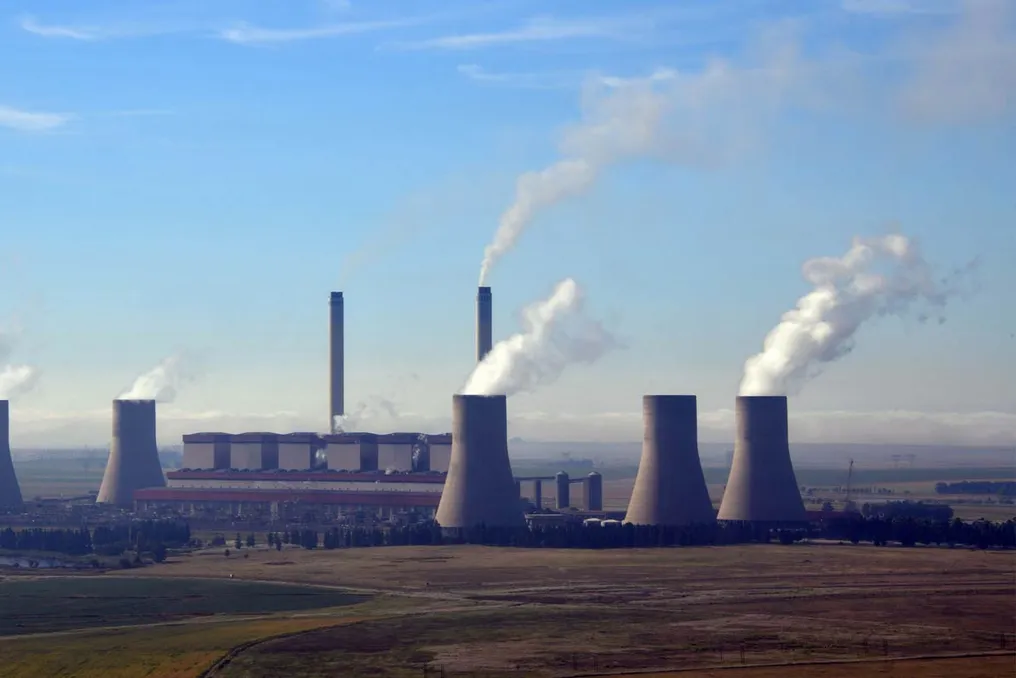
Eskom has demonstrated a significant improvement in its performance, noting an 86% reduction in diesel fuel costs for the current fiscal year. This occurred against the backdrop of achieving an eight-year low in the number of breakdowns.
As of July 20, Eskom's Energy Availability Factor (EAF) was 80.24%, which is the best single-day figure since September 20, 2017. At the beginning of the fiscal year, the EAF reached 66.22%, representing an increase of 6.97 percentage points compared to last year, although this figure remains below Eskom's target recovery level of 70%.
The daily record is also due to temporary factors: Eskom reduced planned maintenance during the peak winter demand period, and the scheduled power loss factor for the week leading up to July 23 was 7.19%, compared to 10.74% the previous year. Fewer units sent for repair means more are available for operation, positively impacting daily figures. Overall, Eskom conducted more maintenance throughout the year, averaging 12.28% of capacity, versus 11.13%.
A substantial improvement is observed in the decrease in unplanned outages: on July 19, they dropped to 5.89 GW, the lowest daily level since July 2, 2018. Over the entire week, they averaged 7.07 GW compared to 11.84 GW the previous year. The Unplanned Capacity Loss Factor (UCLF), which reflects the share of the fleet taken out of service due to breakdowns, improved to 14.94% from the previous 24.66%.
Eskom estimates this annual improvement at 4.25 GW, or 35.9%. However, the company's internal average figures suggest otherwise: the difference between 11.84 GW and 7.07 GW is 4.77 GW, or 40.3%. When checking these weekly averages using UCLF percentages, both average figures suggest a fleet capacity of about 47–48 GW, which is accurate, meaning the averages are correct, and the 4.25 GW figure is an exception.
Eskom's financial calculations confirm this trend. A week before July 2, the company reported a decrease of 5.13 GW compared to average values of 9.85 GW and 14.98 GW; a week before July 9, the decrease was 5.22 GW compared to averages of 8.4 GW and 13.62 GW. Data for the week before July 23 does not align with this trend.
The correction has been favorable for Eskom. The company compared this reduction to the capacity of a large power station, such as Kusile, which produces 4.8 GW at full load. The value of 4.77 GW is close to this comparison, whereas 4.25 GW is not. Breakdown rates directly affect Eskom's expenses. For the current fiscal year, the company spent 807.4 million rand on diesel fuel, significantly less than 5.62 billion rand for the same period last year, representing an 85.6% decrease. During the period from July 17 to July 23, no diesel fuel was consumed.
Eskom's open-cycle diesel gas turbines operated at a load factor of only 1.14% for the current fiscal year, compared to 10.28% last year, which is within the planned budget of 3%. As of July 23, Eskom recorded 434 days without power outages starting from May 16, 2025, and asserts that demand was met at 100% in the current fiscal year. The winter forecast published on April 22 does not foresee outages until August 31.
The load reduction that Eskom applies locally in areas where illegal connections and meter tampering have overloaded local grids is slowing down. Six provinces have now been cleared, and about 1.2 million consumers have been removed from schedules, accounting for approximately 70% of the planned 1.7 million, after reaching one million at the beginning of this month. The seventh province is expected to be cleared by October, and complete nationwide elimination is planned for 2027.