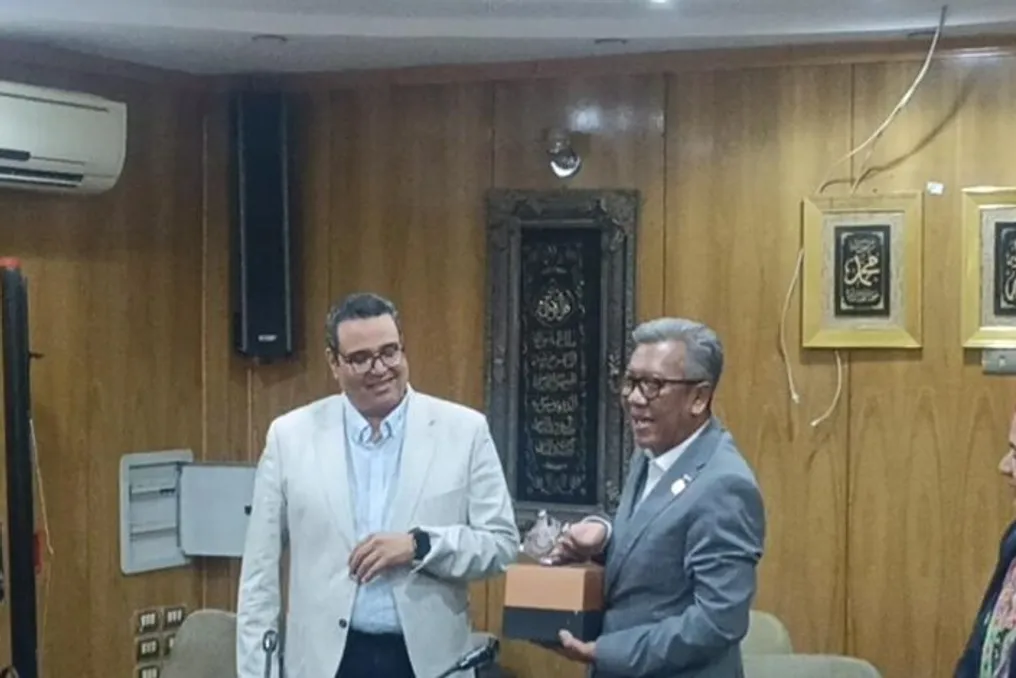
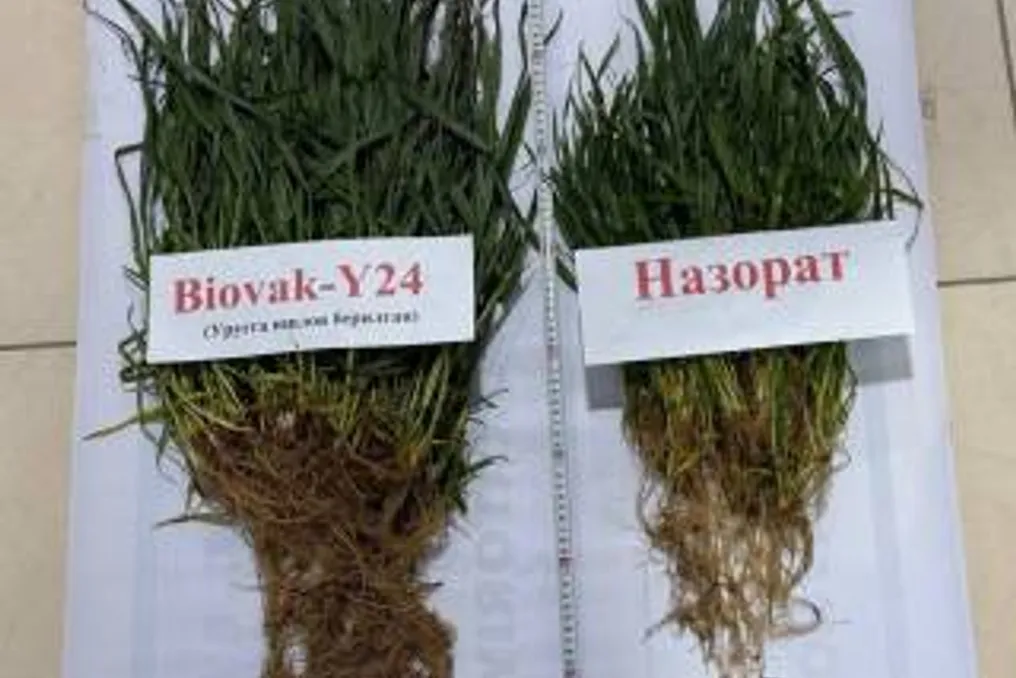
The biological preparation 'BioVak Y24' is being tested in experimental fields by the 'Yuma Green' enterprise and local scientists. This experiment took place in the Republic of Karakalpakstan, where Gongirotboy Sharipov, Minister of Higher Education, Science and Innovations, also familiarized himself with the experiment.
Experiment and Application Rate
Based on the recommendation of the head of state, 'BioVak Y24' is being applied to 3 hectares of degraded land in the 'Borli' area of Ellikqala district in the Republic of Karakalpakstan. Crops are being grown here with 5% saline water. Such an experiment forms the basis for introducing new agrotechnologies for cultivating crops and increasing yields in saline lands.
Project and Infrastructure
This project, financed by the Innovation Development Agency, has a total value of 4.9 billion soums, including 1.07 billion soums allocated under state scientific programs. The enterprise has the capacity to deeply process 2000 to 3000 tons of medicinal plant raw materials per year. Furthermore, a modern scientific laboratory base has been established to obtain biologically active substances from medicinal plant extracts, creating 15 new jobs.
Agrotechnical Advantages of the Preparation
In cases where the 'BioVak Y24' preparation has been used in recent years, high results have been reported for main crop types. The preparation develops the plant root system 2-3 times more. It ensures that the roots reach a depth of 1-1.5 meters as good protection against drought, which helps absorb underground natural moisture and nutrients. Additionally, it is resistant to extreme heat, maintaining the plant's turgor even during the hottest part of summer and preventing stress and flower drop.
Economic and Time Efficiency
Moreover, the preparation reduces the crop maturity period during the vegetative period by 20-25 days, meaning saving time and resources for growers. Important economic results have also been recorded: in cotton farming households, an additional yield of 15 centners was obtained compared to traditional yields, leading to an additional income of 12 million soums per hectare and a net profit of 11.2 million soums. In wheat cultivation, the yield was increased from the traditional 60 c/ha to over 80 c/ha, resulting in an additional income of 6 million soums per hectare and a net profit of 5.4 million soums.
Trials Across the Republic and Disease Prevention
The preparation successfully passed trials in farms across all regions of the republic during the 2024-2025 seasons. For example, when this biopreparation was used in Beruniy district of Karakalpakstan, a yield of 60-68 centners per hectare was obtained. In fields suffering from dust demand, a yield of 43 c/ha was achieved. The preparation is also important in preventing viral and fungal diseases found in tomatoes and other polyculture crops. In areas treated with 'BioVak Y24', disease-causing agents are eliminated, and plant immunity is strengthened. As a result, even diseased plants can be treated and produce healthy, high-quality, and vitamin-rich crops.
Scientific Basis and Future Directions
Scientific observations have shown that this biopreparation significantly increases the adaptive ability of the plant against stress factors by optimizing its endogenous hormonal balance. Firstly, the deepening of the root system to 1-1.5 meters signifies the plant's transition to autonomous water supply from an agrophysics perspective, which is considered a good scientific method for maintaining yield in conditions of limited irrigation resources. Secondly, the fungicide and bactericide properties of the preparation have selective advantages over chemical agents, creating a biotic barrier only against pathogens without disturbing the beneficial microflora in the soil. This indicates that modern agro-industry cannot develop without science, and Uzbekistan's agriculture is transitioning from extensive to intensive, science-based development, where conserving every drop of water is an important part of the process under water scarcity conditions.