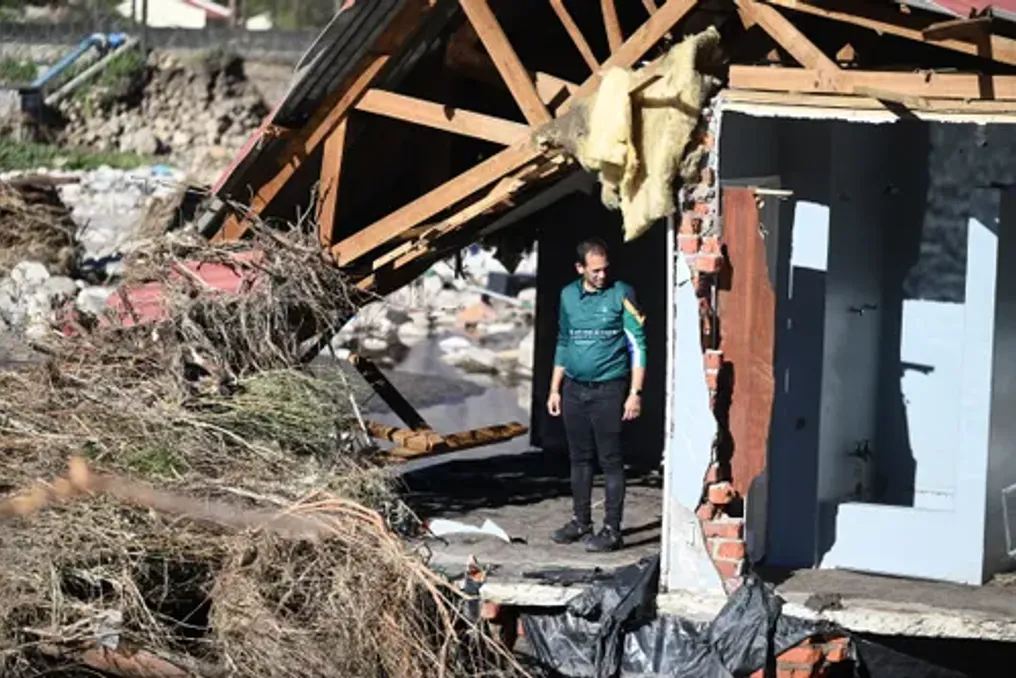
Severe weather events in South Africa have once again demonstrated the growing vulnerability of the agricultural sector to climate change risks, according to Santam.
Financial Impact of Climate
The insurer Santam reported that during the 2025/26 farming season, insurance losses from crops exceeded 1 billion rand. This underscores the increasing financial impact of climate change on South African agriculture.
The insurer noted that farmers are increasingly facing a combination of destructive weather events, including hail, strong winds, heavy rainfall, floods, and off-season conditions. As a result, climate risk has become a constant operational issue rather than just a seasonal occurrence.
Changing Nature of Risks
Hanjho Fourie, Head of Agricultural Crop Underwriting at Santam Specialist Solutions, stated that the nature of agricultural risks has significantly changed in recent years. He specified that Santam recorded insurance losses exceeding 1 billion rand for the 2025/26 season alone, reflecting one of the most active periods for claims submission in the last decade.
Fourie added that in the previous season, only hail-related claims reached approximately 170 million rand, indicating the persistent seriousness of individual events against the backdrop of a general trend toward increased climate instability.
Consequences for Production
In Fourie's view, these events are not isolated setbacks for farmers. They form part of a changing risk landscape where historical weather patterns cease to be reliable predictors of future outcomes. The system is becoming more volatile not only in intensity but also in timing and event superposition. Consequently, climate risk has moved beyond being a seasonal matter and is now integrated into daily operational and financial decision-making.
The impact of these phenomena extends beyond direct crop losses. Damage to infrastructure, such as irrigation systems, netting, packing halls, and access roads, can disrupt production cycles, slowing down harvesting and distribution. In high-yield horticultural sectors, even minor cosmetic damage from hail or wind can reduce product quality, decreasing market value, export earnings, and profitability. These disruptions ripple across the entire agricultural value chain.
Fourie also noted that reduced volumes can lead to packing halls operating below design capacity, affecting employment and efficiency. Simultaneously, damaged infrastructure and logistical bottlenecks place additional strain on already tight supply chains. Over time, this contributes to increased price volatility and overall food security challenges, especially for low-income households.
Geographical Distribution of Risks
Although regions such as Highveld and Eastern Free State were traditionally associated with hail risk, recent weather patterns indicate that the risk is becoming less predictable and more geographically dispersed. Fourie reported that areas not typically considered high-risk zones are experiencing more frequent severe weather events, while established hotspots are seeing changes in intensity and timing.
Furthermore, there is growing evidence that climate variability is affecting the timing of key agricultural seasons. Farmers are increasingly encountering extreme weather conditions outside traditional windows, which can have serious consequences for crops at critical growth stages. For instance, maize remains highly vulnerable during flowering and pollination, where a single storm can significantly reduce yield or cause total crop failure.
Adaptation and the Role of Insurance
In response to these difficulties, farmers are implementing various adaptations in their operations. Many are investing in improved water management systems, protective infrastructure such as hail nets, and precision agriculture technologies that allow for more timely decision-making. However, rising costs of resources, infrastructure investments, and the need for continuous technological upgrades place increasing financial pressure on farms.
Combined with recurring weather-related losses, this can significantly restrict cash flow and reduce the ability to reinvest in future production. Fourie emphasized that insurance, beyond providing financial protection after an event, allows farmers to recover, maintain production continuity, and secure financing. By transferring some risk to a wider pool, insurance helps stabilize the agricultural system and supports long-term sustainability.
Despite its value, there are misconceptions about agricultural insurance. Fourie explained that many claim delays are related to incomplete documentation, late reporting, or deviations from agreed production practices. He advised that close collaboration with brokers and meticulous record-keeping can significantly improve outcomes. As climate variability intensifies, the role of risk management in agriculture will continue to evolve. Farmers are no longer optimizing for stable, predictable seasons but are building systems capable of withstanding recurrent disruptions, requiring a combination of operational adaptation, technological investment, and financial resilience. Fourie concluded that insurance will increasingly become part of this broader sustainability strategy—not as a standalone solution, but as a tool for recovery and continued investment.