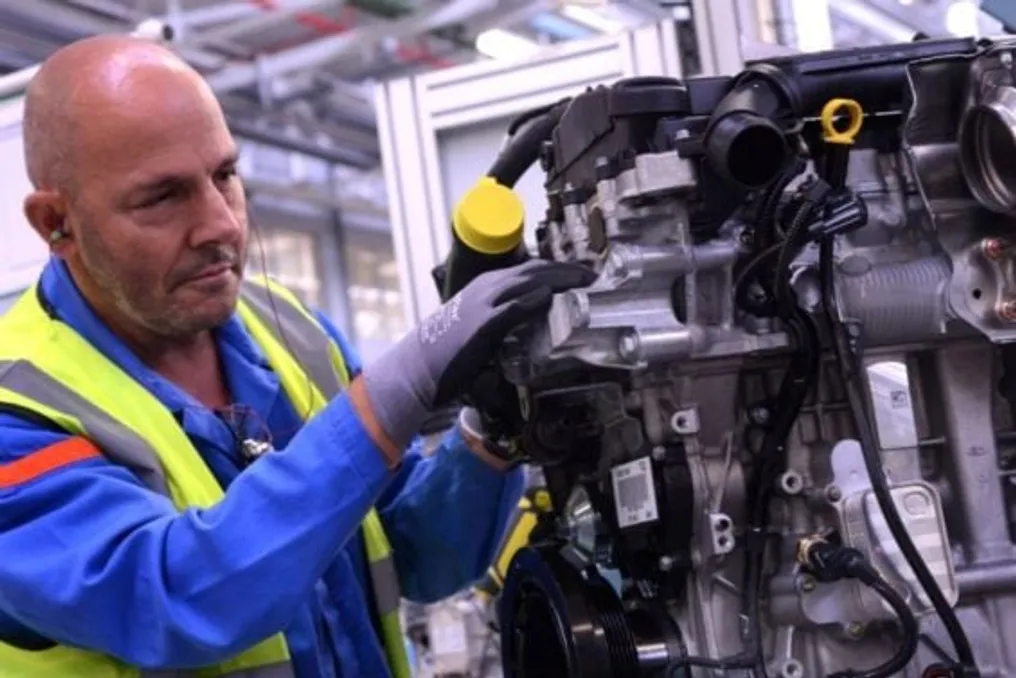
Stellantis announced the closure of the engine factory located in Douvrin, in northern France, with a planned date of October 30, 2026, marking the end of the unit's 57 years of existence. The decision was communicated on July 20.
Stellantis announced the closure of the engine factory located in Douvrin, in northern France, with a planned date of October 30, 2026, marking the end of the unit's 57 years of existence. The decision was communicated on July 20.
The plant began in 1969, as a result of a collaboration between Peugeot and Renault. Initially, it was responsible for producing the X engine, which was used in various vehicles such as the Renault 14, Peugeot 104 and 205, as well as the Citroën Visa and C15 and Talbot Samba Rallye.
Subsequently, the unit began manufacturing the V6 PRV, used in several French luxury models and also in the DeLorean from 'Back to the Future'. Furthermore, Douvrin assembled the EP and Prince powertrains, the latter developed in partnership with BMW and found in Peugeot and Citroën, from the EP6 Turbo of the DS3 Racing to the 270 hp version of the Peugeot 308 GTI and RCZ R.
In 2012, the three-cylinder EB engine, known as the 1.2 PureTech, was introduced, which used an oil-bathed timing belt. Although this technology promised to reduce friction and consumption, the belt showed degradation due to contact with the lubricant, generating residues that harmed the engine's lubrication. Issues with oil consumption and reliability were attributed to the design and usage standards, such as stop-and-go traffic, and not to the factory's operation.
The response to these issues included recall calls, warranty extensions in Europe, and, starting in 2023, the implementation of a generation with a timing chain instead of a belt. In recent months, the unit was only producing the EB2, the 1.2 version already with a chain, intended for combustion and hybrid models of the group, although this version has been discontinued in Western Europe. The 1.5 BlueHDi engine, another model with a questionable reputation, left Douvrin the previous year.
There are two main factors justifying the closure. The first is that the replacement for the 1.2 PureTech, a new 1.2 turbo engine, will be produced in Trémery, near Metz, where Stellantis plans to finalize the lifecycle of this engine. The second factor is the growing electrification of the region, which is now called the 'battery valley', parallel to Silicon Valley. Near Douvrin operates the ACC gigafactory, a battery supplier for the Peugeot e-3008 and e-5008, and there are expectations that the plant will be adapted for cell production, although the automaker has not yet confirmed this destination.
In terms of labor, Stellantis relocated 340 employees to the adjacent battery operation and offered transition plans for another 330. Fewer than 50 permanent employees and about 50 on part-time contracts are still awaiting a defined destination and require retraining to adapt to the new production chain.
However, the engine that marked Douvrin's recent history will not cease production immediately; the Tychy plant in Poland will continue to manufacture the 1.2 PureTech and is expected to keep it in line for a few more years, targeting markets outside of Western Europe.
Stacey Jansen from REDISA states that the South African Recycling and Economic Development Initiative (REDISA) was illegally liquidated during the tenure of former President Jacob Zuma.
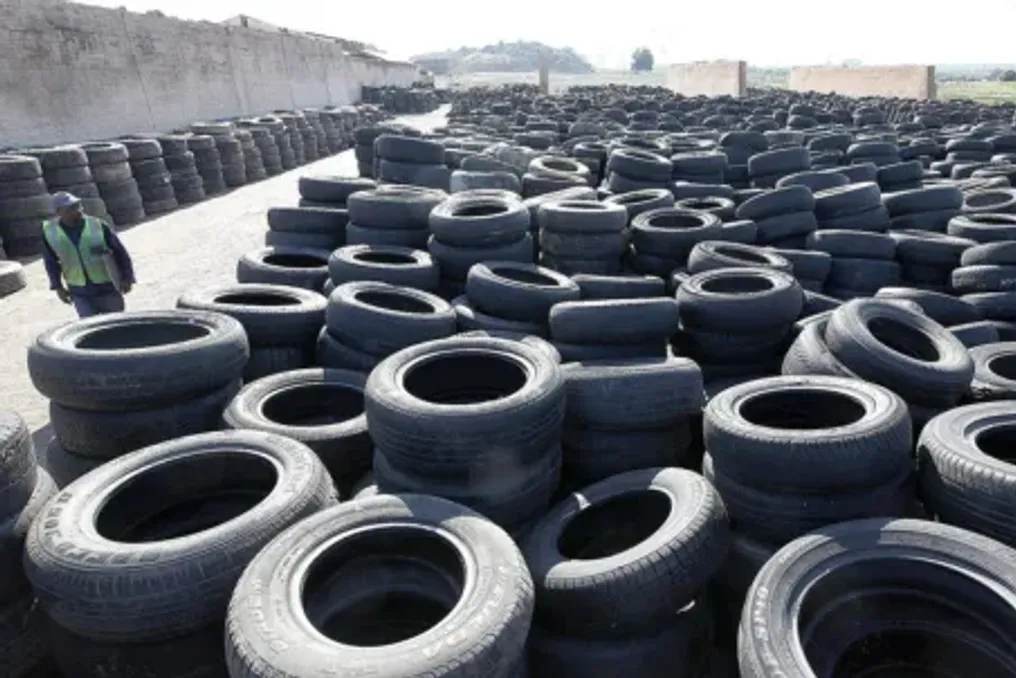
South Africa produces over 70,000 used tires daily, with less than 30% being recycled. This situation poses an extreme environmental and public health threat. Tires that are not recycled accumulate on city outskirts and around informal settlements. There, they are burned to recover scrap metal, releasing carcinogens and heavy metals into the air breathed by the poorest segments of the population, as well as leaching toxins into groundwater.
Initially, REDISA was created and funded by the industry through a producer responsibility system, rather than by government funds, specifically to address this problem. Between 2013 and 2017, the organization built a national collection and processing network, increased the number of tire recyclers from 12 to 32, raised the recycling rate from 4% to 55%, facilitated the creation of over 3,000 jobs and about 250 small businesses, and gained international recognition.
However, REDISA was illegally closed during the Zuma administration, and the management of tire waste was transferred to a state structure through which contracts could be issued. In 2019, the Court of Appeal upheld REDISA's legality, ruling its liquidation illegal. REDISA is currently pursuing a lengthy damages lawsuit against the relevant liquidators.
The consequences of REDISA's cessation of operations are still visible: many tire depots are overflowing, waste collection has collapsed, and thousands of jobs lost by collectors and transporters have not been recovered. The Department of Forestry, Fisheries and the Environment spent seven years and millions of rands trying, but failing, to develop a functioning plan for managing industrial tire waste. In response to the current situation, the department announced a tender to create 32 depots capable of holding over one million tons of used tires. Data from the Waste Management Bureau needed to solve the problem remains incomplete, inaccurate, or outdated. The problem is much broader, as potential is not being realized: effective management of all 13 waste streams in South Africa could increase GDP by 1.5 percentage points.
Any official responsible for these issues deserves thorough scrutiny. Expressing concerns through all legal channels is not a sign of ill intent. Organizations whose arguments are ignored on their merits present their position publicly, often with professional support. If every interested party criticizing a minister or pointing out departmental shortcomings appears as an organizer of a conspiracy against the minister, supported by a communications firm, then the legitimate defense of interests becomes impossible, and normal democratic competition ceases to function. The standard political response to accusations of inefficiency has turned into a claim of a 'political attack.'
Even alleged legal proceedings between the department and REDISA do not render interaction inappropriate. The mentioned lawsuit concerns a damages claim against the liquidators, not against the department. The department was drawn into the case because it granted blanket immunity to the liquidators, which is an extremely unusual step that the department must explain. However, if anticipated litigation is grounds for refusing any contact, out-of-court settlements will never happen. Illegal actions must be justly resolved, and this requires communication, not silence.
South Africa faces serious problems, but it often lacks the discipline to focus on them. The tire waste crisis is enormous, compounded and solvable. It deserves attention that is currently being spent on smoke screens of unfounded conspiracy theories.
According to two sources familiar with the situation, the Indian-based company Adani Energy Solutions may potentially carry out another share sale to institutional investors by the beginning of the next fiscal year.
This follows the company raising 3,500 crore rupees (equivalent to approximately $367 million) in a similar financing round this week.
Companies within the conglomerate of billionaire Gautam Adani's ports and energy have raised about $4.75 billion over the past eight months through Qualified Investment Programs (QIP) and rights issues to finance expansion and reduce debt burden.
Specifically, the group's flagship company, Adani Enterprises, previously raised $1.58 billion through QIP this month, as well as $2.8 billion through a rights issue. Another group company, Adani Power, plans to raise up to $1.57 billion through QIP.
This volume of capital raised is the largest for the group since its shares were subject to volatility in 2023 due to short-seller accusations. Adani Energy Solutions received shareholder approval to raise up to 10,000 crore rupees through the issuance of shares in one or more tranches.
Sources noted that if market conditions remain favorable, the company may utilize the entire remaining amount in the next tranche. One source suggested that after such a strong response, the company might approach the QIP market again closer to the end of the current fiscal year or at the beginning of the next fiscal year.
According to the company's statement, the main buyers of Adani Energy Solutions shares during the recent round were mutual funds and insurance companies, with bids exceeding the target by three times. The shares of the firm, which is India's largest private sector power transmission company, have grown by more than 60% since the beginning of 2026.
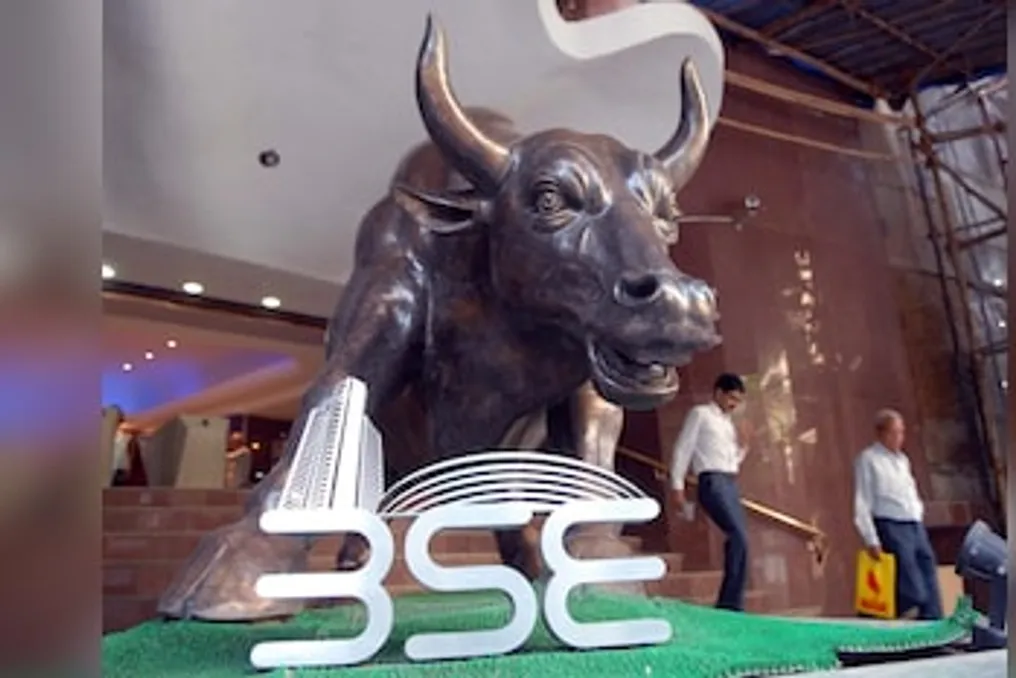
Indian stock markets are approaching the end of July on a positive note. As of July 30, the Sensex index rose by 1450 points, which is 1.89 percent, while the Nifty 50 advanced by 453 points, or 1.90 percent. Despite geopolitical tensions and political uncertainty, investors maintain cautious optimism ahead of August.
An analysis of data from the last 11 years shows that Sensex ended August in positive territory in 6 instances, with an average gain of 3.42 percent. In 5 cases, the index closed in the negative, showing an average decline of 2.71 percent. Notably, in the last three years (2023 and 2025), Sensex ended August with losses of 2.55 percent and 1.69 percent, respectively.
Nifty's performance largely mirrors that of Sensex. Over the same 11 years, the index ended August higher in 6 years, achieving an average growth of 3.46 percent. However, in 5 years, it recorded negative returns, with an average drop of 2.58 percent. Like Sensex, Nifty showed negative results in 2023 and 2025, declining by 2.53 percent and 1.38 percent, respectively.
Devansh Vakil, Head of Research at HDFC Securities, believes that Indian markets are likely to remain resilient as geopolitical concerns ease and India's weighting in the MSCI Emerging Markets index increases amid the weakness of countries like Korea and Taiwan. He added that the markets could benefit from earnings meeting expectations, healthier valuations after nearly two years of price consolidation, and foreign investment inflows into large companies.
Key events to watch in August also include corporate earnings season. Sudip Shah, Head of Technical and Derivatives Research at SBI Securities, noted that investors will closely monitor the seasonal corporate reports to assess the sustainability of profit growth and management prospects. Furthermore, the progress and distribution of the southwest monsoon and reservoir levels during the sowing period will be critical for assessing agricultural demand, yield, and inflation.
Additionally, the outcome and commentary from the RBI MPC meeting in the first week of August will provide signals on the balance between domestic growth and inflation, which may affect liquidity and risk appetite. Other determining factors include geopolitical events affecting trade flows and energy prices, as well as changes in stocks related to the MSCI review, crude oil price trajectory, bond yields, the US dollar index, and inflation expectations. Sudip Shah also emphasized that any news of a ceasefire in the Middle East war or further decline in crude oil prices would support Indian stock markets in August.
Regarding sectors that have historically performed well in August, Sudip pointed to favorable seasonality in the FMCG and Automobile sectors. The FMCG index ended August in the black in 13 out of the last 20 years, providing an average return of 2.84 percent. After the post-COVID recovery period, this sector showed only one negative August, falling by 2.93 percent in 2023.
The automotive sector is also one of the strongest, as the index closed in the green zone in 12 out of the last 20 years, generating an average gain of 5.30 percent. According to Sudip, the auto business should see renewed buying interest if the monsoon improves and channels fill up before the holidays.