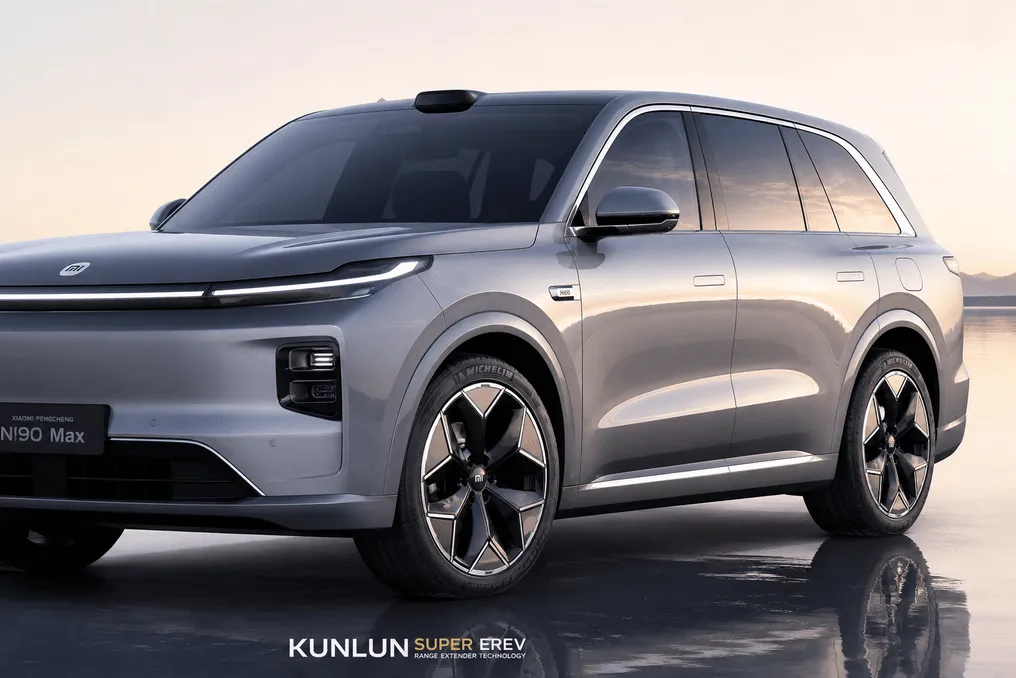
Xiaomi has unveiled its Kunlun platform, which comprises seven core components and fifty-seven redesigned parts. Thanks to this development, the N90 Max model achieves a combined range of 1705 kilometers under CLTC standards and a WLTC fuel consumption of 6.26 liters per 100 kilometers.
Introduction of the Kunlun System
Xiaomi's founder and CEO, Lei Jun, presented the Xiaomi Kunlun ultra-long-range system during the Pengcheng technology launch event on July 30th. At this event, the Kunlun platform, Xiaomi's ultra-long-range powertrain, and the full-cycle Kunlun safety system were introduced. The Xiaomi Pengcheng N90 Max model became the first vehicle equipped with this system, demonstrating a fuel consumption of 6.26 L/100km under WLTC and a range of 1705 km under CLTC.
Technical Specifications and Strategy
Creating this ultra-long-range system required the development of seven key components and the redesign of fifty-seven elements. This marks Xiaomi's systematic entry into the electric vehicle segment with extended range, currently dominated by companies such as Li Auto, AITO, and Leapmotor. The system supports gasoline with octane ratings of 92, 95, and 98, and the maintenance interval is three years or 30,000 kilometers after the first service, significantly reducing operating costs.
Pengcheng Brand Positioning
Xiaomi has established a differentiated strategy for the Pengcheng brand, focusing on long-distance travel for purely electric models. The vehicle is equipped with a 76 kWh battery, providing a pure electric range of 505 km under CLTC, which is one of the largest in its class. This allows for daily trips without engaging the engine, while retaining the extended-range engine for long journeys. The preliminary price starts from 259,900 yuan, with a launch scheduled for September 2026.
Model and Dealership Network
The Pengcheng N90 Max is a full-size SUV that was described in early reviews as imposing, occupying a competitive niche alongside flagship models from AITO and Li Auto. Xiaomi has opened six exclusive Pengcheng stores across the country where all staff are authorized to sell the vehicle, differing from the traditional dedicated sales team model. The company also clarified that the three-year or 30,000-kilometer service interval applies exclusively to the extended-range engine, not the entire vehicle, which remains subject to standard maintenance schedules.
Strategic Significance for Xiaomi EV
This launch expands Xiaomi EV's strategy beyond the purely electric SU7 and YU7 models into the extended-range segment. The target audience includes buyers concerned about charging infrastructure coverage and long-distance travel. The Xiaomi Kunlun Super Extended-Range system represents a comprehensive approach, integrating the battery, engine, thermal management system, and safety systems under a single platform. The combined range of 1705 km directly addresses 'range anxiety' in purely electric vehicles. The strategic bet is that the extended-range technology will serve as a transitional powertrain for mass consumers until charging infrastructure is fully mature, while Xiaomi leverages its ecosystem advantages in integrating the smart cabin with HyperOS, autonomous driving capabilities, and economies of scale in its production capacity.