Groundcover has raised $100 million in a new funding round. New investors One Peak and Morgan Stanley Expansion Capital participated in this round. Zeev Ventures, Angular Ventures, Heavybit, and Jibe also took part in the financing.
Groundcover has raised $100 million in a new funding round. New investors One Peak and Morgan Stanley Expansion Capital participated in this round. Zeev Ventures, Angular Ventures, Heavybit, and Jibe also took part in the financing.
Thanks to this round, the total amount of funds raised by the Tel Aviv-based company Groundcover has reached $160 million. The company announced that it plans to use these funds for global deployment, deepening partnerships with leading cloud service providers, and accelerating and intensifying product innovations.
Over the past year, the company has served more than 250 enterprises, many of which are Fortune 5 companies, as well as fast-growing startups. During this period, Groundcover tripled its revenue and doubled its staff to 130 employees worldwide.
As the volume of workloads utilizing artificial intelligence or functioning as autonomous systems increases, engineering teams require a deeper understanding of infrastructure, applications, and the AI workloads themselves, without compromising costs or ensuring data security and privacy.
Groundcover offers to combine adaptive eBPF sensors with support for the ready-made OpenTelemetry solution to create complete telemetry across infrastructure, applications, and AI workloads, eliminating data sampling. Shahar Azulai, CEO and founder of Groundcover, stated: 'We are entering the AI era, and this requires a new observability model, different from what we have today.' He noted that they use eBPF and BYOC infrastructure to provide clients with a platform capable of serving both engineers and autonomous AI agents operating in production environments.
Unlike traditional observability platforms that reduce or selectively collect telemetry data to control costs, Groundcover captures operational data with full fidelity, keeping it in the customers' own cloud environments. This approach allows organizations to maintain privacy, reduce operational costs, and improve AI-driven decision-making.
The company's Agent Mode feature further extends these capabilities, helping engineering teams automatically detect, troubleshoot, and fix issues in the production environment. By providing complete operational visibility, Groundcover aims to create the data foundation necessary for autonomous software operations.
Venture firm One Peak noted that Groundcover has developed an observability platform specifically designed for AI-centric environments. The investment firm believes that Groundcover's architecture positions it to define the next generation of observability infrastructure as enterprises increasingly rely on AI-based applications.
The platform has gained popularity among organizations seeking greater control over operational data and reducing dependence on outdated monitoring systems that struggle with rapidly growing volumes of telemetry. Groundcover plans to use the new funding to strengthen commercial activities, especially in North America, where it continues to attract clients from established observability vendors. Furthermore, the company intends to enter additional international markets and deepen its co-selling programs with leading cloud providers.
The investments will also support the further development of the product roadmap, including new AI-based features and additional observability use cases. The company's goal is to create a platform that allows engineers and autonomous AI agents to operate more efficiently while maintaining full control over operational data. As enterprises continue to integrate AI into critical business systems, observability is becoming an increasingly vital layer of cloud infrastructure, and Groundcover is positioning itself to capitalize on this shift by offering scalable monitoring, a privacy-first architecture, and AI-powered automation for modern software environments.
The tech startup Genius AI has raised $44 million in investment to capitalize on the growing demand in the personal interaction-focused service economy. With this Series D funding round, the company's valuation reached $1.15 billion.
Venture firm Lux Capital led the round. Other investors included Bessemer Venture Partners, Imaginary Ventures, L Catterton Growth, 2048 Ventures, and StepStone Private Ventures. These funds will allow Genius AI to shift its focus from beauty booking software to autonomous artificial intelligence tools for a wider range of in-person services.
The company, formerly known as GlossGenius, was founded in 2015 by identical sisters Danielle and Leah Cohen-Shohet. They initially created GlossGenius to help salon owners, aestheticians, and spa operators manage their daily operations. Danielle independently learned programming and wrote the initial code, and over time, the software became a dominant force in the market, helping small businesses process payments, book clients, and promote their services.
The company is now changing its name to Genius AI, signifying a broader mission. As Genius AI, the platform will support all in-person professionals. It is planned for use in medical spas, physical therapy centers, fitness studios, injections, and health clinics.
The physical service economy in the United States includes about eight million businesses generating over $2 trillion in annual consumer spending. Although studies show that business owners spend nearly 36% of their working time on administrative tasks, Genius AI aims to completely eliminate this bureaucratic burden. The platform goes beyond simple assistance tools and transforms into an autonomous AI agent capable of handling complex tasks end-to-end, freeing up business owners to interact with clients.
The company demonstrates impressive growth and operational scale. Currently, the system is used by over 125,000 businesses across half of the US zip codes. Genius AI reports that its platform is approaching $200 million in annual revenue. To date, the company's tools have helped clients save over 112 million hours of administrative work. To deepen penetration into the healthcare sector, the company has added full HIPAA compliance, allowing physical therapists and clinical specialists to securely store sensitive patient data. This gives Genius AI a significant advantage over traditional tools lacking privacy protection. As artificial intelligence automates office work, human care becomes even more valuable, as skilled professionals like masseuses and trainers provide care that computer code cannot replicate. The new funding is planned to be used to expand software development and increase the engineering team.
London-based company Arrakis has announced the raising of approximately $38 million. These funds are intended to expand the company's platform, which helps industrial enterprises integrate artificial intelligence agents into critical workflows.
The funding round includes a Series A round of $30 million from Blossom Capital. This round took place ten months after Arrakis raised $7.5 million in a seed round supported by Accel.
The Series A was led by Blossom Capital with participation from Accel, as well as other investors, including GFC, MainObject, Rerail, Olivier Pomel, founder of Datadog, Olivier Godemon, Head of Business Products at OpenAI, and Junaid Hussein, founder of Cambridge Aerospace.
The raised funds will be used to triple Arrakis's staff, strengthen security measures, and increase the capacity of its AI platform. Additionally, the funds will support the company's expansion into the European Union, the United States, and the Middle East.
This startup, founded in January 2026 by Accel alumnus Raphael Quintanillo along with co-founders Harun Beltayfo, Roman Fuiyand, and Mikhail Galkov, focuses on applying AI in industries where digitalization is slowed down due to complexity and outdated infrastructure. The product is applicable in sectors such as aerospace, manufacturing, logistics, energy, telecommunications, and construction.
Instead of replacing existing enterprise software, Arrakis embeds AI agents directly into operational systems. Through a combination of AI engineers and an AI model-agnostic platform, the company allows organizations to train and manage their own custom agents using their data. This gives companies control over their intellectual property and data, and the platform supports working with multiple models as technology evolves.
According to CEO Raphael Quintanillo, one of the biggest opportunities for AI lies in industrial companies, as a significant part of the industry relies on isolated systems and manual processes. Arrakis's mission is to provide industrial organizations with tools to digitize operations while maintaining full control over performance, costs, and security.
Within six months of launch, Arrakis secured contracts with major corporate clients in Europe and the United States, including NYSE-listed companies operating in the energy, logistics, and industrial sectors. Clients have already achieved measurable improvements: some organizations reduced procurement times by up to 90%, while others gained the ability to view operational and financial processes in real time that were previously managed manually.
Arrakis's commercial model is closely tied to client results, as a significant portion of its fees is directly linked to the value created. The company operates out of offices in London and Paris and has already signed a contract with its first US client, indicating growing international demand for industrial AI adoption.
The new funding will help Arrakis strengthen its engineering and security capabilities while supporting rapid global growth. The company plans to significantly increase its workforce as it scales implementations across industrial markets. As manufacturers, logistics providers, and energy companies continue to modernize their operations, demand for AI platforms capable of integrating with existing systems while meeting strict security and data ownership requirements is expected to grow. With early customer support and fresh capital, Arrakis aims to become a leading platform for implementing AI in industrial organizations seeking to improve operational efficiency without replacing existing technological infrastructure.
Gritt has successfully raised $26 million in investments that will be used to scale infrastructure automation using artificial intelligence. Obvious Ventures led the round, with participation from Union Square Ventures, Active Impact Investments, and existing investors, including First Round Capital, Climactic, Congruent Ventures, and VSC Ventures.
With this new injection of capital, Gritt's total funding has reached $32.4 million. The company plans to use the acquired capital to expand its operations and further develop an intelligent robotic platform designed for complex outdoor construction environments.
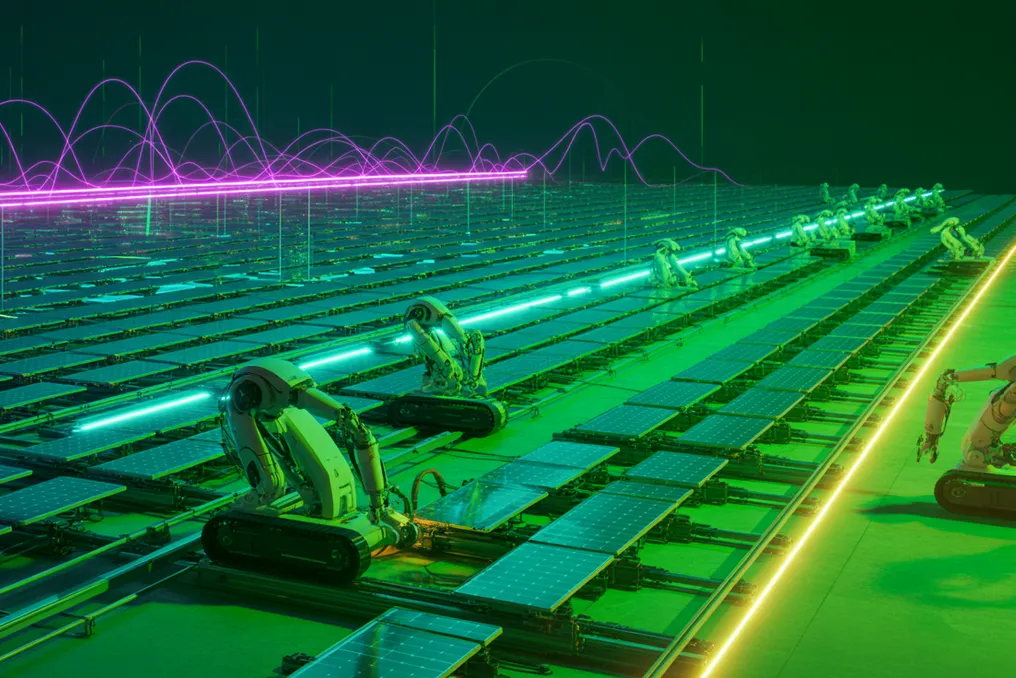
Founded by Punith Puri and Vishal Dugar, Gritt develops robotic systems to automate construction equipment. Its AI-based system can autonomously perform tasks such as material handling, assembly, placement, inspection, and project planning. Gritt's technology integrates with existing equipment on sites, allowing contractors to apply automation to their machinery and ensuring safe collaboration between robots and humans.
CEO Punith Puri noted that automating outdoor construction is more complex due to changing weather conditions, terrain specifics, and other unforeseen factors. He emphasized that their 'Physical AI' is specifically designed for such tasks, enabling the acceleration of construction for solar, bridge, and road projects, as well as large infrastructure projects like data centers, with robot support.
The company's platform continuously improves through learning from every completed project. Tasks that previously required months of system setup can now be adapted in just a few days, allowing robots to perform high-precision work on various construction sites. In addition to automation, Gritt collects real-time data from sites, including information on completed work, material movement, and changes in site conditions. This information helps project managers make faster decisions and optimize schedules.
The company has already implemented its systems in several large American construction firms involved in industrial-scale solar panel installation. According to Gritt, their robots have independently installed tens of thousands of solar panels without a single failure. Demand for automation is supported by industry challenges: it is expected that over 40% of the US construction workforce will retire by 2031, and the sector's overall productivity is declining, forcing companies to turn to AI and robotics to solve labor shortages.
Obvious Ventures stated that Gritt is creating a new category of physical AI by implementing intelligent automation in one of the most demanding industrial environments. Investors believe that the company's ability to learn after each deployment gives it a long-term competitive advantage. Gritt's long-term goal is to transform AI into a comprehensive object condition analysis platform that tracks resource usage, identifies potential workflow obstacles, and assists project managers in making real-time decisions. Ultimately, the startup aims to reduce manual labor for construction workers and allow contractors to accelerate the implementation of large-scale infrastructure projects, believing that intelligent robotics will become an integral part of modern construction.