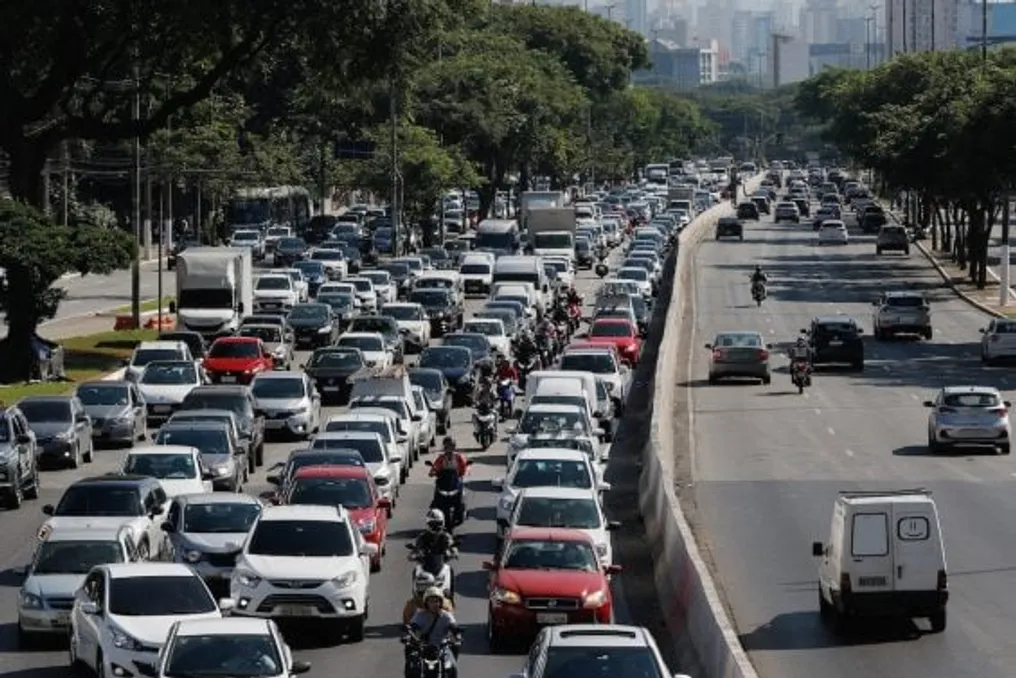
The intense flow and congestion of vehicles are recurring themes in discussions about urban mobility, but the impact of traffic noise on health is a less addressed aspect. Recent scientific research demonstrates that the continuous sound generated by cars, motorcycles, buses, and trucks should not be seen merely as an annoyance, but rather as a significant risk factor for physical and mental health.
Mental Health Risks
Various studies, published in journals such as Environmental Research and JAMA Neurology, indicate that traffic noise acts as a persistent biological stressor, capable of profoundly deregulating the body. An investigation conducted by the University of Oulu, Finland, monitored 114,353 young people in the Helsinki metropolitan area for up to ten years, mapping the effects of exposure to road and rail noise.
This study confirmed that exceeding the safety limit established by the World Health Organization (WHO), which is 53 decibels (dB), considerably increases the chance of young people developing depression and anxiety. Noise above this level ceases to be a simple discomfort and begins to exert direct psychological pressure on youth. It was observed that the risk of anxiety is lower when noise levels are between 45 and 50 dB in the quieter part of the residence, but rises drastically when exceeding the range of 53 to 55 dB. Furthermore, the link between noise and anxiety was stronger in men and in individuals whose parents had no history of mental health problems.
Impact of Nighttime Noise on Metabolism
The effects of noise go beyond psychology, directly affecting cardiovascular and metabolic health. Another study from the University of Oulu, also published in Environmental Research, analyzed data from over 200,000 adults in the UK, Netherlands, and Finland, focusing on noise during the night, a period when sleep is most vulnerable to interruptions. By evaluating 155 blood biomarkers, the research concluded that nighttime noise pollution from vehicles on roads or highways can lead to higher levels of cholesterol and fat-related metabolites in adults, both known risk factors for type 2 diabetes and arterial hypertension.
Prolonged exposure to nighttime noise exceeding 50 dB was associated with increased total cholesterol and LDL (bad cholesterol), elevated blood fat metabolites, and greater susceptibility to cardiometabolic diseases, such as hypertension and type 2 diabetes. The WHO recommends that nighttime noise not exceed 45 dB, emphasizing that nighttime noise subtly but constantly alters the body's biological markers.
Relation to Parkinson's Disease
In the neurological field, a comprehensive study conducted in Denmark, tracking over 3 million adults for almost two decades and published in JAMA Neurology, identified a correlation between prolonged exposure to traffic noise and an elevated risk of Parkinson's diagnosis. Participants exposed to higher noise levels showed a small but statistically significant increase in the risk of developing the condition.
The Danish findings highlighted that a gradual increase of about 11 dB on the facade most exposed to traffic was linked to a 3% increase in Parkinson's risk. Conversely, residences that had at least one side considerably quieter (with a difference of 10 dB or more compared to the noisy facade) demonstrated a protective effect for residents. However, the authors warn that the study is purely observational, indicating only a statistical association and not being able to state that noise is the cause of the disease.
Damage Mechanisms and Prevention
Despite different methodologies, science points to common biological mechanisms: sleep deprivation and fragmentation caused by nighttime noise; chronic stress, where the brain interprets constant sound as an alert, activating cortisol production; and inflammation and oxidative stress resulting from the prolonged biological response to stress, which affects cellular metabolism and the central nervous system.
To mitigate these public health damages, specialists suggest preventive actions by urban managers and planners, such as expanding green areas to absorb sound, implementing architectural designs that direct bedrooms to internal or quiet areas, and reducing speed limits in residential zones, encouraging the use of quieter tires.