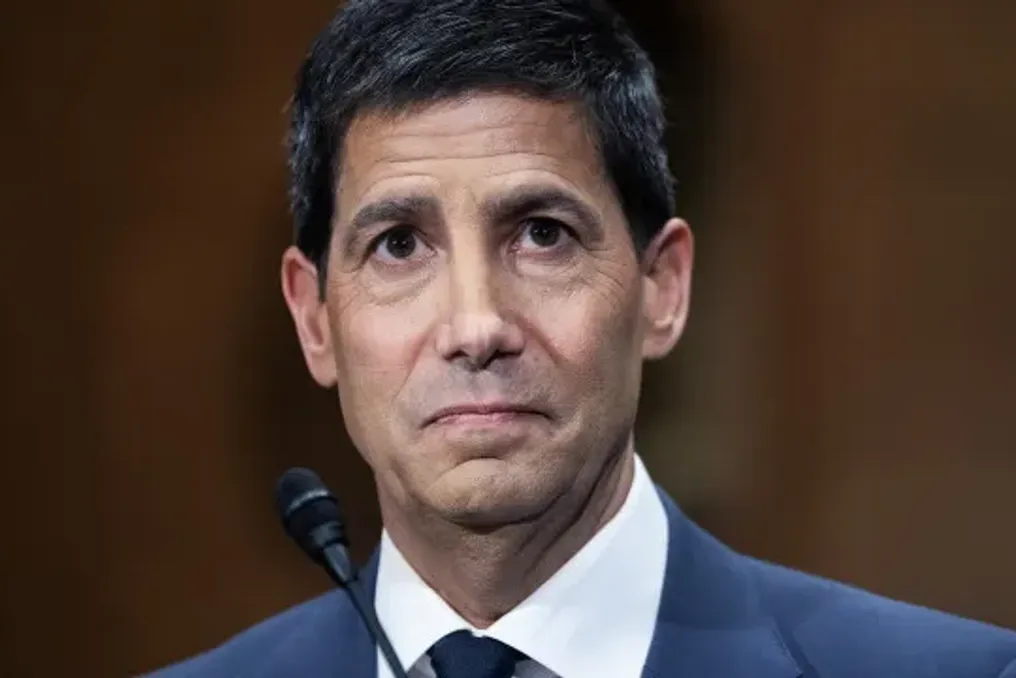
Kevin Warsh acknowledged that the Committee meeting was not unanimous, describing the discussions as a true 'family dispute'. The Committee's final decision was not unanimous, recording three dissenting votes and nine votes in favor of maintaining interest rates.
Stance and Economic Perspectives
Although he framed the debates as 'active and robust', Warsh did not elaborate extensively on the reasons for the disagreement, stating his belief that his team is best positioned to define the direction of monetary policy. He highlighted that the economy demonstrates 'impressive resilience', even in the face of recent shocks.
Warsh reaffirmed the Committee's commitment to achieving the Fed's 2% inflation target, declaring there would be no flexibility on this matter. However, he did not confirm a potential interest rate hike at the next session.
Inflation and Interest Rate Analysis
The Fed leader mentioned that they are analyzing inflationary dynamics, given that prices have remained high for five years, but did not present specific measures to meet the target. Furthermore, the Fed president reinforced that the institution will stop providing future projections, expecting the market to react in real time, 'without filters' and with less constraint due to these forecasts.
After a two-day meeting, the Fed decided to keep interest rates in the range of 3.50% to 3.75%, as announced in a statement. This decision reflects support for the Federal Reserve's dual mandate.
Decision Details and Global Context
The statement indicated that economic activity is growing solidly, despite the high uncertainty partly caused by the conflict in the Middle East. The Fed observed that productivity growth and capital investment are strong, and that employment growth accompanies the growth of the active population, keeping the unemployment rate nearly stable.
In contrast, inflation remains above the Committee's 2% target, attributed partly to supply shocks that raised prices in certain sectors, such as energy. The Fed guaranteed that it will ensure price stability. The statement also specified that the dissenting votes on the monetary policy measure were cast by Beth M. Hammack, Neel Kashkari, and Lorie K. Logan, who advocated for a 0.25 percentage point increase in interest rates.
Inflation has exceeded the central bank's target for over five years. The war in Iran contributed to economic uncertainty and drove up energy prices, intensifying inflationary pressure and creating a dilemma for Federal Reserve decision-makers. Hammack, Kashkari, and Logan had already expressed willingness to raise interest rates to combat high prices, according to the Associated Press.