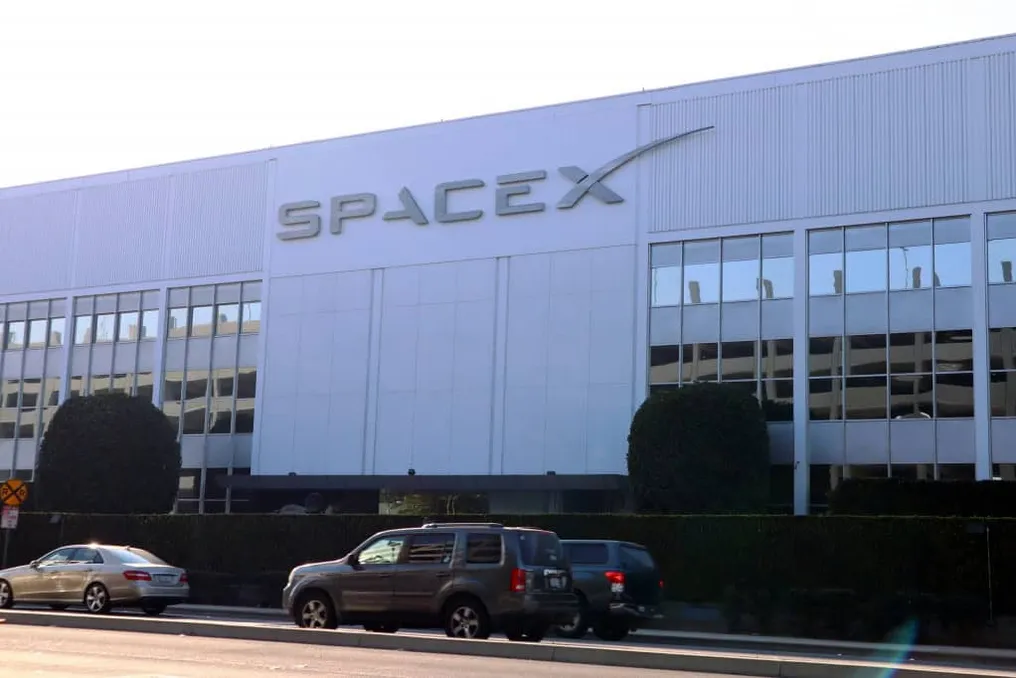
The heat shield of the Starship rocket, developed by SpaceX, potentially represents one of the most serious obstacles to Elon Musk's plans for a fully reusable vehicle capable of frequent short-interval flights.
Assessment After Test Flight
Three former NASA researchers concluded that the damage found in the thermal protection system during the latest test indicates that the current technology is still far from achieving its goal.
These concerns arose after the thirteenth Starship test mission on July 24. High-quality images taken after the ship landed in the Indian Ocean showed significant cracks and damage to the heat shield tiles while the craft was in the water.
According to experts, although the system prevented the ship from disintegrating during atmospheric re-entry, the observed damage suggests that the current design is not suitable for ensuring rapid reuse.
Protection System Functions
The tiles are part of the Thermal Protection System (TPS), which is designed to protect Starship from the extremely hot plasma generated during entry into Earth's atmosphere. This technology is critical for realizing Elon Musk's plans to sharply reduce the cost of spaceflights and ensure frequent missions to the Moon and Mars.
Starship also plays a central role in NASA's Artemis program, which plans to use it to deliver astronauts to the lunar surface. Despite the success of the last flight—the ship settled intact in the ocean, unlike previous tests that ended in explosions—specialists doubt the possibility of rapid multiple reuse due to the condition of the thermal tiles.
Experts' Opinion on the System
Charles Miller, a former senior NASA advisor and space policy consultant, told Bloomberg that the existing thermal protection system is a dead end for SpaceX's goals. He emphasized: 'The current thermal protection system is not good enough and is a dead end.' Miller added: 'You can achieve full reusability, but it won't be fast.'
Miller presented his analysis together with Daniel Rasky, a former NASA researcher specializing in heat shield materials, and Charles Kamarda, a former agency astronaut.
Musk's Acknowledgment of the Problem
After the test, Elon Musk announced in an X post that SpaceX would send a vessel to rescue Starship in the Indian Ocean. According to him, the craft will provide important information about the heat shield's performance during the mission.
SpaceX is developing Starship as the world's first fully reusable rocket. The project envisions that both the ship and the Super Heavy booster will return after each launch and be able to fly again within a few hours.
Nevertheless, Musk himself previously acknowledged that the heat shield remains one of the biggest technical challenges of the program. In September of last year, speaking on the All-In podcast, he stated: 'To achieve full reusability of the ship, there is still a lot of work to be done on the heat shield.'
SpaceX has not commented on the experts' criticism.
Comparison with Previous Technology
In the opinion of Miller, Rasky, and Kamarda, the tiles used on Starship resemble those used on the old NASA space shuttle. Although SpaceX has not disclosed the composition details, Rasky believes they are made of ceramic material, representing an evolution of what was used in space shuttles.
Previously, these tiles often required replacement or repair after each flight. For experts, such a process of inspection and repair would be incompatible with SpaceX's goal of high-frequency launches. Rasky noted: 'A significant amount of inspections, repairs, and replacements will likely be required.' He also participated in the development of the heat shield material for the Dragon capsule, which SpaceX uses to transport astronauts to the International Space Station (ISS).
He concluded: 'They can do it in a few days or weeks, but it won't be like an airplane you return, clean, refuel, and relaunch.'
Potential Consequences for Projects
According to Miller's assessment, the problem should not prevent SpaceX from using Starship to launch future versions of Starlink satellites at a slower pace. However, experts warn that the company's plans to launch up to a million satellites aimed at artificial intelligence (AI) data centers could suffer if rapid reusability is not achieved.
Furthermore, they suggest that the limitation could increase costs or delay astronaut delivery missions to the Moon under NASA's Artemis program. Meanwhile, companies such as the aerospace startup Stoke Space are working on developing new heat shield technologies requiring minimal maintenance between missions.
All three specialists also insist that NASA resume investments in next-generation thermal protection systems. The agency has also not commented on this matter.