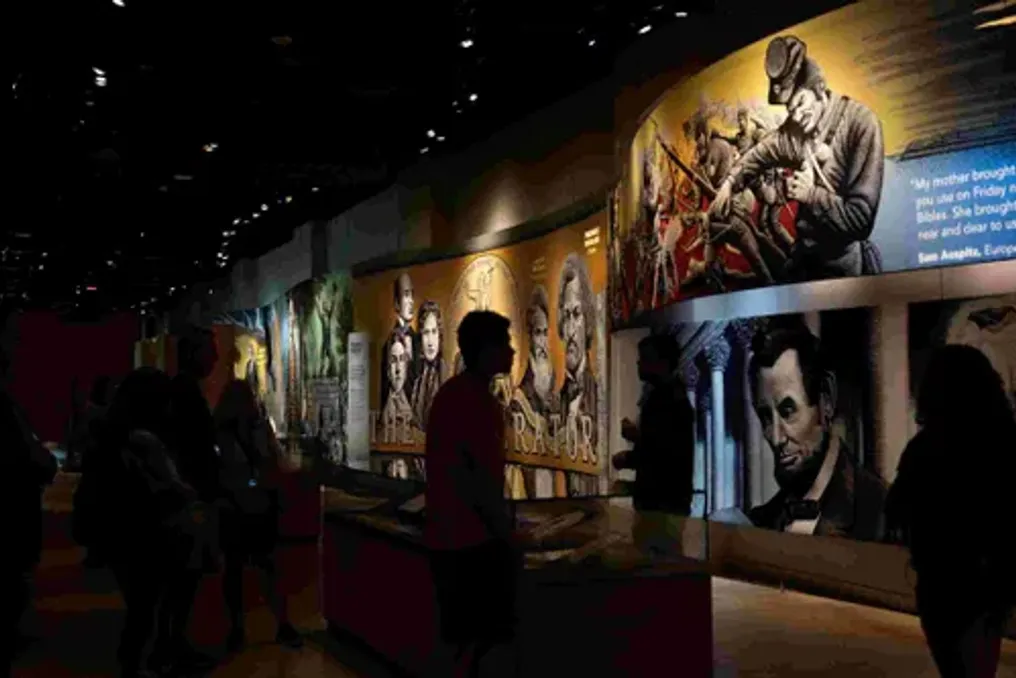
The Bible Museum in Washington, D.C., has unveiled its central exhibition for the country's 250th anniversary, titled 'Sacred Liberty.' This exhibit utilizes an extensive archive containing over 5,000 historical Bibles and sacred artifacts to examine the complex role of the Bible in the formation of the American Republic.
Exhibition Theme
The exhibition analyzes how Christian scriptures were used both to support and to counteract the American Revolution. It also addresses issues concerning religious tolerance for minorities and the views of early leaders on state prayer. Ultimately, the exhibit demonstrates that while foundational documents like the Constitution are largely secular, the cultural and moral foundation of the revolutionary era was deeply permeated by biblical ideas.
Curator and Historian Opinions
According to Senior Curator Anthony Schmidt, the Bible served as an important backdrop for founders' discussions on topics such as the function of government and the source of monarchs' rights. He noted that the 'great documents' studied by Americans on July 4th, including the Declaration of Independence and the Constitution, 'do not speak of faith,' but ignoring the Bible's influence means missing a vital part of history, as this world gave birth to those documents.
The exhibition, which opened on July 3rd, reflects the museum's dual mission: to use its rich collection and impressive building to tell a complex story while adhering to the principles of its evangelical founders and board of directors, who are required to sign a statement of faith in the truthfulness of the Bible.
Different Views on the Bible's Influence
Katerina Brekus, a historian of US religion from Harvard, believes the exhibition emphasizes evangelical views on the Bible during the founding, while overlooking other perspectives. She agrees that the Bible was key to the revolutionary discourse but stresses that it is not the only story.
Mark David Hall, a specialist in early America and religion from Regent University, argues that this exhibition is a necessary correction to the trend of recent decades where the Bible's influence in America has been downplayed. In his view, 'the Bible was undoubtedly the most important text in the founding of America,' and the exhibition highlights its 'very positive influence.'
Key Exhibits
Among the items selected to recount the founding are several artifacts. These include the Aitken Bible, described as belonging to the 'printer of the First Continental Congress' and being the first Bible printed in North America in English, known as the 'Revolution Bible.' The Congress highly valued Aitken, but some experts suggest that the history of this Bible is more related to the founders' wavering regarding the place of religion in the new country.
Thomas Jefferson's Letter is also displayed. After retiring, Jefferson wrote a letter to a church in Connecticut concerning religious freedom, praising the Constitution for protecting 'conscience rights from civil authority enterprises.' In another letter from 1802, Jefferson defined the First Amendment as a 'wall of separation between church and state.' The exhibition is shown against the backdrop of the Supreme Court weakening this wall in recent decades by expanding the use of tax funds for religion and public prayers by officials.
The exhibit includes Jude Monis's textbook, the first Jewish textbook printed in America, illustrating early Jewish life. A Jewish prayer book and marriage contract are also included. Schmidt notes that these items show the participation of this then-small community in early America, laying the groundwork for future growth and integration, although the exhibition does not cover the discrimination of that time, including laws prohibiting Jews from holding public office and restricting their worship. It is noted, however, that Monis became the 'first Jew to receive a university education in the colonies' in 1720 at Harvard, although he had to convert to Christianity to earn his degree and subsequently teach.
Another significant exhibit is the sermon of Jacob Duchesne. Duchesne was the chaplain of the First Continental Congress, where in 1774 he delivered an inspiring sermon calling for the defense of God for those who 'fled to Thee from the lash of the oppressor.' The exhibition also displays a similar sermon from 1775, delivered by him after the battles of Lexington and Concord. Duchesne's history is complex, as he later withdrew his support for the revolution.