Terms such as mining, hashing, or mining rigs are often used in the crypto community, but they can cause misunderstanding. Cryptocurrency mining, in simple terms, is the process of verifying transactions and subsequently including them in the blockchain network.
When someone sends cryptocurrency, such as Bitcoin, this operation must be confirmed. Miners take on the function of verifying such transfers and packaging them into blocks. After a block passes verification, it is added to the blockchain. Companies engaged in mining reward this work by providing miners with new coins and a portion of the fees paid by users.
Thus, the main function of crypto mining is to ensure the security of decentralized networks and introduce new coins to the market. This process is not centralized, which excludes the participation of banks or intermediaries; it is supported by a network of competing computers that manage the blockchain.
How Mining Works (PoW and Hashing)
To understand the mechanism of crypto mining, it is necessary to examine the Proof of Work (PoW) consensus mechanism. Most major cryptocurrencies, including Bitcoin, use this mechanism. It is important to note that mining is primarily limited to cryptocurrencies operating on the Proof-of-Work principle.
Blockchains based on PoW consist of blocks containing transaction data. To add a new block to the chain, miners must solve a complex mathematical problem related to the hashing process. A hash is a unique digital signature generated using a specific algorithm (e.g., SHA-256 for Bitcoin).
Miners use their computers to guess a specific number known as a nonce (number used once). This number, along with the block data, must produce a hash that meets the specified requirements. Since it is impossible to predict the result of the hashing, miners are forced to make trillions of guesses every second. It is this work that ensures network security by authenticating the blockchain against attackers trying to alter the transaction history. The network rewards miners for completing this task with cryptocurrency.
Methods of Cryptocurrency Mining
There are three main ways to mine cryptocurrency:
Hardware Mining: The user purchases specialized equipment (usually GPUs or ASICs) and then installs mining software.
Mining Pools: A group of miners combines their computing power to increase the probability of successfully solving a block.
Cloud Mining: In this case, a remote data center provides computing power for rent. The user makes an initial payment and receives a share of the power and rewards.
What is a Mining Rig?
A mining rig is a specially designed computer system intended to perform hashing operations. These devices differ from regular PCs in that they are optimized for high data processing performance and efficient cooling.
Components of a proper mining rig include: graphics cards (GPUs) or ASIC miners, a power supply unit (PSU), a cooling system, a motherboard, and a processor, as well as specialized mining software.
Types of Mining Rigs
Mining rigs come in two types. GPU rigs are based on the use of high-performance graphics cards (from NVIDIA or AMD) to mine altcoins such as Monero or Ravencoin, and can also be used for gaming and video editing. ASIC miners, conversely, are designed to mine one specific algorithm (such as Bitcoin's SHA-256) and possess greater efficiency due to this specialization.
Solo Mining vs. Mining Pools
In solo mining, the user works alone, retaining full control over settings and 100% of the profit. However, due to the increasing complexity of the network, the probability of a single machine solving a block is extremely low. This is why most miners join mining pools, combining their computing resources with other participants for more frequent solution finds. Pool advantages include regular payouts and a lower barrier to entry, although the share of payouts decreases due to the need to share profits, and fees can be high depending on the platform.
Features of Cloud Mining
Cloud mining suits those who want to avoid the noise, heat, and electricity costs associated with physical setup. In this model, the user pays the services of a company that owns large equipment farms. Essentially, they rent a portion of the hash power for a specific period. This is the simplest form of mining because it does not require owning or managing equipment, but it carries risks: profits often do not match what operators claim, and contracts usually require a long term.
Advantages and Disadvantages of Mining
Among the pros of mining is the possibility of generating passive income, as the rig can generate rewards around the clock. There is potential for very high return on investment (ROI) if the coin is mined at a low price and its value subsequently rises sharply. Furthermore, miners are the foundation of the blockchain, supporting its decentralization and inaccessibility to central authorities. Also, GPU rigs can have value when resold in the secondary market for gaming goods.
On the other hand, there are negative aspects. Mining is very energy-intensive, which quickly erodes profits. Technologies develop rapidly, and a modern ASIC can become obsolete in just two years. Market volatility means that the price of mined coins can drop overnight, turning a profitable business into a loss. Finally, governments are increasing control over tax implications and the environmental impact of mining.
Conclusion: Should You Start Mining?
Compared to earlier periods, cryptocurrency mining is no longer a simple way to earn money. Today, it is a game of efficiency. Nevertheless, given the necessity of mining for the functioning of cryptocurrencies, this practice remains a profitable business. For beginners, the most realistic option is to join a pool or mine less competitive altcoins. Before expanding operations, you should calculate the cost of electricity and equipment using a profitability calculator.
Trading cryptocurrency using leverage has become very popular in recent years. However, this concept can seem complex for beginners. This guide aims to explain as simply as possible what leverage is, how it functions in the crypto sphere, and when it should be used and when it should be avoided.
Definition of Leverage in Crypto Trading
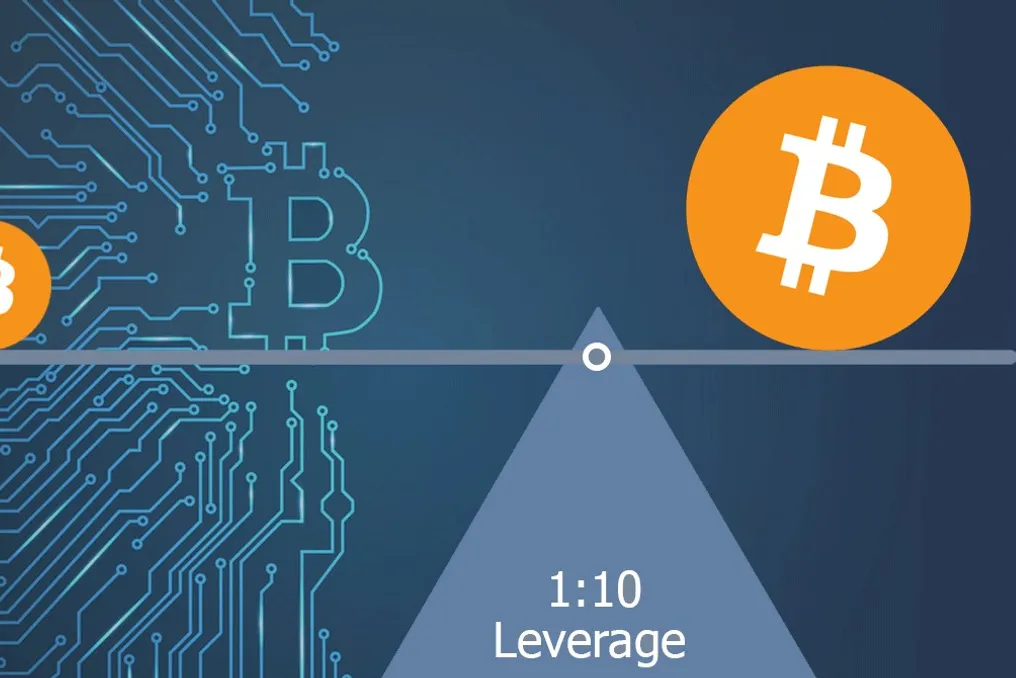
Essentially, leverage in crypto trading is the practice of using borrowed funds to increase your buying or selling power. This can be viewed as a temporary loan taken from an exchange. Thanks to these borrowed funds, you can execute trades with a much larger asset volume than what you actually own.
In standard spot crypto trading, if you have $1000, you buy Bitcoin worth $1000. If the price of Bitcoin increases by 10%, you earn $100. When using crypto leverage, you can use those same $1000 as collateral to open a $10,000 position (10x leverage). With such a larger trade size, if the price of Bitcoin rises by the same 10%, your profit will be $1000. Nevertheless, higher profit potential comes with increased risks.
How Leverage Works
To understand how leverage works in crypto, you need to grasp the lending model from the exchange to the user. Exchanges that provide funds for leveraged trading are commercial entities, so they do not do it for free. They require collateral, called Margin, to ensure they do not incur losses if your trade fails.
Understanding Types of Margin
Margin is essentially the crypto assets you deposit as collateral to open a large position. There are two types of margin, and it is important to know both. The first is Initial Margin, which represents the minimum amount of equity required to open a leveraged position. The second type is Maintenance Margin, which is the minimum capital that must remain in your account to keep the position open. If your account balance drops below this threshold due to market losses, you risk a margin call.
Multiplicative Effect and Position Types
Leverage is expressed as a coefficient, which is the multiplicative effect. It shows how many times your initial capital is multiplied. When you see 5x, it means you are trading $5 for every dollar. At 10x, you are trading an amount 10 times greater than your starting amount. 100x leverage is usually limited to Bitcoin trading, where a $100 deposit can open a $10,000 position. A very high multiplier has a dual effect: while huge profits can be made, the risks are also great.
100x leverage implies that any move against you of 1% will lead to the loss of 100% of your collateral. Furthermore, only some leading platforms for high-leverage crypto margin trading, such as MEXC, offer such a multiplier.
Leveraged cryptocurrency trading is available not only in a bull market; it can also be used in a bear market. This is where long and short positions come into play. In a long position (Longing), you borrow funds to buy an asset hoping its price will rise, and then sell it back, repay the loan, and receive the difference. In a short position (Shorting), you take an asset, such as BTC, and sell it on the spot market. If the price falls, you repurchase it at a lower price, deliver the BTC to the lender, and keep the profit.
Risk Management: Isolated vs. Cross Margin
A key aspect of leveraged trading is risk management in different modes. Most platforms offer two modes. In Isolated Margin mode, the risk is limited to a specific trade; if that trade fails, you only lose the percentage allocated to that position. In Cross Margin mode, your entire account balance is used as collateral. While this prevents liquidation during short-term price drops, a more significant decline can automatically empty your wallet.
Different Types of Crypto Leverage
There are several ways to approach crypto leverage trading. Depending on the chosen exchange, you can trade various instruments. Crypto margin trading is the most common form, where you borrow funds directly from the exchange or other users to buy more spot crypto. This is often used for short-term speculation and involves daily interest payments on the borrowed amount.
Cryptocurrency futures and perpetual contracts are used to buy or sell an asset at a specific price at a given future time. In the crypto sphere, perpetual swaps offer additional advantages because they have no expiration date and are tied to the true price of Bitcoin or Ethereum via a funding rate. Options give you the right (but not the obligation) to buy or sell at a specific price. Although this is more typical of traditional finance, options are also available in the crypto sphere. CFDs (Contracts for Difference) are simply betting on price changes, where you never own the underlying currency.
What is Liquidation in Crypto Trading?
Liquidation means the end of the game in leveraged cryptocurrency trading. Since exchanges are businesses, they cannot assume all the trader's risks. When an exchange detects that your trade is losing money and has reached the depletion point of the Initial Margin, it automatically closes your position. This closure is called liquidation. Upon receiving a liquidation notification, you understand that you have lost 100% of the collateral you allocated to that trade. Exchanges do this to protect their own funds from losses on your position and to prevent you from having a negative balance.
Spot Trading vs. Leverage
If you do not want to risk the risks associated with leveraged trading, you can engage in spot trading. While using leverage, you borrow to trade large volumes, whereas in spot trading, you directly buy or sell the crypto asset at current prices. The main differences between these methods are as follows: beginners are recommended to start with spot trading, while leverage is suitable for experienced traders willing to accept the associated risks.
Step-by-Step Guide to Leveraged Trading
After understanding the principle of leverage, let's look at how to trade it on an exchange, such as Binance. You need to choose a reliable exchange with high liquidity to avoid scam candles that cause liquidations. Then, you need to deposit collateral (USDT or BTC) into the Futures or Margin account. Next, select the margin mode and the desired leverage level, with beginners advised to start with small values, such as 2x or 3x, avoiding promises of 100x. It is crucial to set a stop-loss to automatically close the trade upon reaching an acceptable loss. You must also constantly monitor the trade and adjust the stop-loss to a profit zone if the result is positive. It should be noted that maintaining an open trade may require paying a fee every 8 hours.
Pros and Cons of Trading Bitcoin with Leverage
Advantages include the ability to earn huge profits from small price fluctuations (1-2%) and using a small capital to access large trade sizes. Additionally, BTC holders can use leverage for short selling to hedge their portfolio during a market crash. Disadvantages include the high volatility of crypto leverage, where one small market move can zero out the balance. Also, the stressful state of watching a leveraged position and the need to master complex concepts such as funding rates, mark prices, and liquidation prices require a steep learning curve.
Conclusion for Beginner Traders
Beginner traders are strongly advised to approach leveraged trading with extreme caution. The process should only begin when you have a proven trading strategy and a disciplined approach to risk management. Crypto leverage is a tool for professional growth, not a get-rich-quick scheme. If you are just starting, stick to spot trading until you understand market cycles. When moving to leverage, start with 2x and always use a stop-loss to minimize risks.