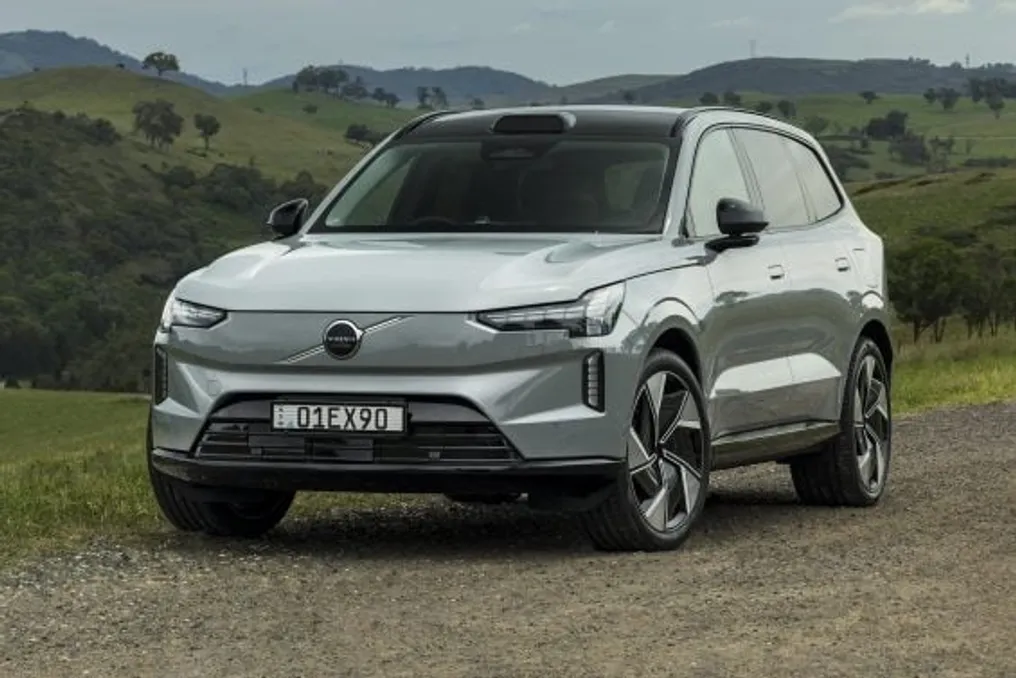
The Swedish manufacturer Volvo has decided to permanently abandon LiDAR technology in the EX90 and ES90 electric vehicles. With the removal of the laser scanning sensor from the roof, the automaker has also suspended the development of driver assistance features that relied on this equipment and initiated a compensation process for customers who purchased the cars expecting these technologies.
Compensation for Owners
Regarding compensation, Volvo Cars informed that owners in Norway will receive 18 thousand Norwegian kroner, which corresponds to approximately US$ 1,900. This amount is equivalent to the discount already applied to the 2026 model year versions manufactured without the LiDAR package. In the United States, the brand is offering benefits amounting to US$ 1,500, which can be used for options such as maintenance plans and charging credits. In Sweden, 16 thousand Swedish kronor were removed from pending orders until November. Furthermore, owners in the Netherlands and Canada reported receiving 1,500 euros and 2 thousand Canadian dollars, respectively, according to the website Electrek.
End of Partnership with Luminar
This strategic change began taking shape in November 2025, when Volvo started producing the two models without the sensor. A few days later, the automaker formally terminated the contract with Luminar, the American supplier of the equipment. The American division of Volvo Cars justified this decision by stating that it aimed to reduce the company's vulnerability in the supply chain, which was a direct result of Luminar's inability to fulfill its contractual obligations.
Functioning and Replacement of LiDAR
LiDAR, which stands for light detection and ranging in English, uses laser pulses to create a three-dimensional map of the environment around the vehicle, feeding safety systems with a night range of about 250 meters. Luminar had been the exclusive supplier of this component since 2020, a period during which Volvo also invested in the company. With the decision, the sensor ceased to be a standard item, becoming optional for the 2026 model year and subsequently being completely eliminated from the offering. The Polestar 3, which shares the SPA2 platform with the EX90, also lost this feature.
Safety and Luminar's Situation
Despite the removal of the LiDAR hardware, Volvo assures that both models continue to meet the brand's internal safety standards and maintain a high level of driver assistance thanks to its central computing architecture and remaining sensor suite. Specifically, the EX90 retains five radars, eight external cameras, two internal cameras, and 16 ultrasonic sensors. On the other hand, Luminar faced difficulties after the contract termination. The company had requested substantial damages from Volvo and suspended new deliveries of the Iris sensor before seeking legal protection in the United States on December 15, 2025, in the Southern District of Texas bankruptcy court. Under Chapter 11, Luminar presented a liquidation plan and negotiated the sale of its chip division to Quantum Computing for US$ 110 million.
Debate on Autonomous Driving
This incident reignited the debate over which technology should guide autonomous driving. Elon Musk, of Tesla, commented on a post about the compensation, arguing that he had warned automakers, given that humans drive using neural networks and optical sensors. However, this argument has limitations, as the EX90 continues to use radars and ultrasonic sensors, indicating that it has not migrated to a purely visual architecture. In the Brazilian market, the EX90 has been marketed since 2025 for around R$ 850 thousand, imported from the United States, and LiDAR was cited as a selling point of what the brand considered its safest car up to that point. As of the publication of this article, Volvo had not communicated whether there would be any compensation for buyers in Brazil.