The Deputy Minister of Mining and Geology of Uzbekistan, Rustam Yusupov, met with a delegation from the Interstate Water Coordination Commission to discuss expanding joint work on the study and sustainable use of groundwater resources.
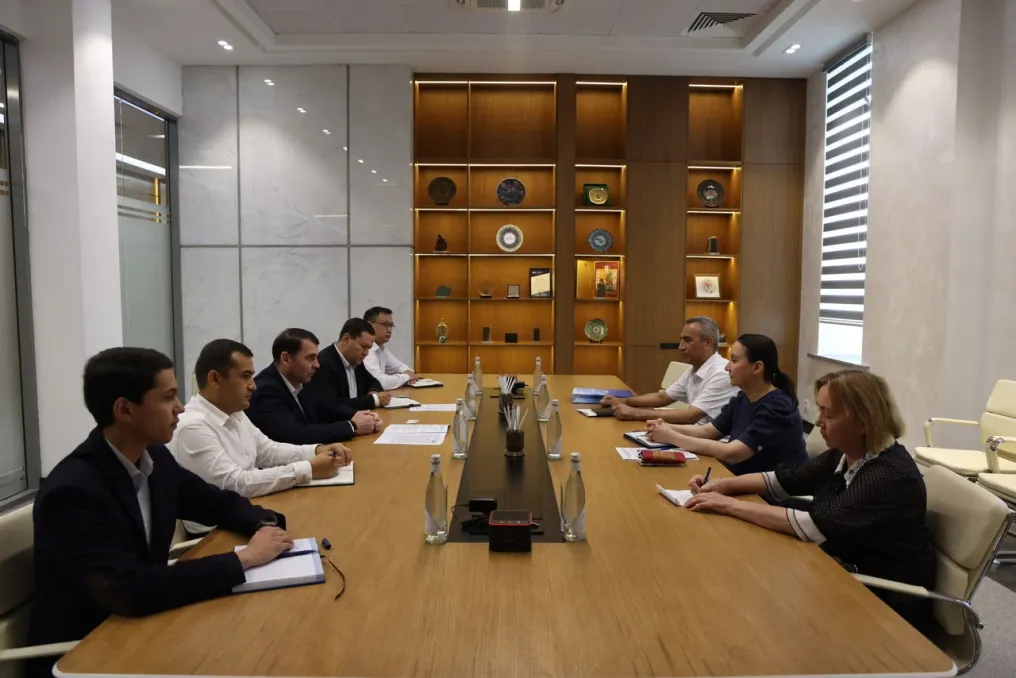
The Deputy Minister of Mining and Geology of Uzbekistan, Rustam Yusupov, met with a delegation from the Interstate Water Coordination Commission to discuss expanding joint work on the study and sustainable use of groundwater resources.
Specialists from the state institutions Uzbekhydrogeology and the Institute of HYDROENGINEERING took part in the meeting. Participants reviewed achievements in ensuring the sustainable use and protection of groundwater in Uzbekistan. Furthermore, they exchanged information on projects being implemented in Central Asia aimed at promoting water resource management, climate change adaptation, as well as international and grant projects concerning transboundary waters.
Following the meeting, the parties agreed to prepare and sign a memorandum of understanding between the Ministry of Mining and Geology of the Republic of Uzbekistan and the Interstate Water Coordination Commission. This memorandum provides for cooperation in researching transboundary aquifers and geothermal resources within the water-energy-land (NEXUS) approach, implementing an automated monitoring system, and jointly organizing events for the professional development of hydrogeologists in the fields of international water diplomacy and water law.
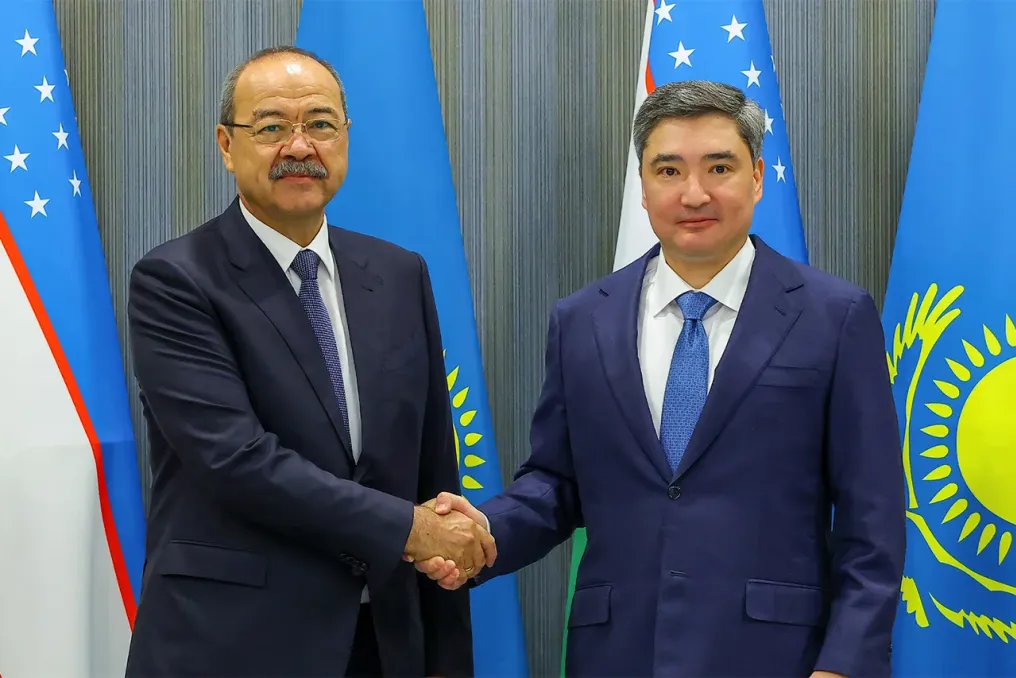
The First Minister of Uzbekistan, Abdullah Aripov, and the First Minister of Kazakhstan, Olzhas Bektenov, held the twenty-third meeting of the Joint Intergovernmental Commission on Bilateral Cooperation in Aktau. At this meeting, they reviewed the progress of previously reached high-level agreements and determined priority areas for further interaction, according to the press service of the Government of Kazakhstan.
According to Bektenov, cooperation between Kazakhstan and Uzbekistan continues to actively develop thanks to the political dialogue between the Presidents of Kazakhstan, Kassym-Jomart Tokayev, and the President of Uzbekistan, Shavkat Mirziyoyev. He noted that this process serves as an example for the entire Central Asian region. The results of the state visit of the President of Kazakhstan to Uzbekistan last November confirmed the high level of trust between the two states.
Aripov emphasized that the meetings of the leaders of the two countries in Bukhara, Astana, and Turkestan set concrete tasks for the governments to deepen cooperation. He expressed readiness to ensure the implementation of these tasks, noting that the negotiations will contribute to the development of trade, investment, industry, transport, interregional connections, as well as cultural and humanitarian relations.
According to data from the Kazakh side, bilateral trade reached a volume of 4.8 billion US dollars in 2025. Furthermore, from January to May 2026, trade turnover increased by 37% compared to the previous year, amounting to 2.3 billion US dollars. Participants focused on implementing the Roadmap for Investment and Trade, which is valued at 7.8 billion US dollars. Projects under this roadmap are designed to diversify trade, expand product supplies, and attract new investments.
Industrial cooperation became another important topic of discussion. Currently, both countries are working on 80 joint projects worth more than 1.8 billion US dollars. Of these, 15 projects worth 227 million US dollars have been completed, creating about 5,000 jobs. Six other projects worth 102 million US dollars are in the implementation stage, and 59 initiatives totaling 1.5 billion US dollars are under consideration.
The First Ministers also analyzed the state of transport routes and logistics corridors. Railway freight transport between the countries increased by 16% in 2025, reaching 32.3 million tons. To increase transport volumes, the parties developed a joint action plan aimed at increasing the capacity of railway corridors from 35 to 60 million tons. Kazakhstan proposed modernizing cross-border railway infrastructure and opening additional border crossing points.
The meeting also highlighted positive trends in the use of Kazakhstan's maritime infrastructure and the development of road transport. Participants reported that the introduction of the E-Permit electronic foreign permit exchange system has allowed the number of permits to increase more than tenfold over the past four years, while reducing border crossing time from nine hours to 30 minutes.
The sides reaffirmed their commitment to continuing cooperation in water resource management, taking into account the interests of both countries. They also stressed the importance of expanding cultural and humanitarian ties, including joint efforts to include historical and cultural sites of Kazakhstan and Uzbekistan in the transnational UNESCO nomination 'Great Silk Road: Fergana-Syr Darya Corridor.'
Following the expanded format of the meeting, the sides agreed to strengthen cooperation in industry, transport, transit, and other sectors of the economy. Aripov and Bektenov signed the protocol of the twenty-third meeting of the Joint Intergovernmental Commission on Bilateral Cooperation.
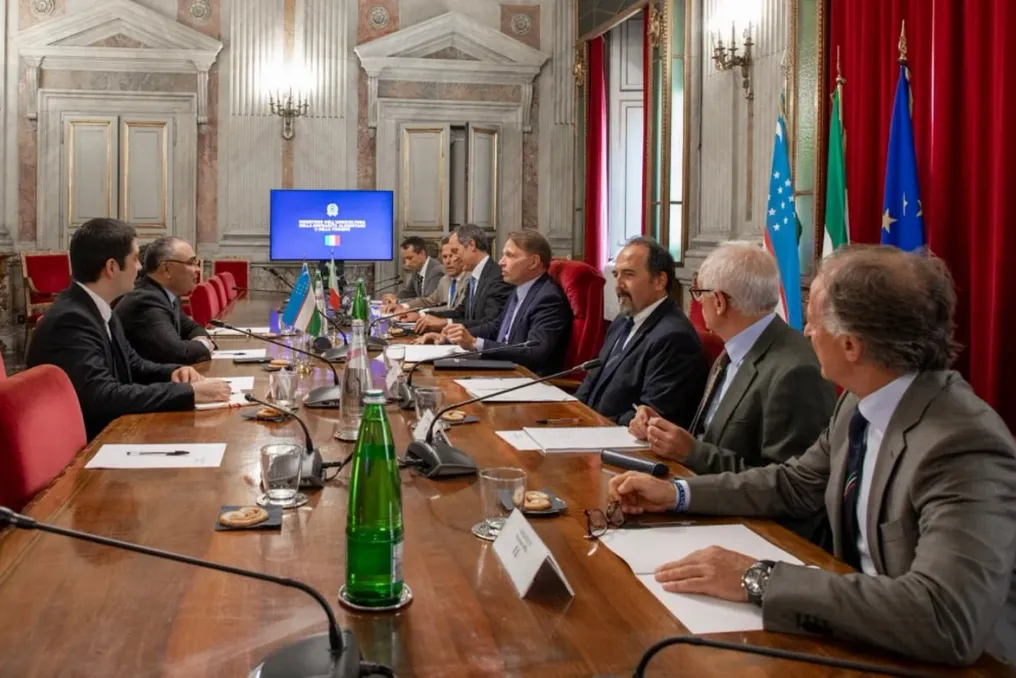
Uzbekistan and Italy have reached an agreement to expand cooperation in the field of agriculture, accelerate the implementation of joint investment projects, strengthen scientific cooperation, and introduce modern technologies.
The agreements were concluded during the meeting between Uzbekistan's Minister of Agriculture, Ibrohim Abdurakhmonov, and Italy's Minister of Agriculture, Food Sovereignty and Forestry, Francesco Lolobrigida. The meeting took place during the 30th session of the Committee on Agriculture (COAG) at the headquarters of the Food and Agriculture Organization (FAO) in Rome.
The ministers discussed areas for expanding bilateral interaction, including the introduction of advanced technologies, strengthening scientific cooperation, and accelerating the launch of joint investment initiatives. Abdurakhmonov noted that Uzbekistan continues reforms aimed at modernizing the agricultural sector, increasing production efficiency, and digitizing the industry. He emphasized that utilizing advanced Italian experience and modern technologies is one of the priorities of this bilateral cooperation.
The parties also agreed to study the possibility of introducing the AntiFraud digital system into Uzbekistan, which is used in Italy in the insurance and payment sectors. This technology is intended to increase the transparency of financial operations, reduce corruption risks, and improve managerial efficiency. Furthermore, attention was paid to scientific cooperation: the parties agreed to deepen interaction between the Italian Council for Agricultural Research and Economics (CREA) and the Academy of Agriculture of Uzbekistan, which includes joint research projects and the exchange of scientific and academic personnel.
The ministers also considered accelerating joint projects involving the Italian company Bonifiche Ferraresi, as well as the possible adaptation in Uzbekistan of the Italian mechanisms of Contratti di Filiera and Contratti di Distretto. These mechanisms are used to develop production chains and agro-industrial clusters. Lolobrigida noted that the trilateral cooperation model involving Uzbekistan, Italy, and Azerbaijan has already demonstrated practical results and holds great prospects for further development.
At the conclusion of the meeting, both sides reaffirmed their commitment to strengthening strategic partnership in agriculture, expanding the transfer of innovative technologies, increasing scientific exchanges, and accelerating the implementation of joint investment projects.
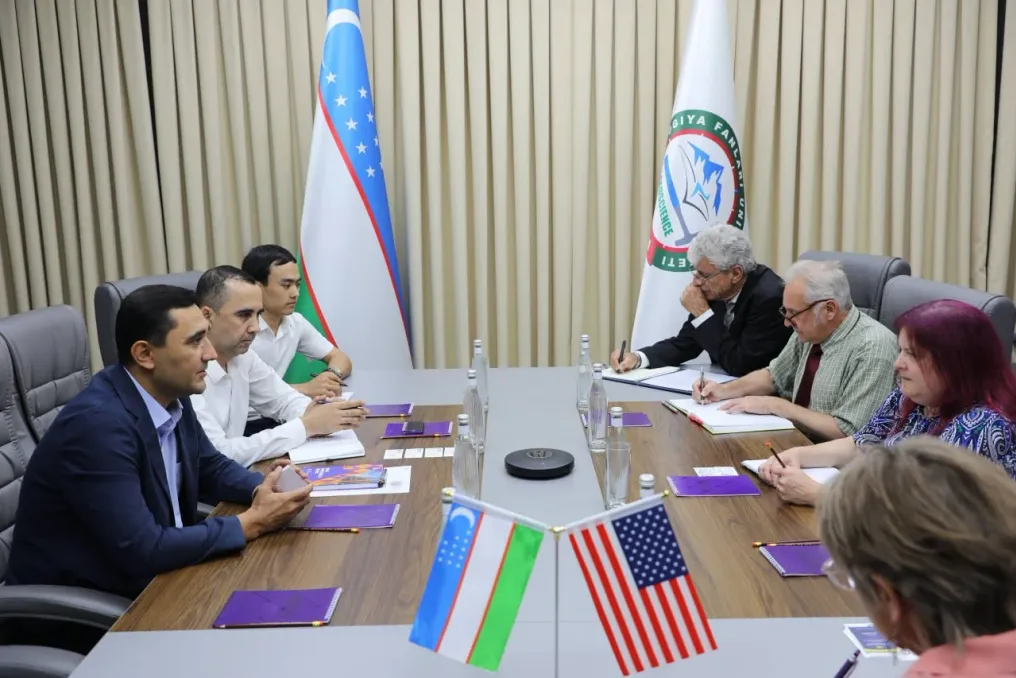
In Tashkent, Uzbekistan, the University of Geological Sciences held a meeting with a delegation from the U.S. Geological Survey (USGS) on July 14. The goal of the negotiations was to discuss opportunities for deepening scientific interaction between the parties.
The discussed issues covered geological mapping, expanding joint research work, organizing scientific seminars and classes, as well as developing the university's laboratory base and implementing potential joint projects.
At the conclusion of the meeting, representatives of both sides expressed their interest in further strengthening the partnership. They voiced readiness to support scientific research and train qualified specialists in the field of geology.