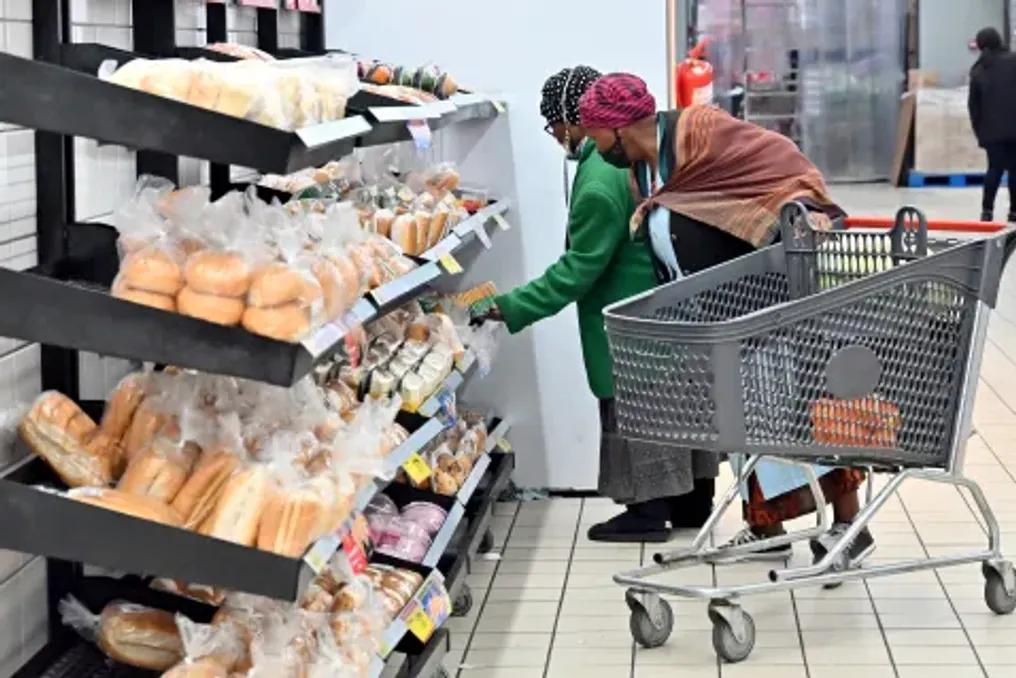
The cost of the household food basket increased again in July, prompting civil society organizations to warn of worsening food insecurity across South Africa. The rise in food prices is coupled with stagnant social grants and high unemployment.
Basket Cost Data
According to the latest Household Affordability Index published by the Pietermaritzburg Group for Economic Justice and Dignity (PMBEJD) on Wednesday, the average cost of a food basket reached R5,530.52 in July. The index showed that the basket grew by R28.11 per month and R87.81 compared to the same month last year, highlighting constant pressure on low-income families despite relatively moderate overall inflation.
Food Price Changes
Mervyn Abrahamse, director of PMBEJD, noted a significant increase in prices for several staple foods. Among the items whose prices rose by 5% or more in July 2023 were apples. Goods whose prices increased by 2% or more include maize meal, vegetable oil, salt, potatoes, frozen chicken portions, bouillon cubes, eggs, sausages, beef offal, tomatoes, sweet potato, cabbage, cream, canned mackerel, peanut butter, and sausage.
Some products saw price decreases. Abrahamse reported that items such as carrots decreased in price by 5% or more, while others, including cake flour, samp, onions, soup, tea, beef liver, fish, spinach, green pepper, canned beans, bananas, oranges, and margarine, showed price reductions of 2% or more.
Regional Price Fluctuations
According to Abrahamse, the increase in food basket prices was recorded in Johannesburg (R50.07), Cape Town (R69.26), Springbok (R164.70), and Mutatuba (R129.49). Meanwhile, Durban saw a price decrease of R40.31, Pietermaritzburg—a decrease of R2.56, and Mthatha—a decrease of R74.15.
Inflation and Poverty Context
This report was released after the South African Statistics Agency reported an overall inflation rate of 5.0%, while food and non-alcoholic beverage inflation stood at 0.4% monthly and 1.6% annually. Abrahamse emphasized that the affordability crisis cannot be understood without considering the number of people dependent on a single source of income. He noted that for Black South African workers, one wage often has to support four people, with the maximum wage of R5,562.32 when distributed among a family of four amounting to only R1,390.58, which is below the National upper poverty line of R2,846 per capita per month and below the National lower poverty line of R1,415 per capita per month.
Impact on Low-Income Groups
Siyanda Baduza, a researcher from the Basic Income Project at the Institute for Economic Justice (IEJ), stated that the latest increase placed additional strain on poor households. He pointed out that the average basket increased by more than R20 per month and more than R150 since last year. Meanwhile, the largest grant, the child support grant, only increased by R20 from last year, and the SRD grant remains at a negligible level of R370, with its last increase in 2024.
Aliya Chikete, a project staff member at the Alternative Information and Development Centre (AIDC), noted that the cost of a basic nutritional basket reached R962 per person per month, while the SRD grant remained unchanged at R370. She stressed that this covers only 38% of what a person needs to meet the most basic nutritional requirements. Chikete argued that the continued exclusion of eligible recipients from the grant system, combined with high unemployment and deepening poverty, exacerbates hunger nationwide.
Future Warnings
Evashni Naidu, Regional Manager for Black Sash in KwaZulu-Natal, stated that many of the products whose prices have risen are staple foods relied upon by most households. She warned that as food costs continue to rise and fuel price instability remains an issue, it is highly likely that both food and fuel prices will be affected this year. Naidu called on the government to take action to combat food insecurity during the presentation of the Medium-Term Policy Statement in October, noting that the rising cost of living diminishes the value of previous social grant increases implemented this year.