Google is dismantling the team responsible for AlphaFold, an artificial intelligence system dedicated to predicting protein structures, and reallocating researchers to other initiatives, including advancing Gemini. It is estimated that approximately a quarter of the authors of the initial scientific papers on AlphaFold have left Google DeepMind.
Researcher Redirection
Google DeepMind confirmed that some collaborators were internally reassigned to projects focused on the large language model Gemini, as well as areas such as genomics, nuclear fusion, and enzyme design. Other professionals were transferred to Isomorphic Labs, an Alphabet company focused on drug discovery. Alphabet acts as the controller of Google and several other science and technology entities.
Strategic Shift at the Lab
According to the Financial Times, these movements reflect a change in DeepMind's scientific priorities. Pushmeet Kohli, Vice President of Research at Google DeepMind, informed the FT that the lab's strategy has changed. He mentioned that for the last nine years, the focus was on major challenges with specific goals, but now the lab encompasses Gemini-based systems to assist scientists, in addition to developing AI agents to compete with Anthropic and OpenAI.
Key Scientist Movements
John Jumper, one of the 2024 Nobel Laureates in Chemistry for his work on AlphaFold, was assigned to the team working on developing Gemini's code generation capabilities. Recently, Jumper left Google and joined Anthropic. His colleagues in three-dimensional protein structure, Jonas Adler and Alexander Pritzel, followed the same path. An anonymous Google DeepMind employee told the FT that these departures caused internal surprise, given that the three were considered crucial members of the lab.
About AlphaFold
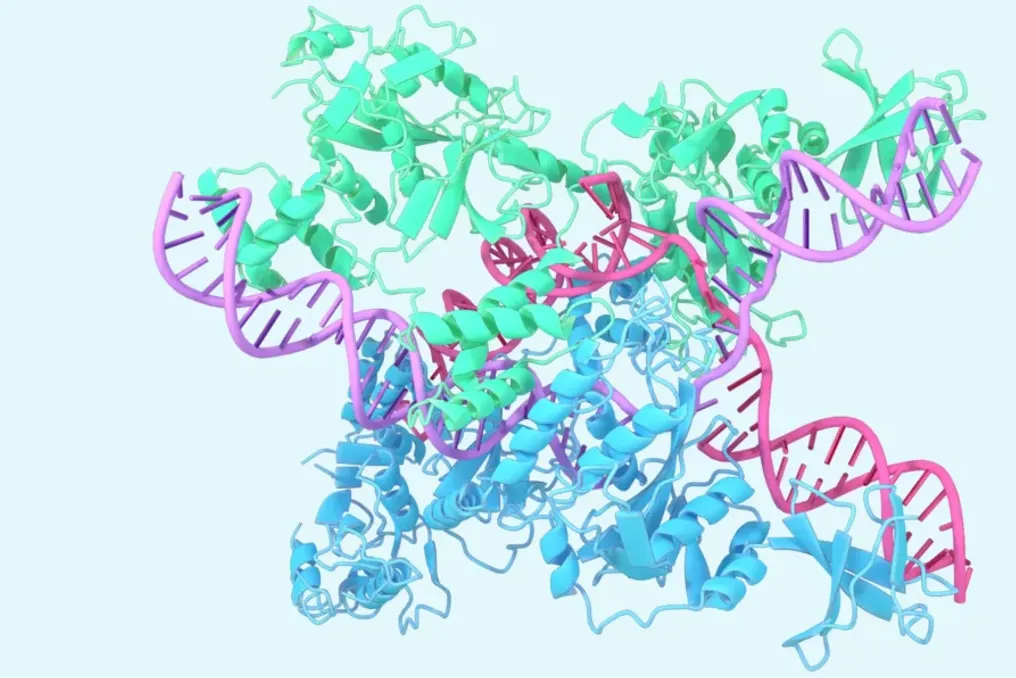
AlphaFold is software designed to predict and generate three-dimensional protein models using diffusion models, the same AI technology used in image generators. Thanks to this tool, researchers have been able to anticipate the structures of almost all 200 million proteins cataloged to date, offering a faster and more economical method than previous approaches, which could accelerate the development of protein drugs.
DeepMind and Google History
The project began in 2018, when DeepMind still operated as an Alphabet subsidiary. Another important milestone for the lab was AlphaGo, an AI software capable of defeating the world champion of Go. In 2023, due to the success of ChatGPT and OpenAI, DeepMind was integrated into Google to contribute to the development of AI applications in products. Previously, the relationship between the companies was marked by tensions, as the lab maintained an academic and scientific focus that incurred losses while seeking greater autonomy, something Google, responsible for the costs, had denied by refusing to transform DeepMind into a non-profit institution.