The European Union is reviewing its trade policy towards China amid record bilateral trade volume and rapid growth in the import of Chinese industrial products. This was concluded by the leading analytical center PISM from Poland.
The European Union is reviewing its trade policy towards China amid record bilateral trade volume and rapid growth in the import of Chinese industrial products. This was concluded by the leading analytical center PISM from Poland.
The European Union increasingly uses the term 'China Dislike 2.0,' which refers to the period in the early 2000s when the sharp rise in China's exports led to serious consequences for Western industry. Currently, not only low-cost goods but also high-tech products, including solar panels, wind turbines, electric vehicles, steel, and chemicals, are under close scrutiny.
According to Eurostat data, trade between the EU and China reached a record 360 billion euros in 2025. Over the last decade, imports from China have increased by 89%, while the continent's exports to China have grown by only 37%. Brussels is concerned that maintaining this trend could weaken European industry, leading to job losses and business closures.
According to the European Central Bank, between 2015 and 2022, the continent's industry lost about 240,000 jobs due to competition from China. In response, the EU is considering expanding protective trade measures, stricter enforcement of restrictions on subsidized imports, and creating new mechanisms to strengthen supply chains. Furthermore, plans include enhancing the economy's ability to withstand potential economic pressure from Beijing.
PISM emphasizes that tightening policy will not be a simple process, as Chinese products remain in demand among European consumers due to low prices, which could trigger inflation. Currently, the EU's dependence on Chinese supplies persists, and relations with Beijing have become the continent's main economic challenge.
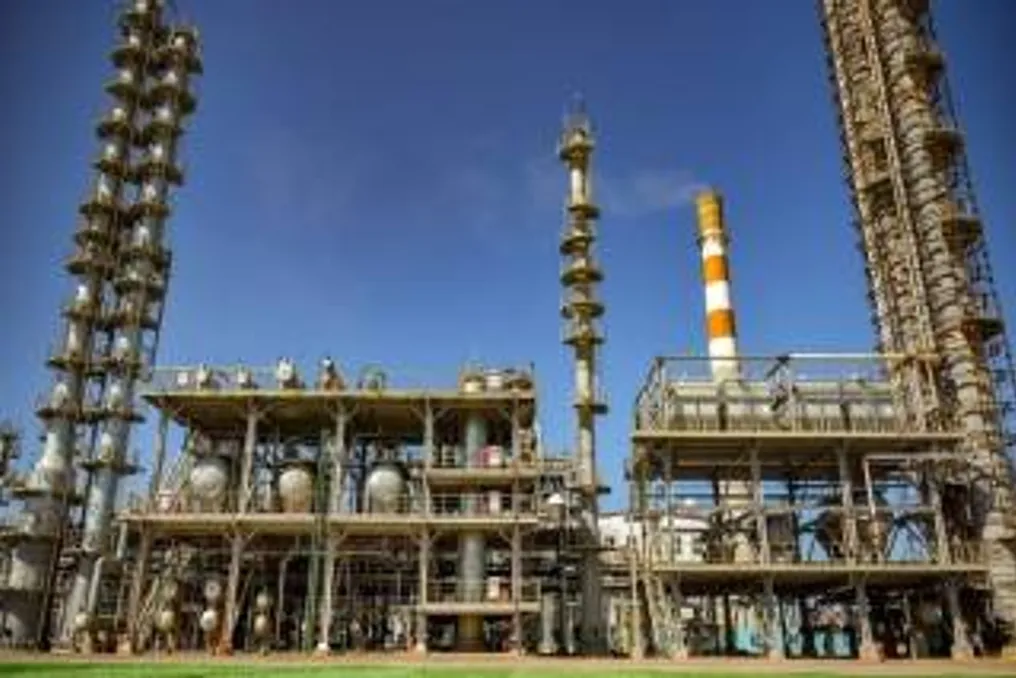
The government of Kyrgyzstan has approved a project for the construction of a small oil processing plant in the southern part of the country. This step is aimed at increasing domestic fuel production and reducing dependence on imports, especially after the reduction of raw material supplies from Russia.
According to Reuters, the $25 million project will be financed by the Chinese company 'Central Asian Energy LLC', and the corresponding contract has already been signed. The new refinery will produce gasoline and diesel fuel meeting K5 and K6 emission standards (analogous to European requirements for Eurasia), as well as bitumen and motor oil. The first stage of construction is scheduled for completion this autumn.
Currently, about 90 percent of the gasoline needed for Kyrgyzstan's domestic consumption is purchased from Russia. At the end of June, the republican association of oil traders warned of a possible shortage of AI-95 and AI-98 gasoline due to supply restrictions from the Russian Federation and seasonal demand growth.
Local media previously reported plans to build this plant in the city of Qoʻchkor-Ota, located in the Jalal-Abad region, with an oil refining capacity of 450,000 tons per year.
To strengthen the atmosphere of goodwill, solidarity, and interconnectedness among the population, and to transform mahallas into more prosperous and pleasant places, efforts to develop local communities have been intensified. The 'Improvement and Generosity' month has begun in Guliston District to ensure the fulfillment of tasks defined at the video-selection meeting under the leadership of the President of the Republic of Uzbekistan.
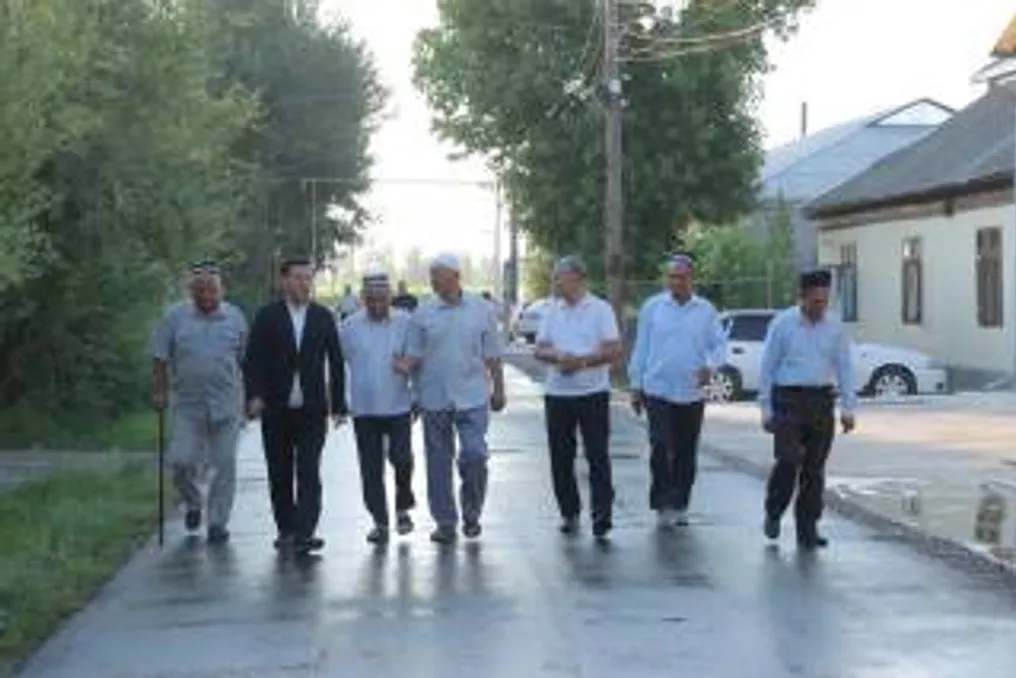
Early in the morning, a public cleanup for improvement began in the Soyibobod mahalla of Guliston District, involving residents, youth, state institutions, as well as teams from enterprises and organizations. Streets, paths, and drainage ditches were cleaned. Agronomic work was carried out on trees, and their trunks were cleared. Additionally, gravel was laid on some internal roads, which improved travel conditions for residents.
The head of Guliston District also took part in the improvement works, familiarized himself with the actions carried out jointly with mahalla activists and youth, and gave relevant instructions to responsible persons.
Within the framework of the 'Improvement and Generosity' month, it is planned to intensify improvement and landscaping work in all 24 mahallas of the district. Events will also be held to ensure sanitation and cleanliness, organize internal streets, improve the territories of social facilities, and collect information about families in need.
Shuhrat Khushmurodov, head of the Guliston District branch of the Mahalla Society of Uzbekistan, emphasized that important tasks regarding the improvement of mahallas, the creation of decent living conditions for the population, and uniting people around good deeds were set at the video-selection meeting under the President's leadership. He noted that the 'Improvement and Generosity' month has been launched in every mahalla of the district to implement these instructions. Mahalla activists, youth, state institutions, and work collectives are actively participating in this process.
According to him, improvement is not just cleaning a street or yard, but strengthening the sense of belonging to the fate of one's mahalla, as well as forming an atmosphere of mutual help and goodwill in every person. Therefore, during the month, in addition to improvement work, systematic events demonstrating generosity will be organized.
It is emphasized that well-being in a mahalla begins with the activity of every household, every street, and above all, with the feeling of participation and solidarity among citizens. Thus, the 'Improvement and Generosity' month is designed not only to tidy up the territories but also to create a foundation for increasing positive values such as mutual respect, kindness, and solidarity among the population.
In Namangan, which aims to become a 'million-city' in terms of population, active work is underway to develop infrastructure and meet residents' demand for public transport. Another important step has been taken to improve the quality of passenger transportation services in the regional center.
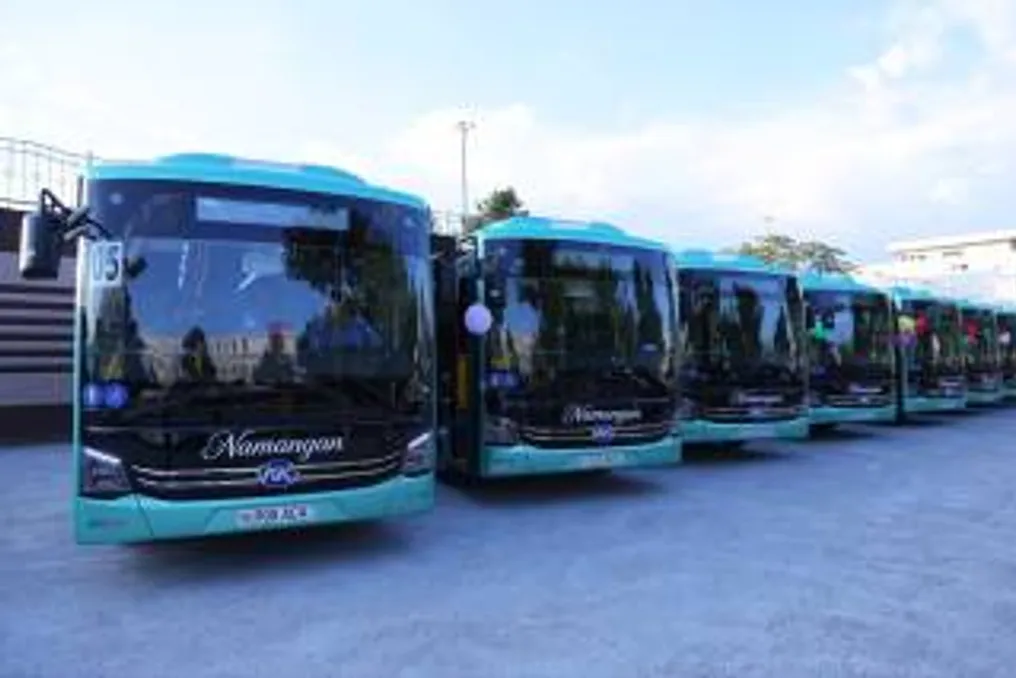
As part of fulfilling the tasks defined during the head of state's video selection meeting on improving the transport system, the next stage of the plan involves the purchase of 12 modern 'Ankai' buses from the People's Republic of China. These buses were obtained by the company 'Malakali Auto Transport Service' using funds amounting to 9 billion soums.
A solemn ceremony was held on the occasion of the commissioning of the new vehicles, attended by representatives of the general public and active citizens. Drivers were handed the keys to the new buses at the event.
The Namangan regional hokim and senator Shavkat Abdurazzokov noted that the work on modernizing the public transport system, including the purchase of new buses and route optimization, will lead to significant positive changes in the public transport sector of Namangan city in the coming years. He emphasized that the new buses embody the broad opportunities being created for the development of the industry.
The new buses have enabled the provision of high-quality and modern transport services to more than 7 thousand passengers daily on the 'Honobod – Sherbulok' route in Namangan city. The first passengers were activists and citizens of the region. The total cost of this project amounts to the equivalent of 1.875 million US dollars, and the next stage plans the purchase of another 18 buses by the end of the year.
The introduction of new buses will improve the quality of public transport services and expand opportunities for convenient and safe movement of the population.