Although the acronym 'NT' in Windows NT officially stands for 'New Technology', internal reports reveal that the origin of the name is linked to a specific Intel processor.
Although the acronym 'NT' in Windows NT officially stands for 'New Technology', internal reports reveal that the origin of the name is linked to a specific Intel processor.
Windows NT 3.1, released in July 1993, represents a significant milestone in Microsoft's history, as it was the first version of Windows built entirely on a 32-bit architecture and had compatibility with various architectures.
In that decade, while many remember Windows 95 or Windows 98, Windows NT also shaped the company's trajectory. Initially, Microsoft intended Windows 3.1 for personal computers, while Windows NT was aimed at professional applications and servers.
The curiosity about the nomenclature gained momentum when Dave Farquhar, a journalist focused on 'retro computing', shared details about the system on his blog. He recalled the roots of Windows NT, exposing the unofficial explanation for its name.
In 2003, developers Mark Lucovsky and David Thompson, who worked on the operating system, clarified that 'NT' refers to the Intel i860 chip. When the Windows NT project began in 1988, Microsoft aimed for the Intel i860 processor, although it was delayed.
Due to this delay, the company opted to test the system on a chip simulator. At the time, Intel used the term 'N-Ten' as a codename for the i860, leading Microsoft developers to adopt the 'NT' acronym as an abbreviation of 'N-Ten'. Mark Lucovsky, a former Microsoft engineer, stated that the initial goal was to develop NT for the Intel i860, a significantly delayed RISC processor.
The term 'New Technology' was later added to the NT acronym for marketing purposes. However, this story was confirmed in 2003 by Raymond Chen, an experienced Microsoft engineer known for his internal revelations.
It is worth noting that the Intel i860 did not achieve commercial success. Launched in 1989 with a focus on high-performance applications, the compilers of the time struggled to exploit its full potential, leading to the chip's discontinuation in subsequent years. Microsoft itself abandoned support for the i860 even before the release of Windows NT 3.1.
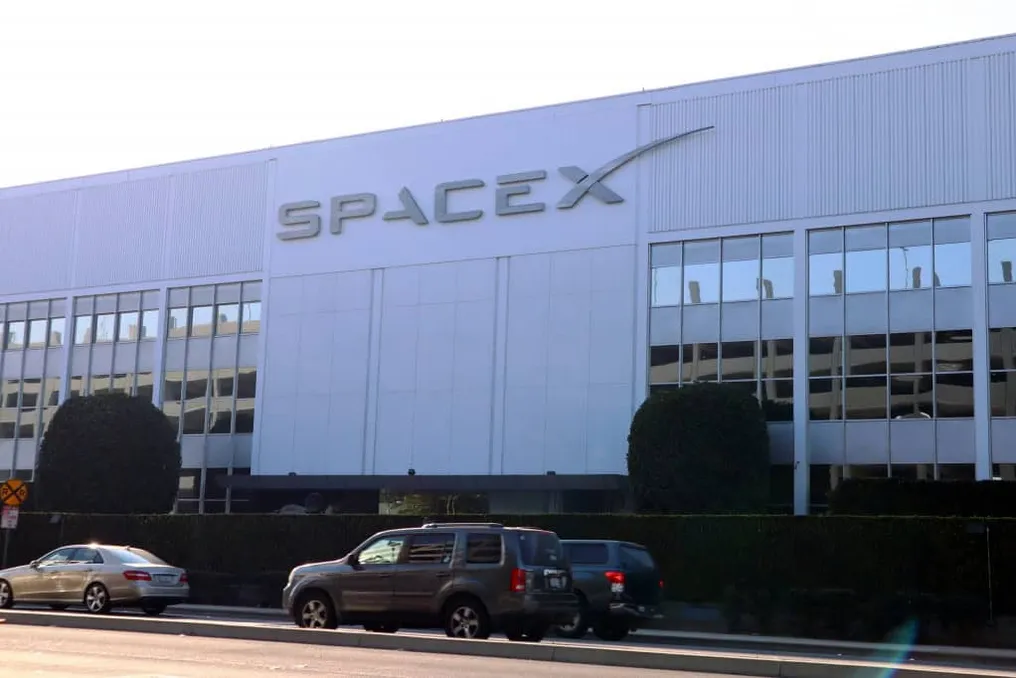
The heat shield of the Starship rocket, developed by SpaceX, potentially represents one of the most serious obstacles to Elon Musk's plans for a fully reusable vehicle capable of frequent short-interval flights.
Three former NASA researchers concluded that the damage found in the thermal protection system during the latest test indicates that the current technology is still far from achieving its goal.
These concerns arose after the thirteenth Starship test mission on July 24. High-quality images taken after the ship landed in the Indian Ocean showed significant cracks and damage to the heat shield tiles while the craft was in the water.
According to experts, although the system prevented the ship from disintegrating during atmospheric re-entry, the observed damage suggests that the current design is not suitable for ensuring rapid reuse.
The tiles are part of the Thermal Protection System (TPS), which is designed to protect Starship from the extremely hot plasma generated during entry into Earth's atmosphere. This technology is critical for realizing Elon Musk's plans to sharply reduce the cost of spaceflights and ensure frequent missions to the Moon and Mars.
Starship also plays a central role in NASA's Artemis program, which plans to use it to deliver astronauts to the lunar surface. Despite the success of the last flight—the ship settled intact in the ocean, unlike previous tests that ended in explosions—specialists doubt the possibility of rapid multiple reuse due to the condition of the thermal tiles.
Charles Miller, a former senior NASA advisor and space policy consultant, told Bloomberg that the existing thermal protection system is a dead end for SpaceX's goals. He emphasized: 'The current thermal protection system is not good enough and is a dead end.' Miller added: 'You can achieve full reusability, but it won't be fast.'
Miller presented his analysis together with Daniel Rasky, a former NASA researcher specializing in heat shield materials, and Charles Kamarda, a former agency astronaut.
After the test, Elon Musk announced in an X post that SpaceX would send a vessel to rescue Starship in the Indian Ocean. According to him, the craft will provide important information about the heat shield's performance during the mission.
SpaceX is developing Starship as the world's first fully reusable rocket. The project envisions that both the ship and the Super Heavy booster will return after each launch and be able to fly again within a few hours.
Nevertheless, Musk himself previously acknowledged that the heat shield remains one of the biggest technical challenges of the program. In September of last year, speaking on the All-In podcast, he stated: 'To achieve full reusability of the ship, there is still a lot of work to be done on the heat shield.'
SpaceX has not commented on the experts' criticism.
In the opinion of Miller, Rasky, and Kamarda, the tiles used on Starship resemble those used on the old NASA space shuttle. Although SpaceX has not disclosed the composition details, Rasky believes they are made of ceramic material, representing an evolution of what was used in space shuttles.
Previously, these tiles often required replacement or repair after each flight. For experts, such a process of inspection and repair would be incompatible with SpaceX's goal of high-frequency launches. Rasky noted: 'A significant amount of inspections, repairs, and replacements will likely be required.' He also participated in the development of the heat shield material for the Dragon capsule, which SpaceX uses to transport astronauts to the International Space Station (ISS).
He concluded: 'They can do it in a few days or weeks, but it won't be like an airplane you return, clean, refuel, and relaunch.'
According to Miller's assessment, the problem should not prevent SpaceX from using Starship to launch future versions of Starlink satellites at a slower pace. However, experts warn that the company's plans to launch up to a million satellites aimed at artificial intelligence (AI) data centers could suffer if rapid reusability is not achieved.
Furthermore, they suggest that the limitation could increase costs or delay astronaut delivery missions to the Moon under NASA's Artemis program. Meanwhile, companies such as the aerospace startup Stoke Space are working on developing new heat shield technologies requiring minimal maintenance between missions.
All three specialists also insist that NASA resume investments in next-generation thermal protection systems. The agency has also not commented on this matter.
Testing a cell phone's microphone is an effective method for detecting audio system problems, whether you are buying a new or used device. The basic procedure involves using the native voice recording application available on both Android and iPhones to check sound capture capability.
Audio input difficulties can be caused by dirt accumulation on protective grilles, privacy restrictions imposed by the operating system, or momentary software glitches. Additionally, physical damage resulting from drops can also impair the function of this component.
When the problem lies with the hardware, replacing the part is an option. However, in contemporary smartphones, the microphone is often soldered to an auxiliary board, which requires intervention from specialized technicians for repair.
To perform the test, you must first open the device's native Recording or Voice Notes application. You need to authorize microphone access to the application if prompted. Next, start a recording by pressing the red button at the bottom of the screen. A useful tip is to record a message in a normal tone and observe how the waveform behaves on the display.
After saving the audio, it should be played back to assess voice clarity. If the voice is captured clearly, the microphone is operating correctly. Otherwise, it is recommended to seek assistance from an accredited technical service.
On Samsung devices, the test can be performed through the Samsung Members application. After opening the app and, if necessary, registering on the platform, the user should access the 'Diagnostics' tab and select 'Phone Diagnostics' to map the components. Upon locating the 'Microphone' icon in the hardware list, tap it and then 'Record', speaking near the device. Afterward, tapping 'Play' allows you to evaluate the recording. If it is correct, confirm by tapping 'Yes', repeating the process with the second microphone.
There are several factors that can prevent the microphone from functioning. These can include physical obstructions, such as dust or protective cases covering the microphone grille; or system blocks, where the privacy settings of the iPhone or Android have disabled access. Other causes include denial of access by a specific application, connection conflicts with Bluetooth headphones or background running applications, sound adjustments like 'Do Not Disturb' mode, or temporary software failures, such as bugs after updates.
If native tests are unsuccessful, some additional actions may help. It is advisable to restart the device and disable Bluetooth to eliminate temporary glitches and ensure that the audio is not stuck in paired accessories. It is also important to clean the sound inputs, removing cases and using a soft brush on the grille. Users should check the system's privacy permissions to ensure the microphone is released for the necessary apps.
Other measures include closing all background applications, updating the operating system, and clearing the cache of problematic applications to remove corrupted files. If the error is isolated to a single application, reinstalling it may restore its original settings. If none of these steps resolve the issue, it may indicate physical damage to the part or the audio controller chip, requiring specialized technical support.
Although it is technically possible to replace the microphone, in modern models, this component is usually soldered onto a sub-board or integrated into the flex cable. For this reason, repair often involves replacing the entire module, not just the individual part. Due to high complexity, which requires precision tools and microsoldering techniques, the service must be carried out at an authorized technical service to guarantee the use of original parts and the integrity of the device.
Starting in February 2027, Logitech will begin selling wireless mice whose batteries can be replaced by the consumer themselves, although this feature will be limited to the European market. In all other regions of the globe, the manufacturer will maintain the offering of conventional models, which have sealed power cells inside the product body.
Robin Piispanen, head of Logitech's gaming division, informed The Verge in an interview that this change is in compliance with European Union requirements. This approach mirrors the strategy adopted by Nintendo last month, when the Japanese company facilitated the replacement of the Switch 2 battery only in countries within the bloc.
Piispanen clarified that Logitech has decided to segment its production into two distinct lines: one version adjusted to European legislation and another intended for the international market. The justification for this differentiation involves aspects such as the final weight of the mice and ensuring user safety.
Currently, most of the brand's wireless peripherals use common batteries or soft-pack type batteries, which contain lithium polymer cells protected by a flexible layer and connected to the main board by thin wires. This configuration allows for the creation of lighter devices.
However, this design presents vulnerabilities. Soft-pack batteries pose risks if handled by individuals without technical knowledge. Accidental damage, such as puncturing during a DIY repair, can cause short circuits or even start a fire.
To comply with the EU's Right to Repair Directive, which stipulates the need for safe and accessible maintenance for lay users, the manufacturer will be obliged to use hard-pack batteries. These latter have cells encapsulated in rigid plastic casings, thus preventing mechanical damage.
This additional protection implies an increase in the device's weight. Since there are no regulations requiring this change outside of Europe, the company considers it unfeasible to impose such a requirement on consumers in the Americas or Asia. Additionally, Logitech claims that market studies indicate that the global public tends to treat the accessory as disposable, without the habit of opening it to perform repairs when the battery loses capacity.
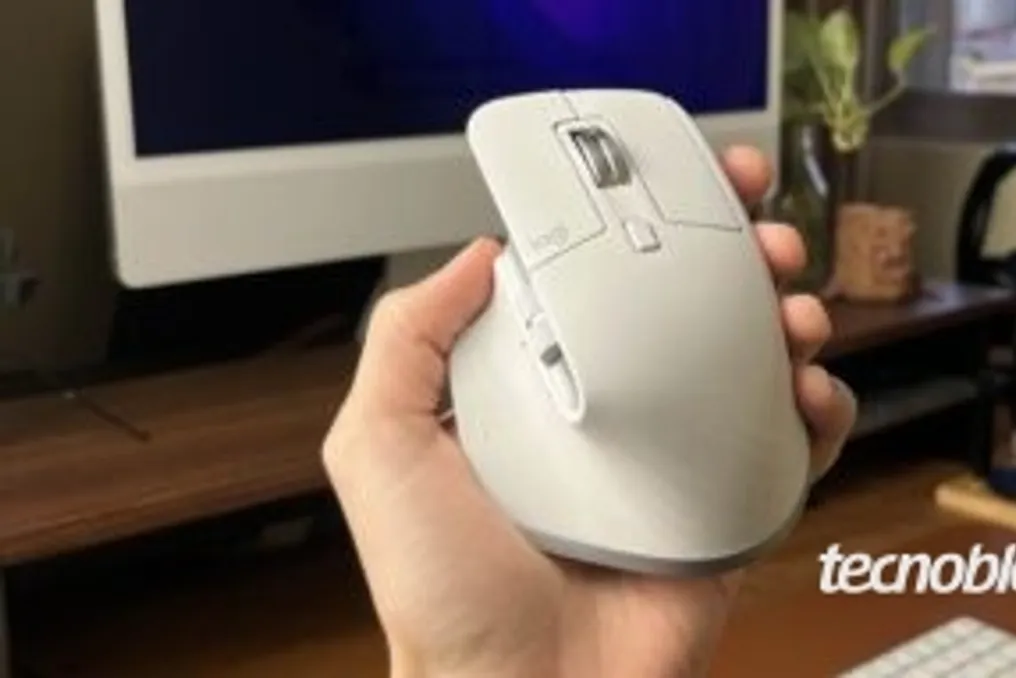
Logitech's own catalog questions the claim that simplifying repairs harms product engineering. The MX Master 4, considered the brand's main productivity mouse, already has a construction that facilitates battery replacement. This model is sold in Brazil for R$ 799.
An analysis conducted by iFixit demonstrated that the internal structure of this peripheral already allows for a relatively simple battery change, requiring only the removal of a basic set of screws. This suggests that the device may have been designed considering EU guidelines.
It is relevant to mention that in January 2025, Logitech released a press release emphasizing its efforts to make electronics repairs easier, reinforcing its commitment to helping customers extend the life of their products and avoid electronic waste.
Besides batteries, a mouse's durability is often determined by the wear of mechanical switches, which can start showing double-click failures over time, and by the deterioration of the side grip rubbers. When questioned about the lack of official spare parts for these natural wear-and-tear issues, Piispanen discouraged home repair.
Replacing a switch requires completely opening the mouse structure. According to the brand's perspective, this increases the probability of an average user damaging plastic fixing clips. Replacing the rubbers would require cleaning the original adhesive and applying a new adhesive with great precision, a procedure classified as laborious.
Despite skepticism regarding home repairs, the company stated that it will conduct a study to determine which spare parts can be safely made available in the future.