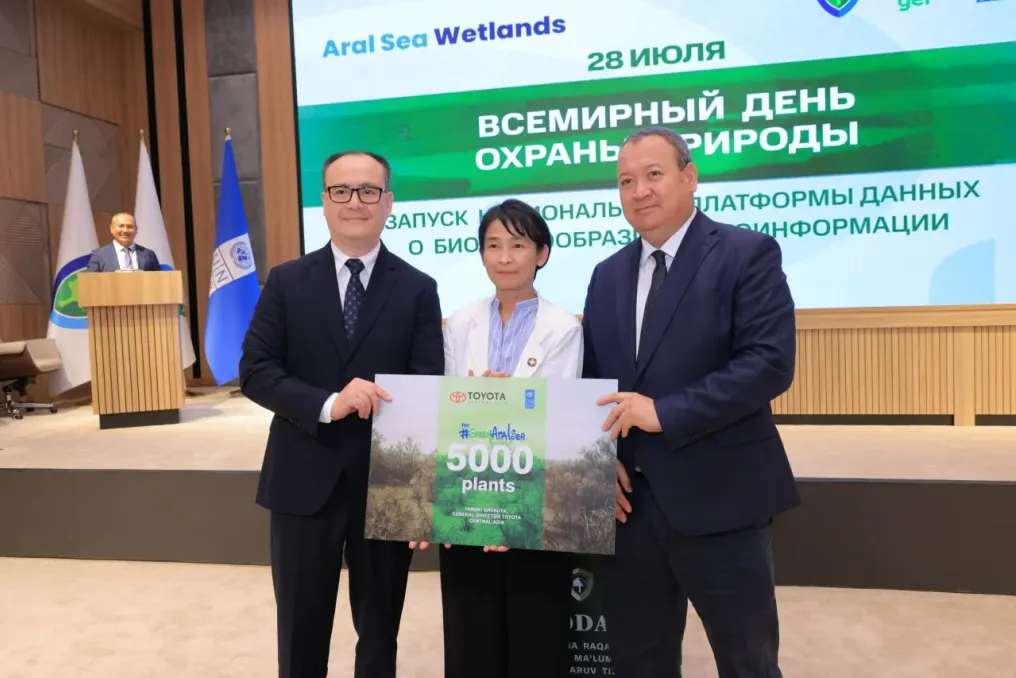
Toyota Central Asia provided charitable funding to the United Nations Development Programme (UNDP) for planting five thousand saxaul saplings on the dried bed of the Aral Sea. This activity is part of the crowdfunding project 'Green Aral Sea.'
Toyota Central Asia provided charitable funding to the United Nations Development Programme (UNDP) for planting five thousand saxaul saplings on the dried bed of the Aral Sea. This activity is part of the crowdfunding project 'Green Aral Sea.'
The main objective of this initiative is to restore the ecological sustainability of the dried bed of the Aral Sea. Furthermore, the project aims to reduce the spread of toxic dust and improve living conditions for local communities.
UNDP noted that the support from Toyota Central Asia aligns with the project's goals of mitigating climate change and protecting the environment. Collaboration with the company is viewed as an example of private sector involvement in environmental protection activities and strengthening the region's climate resilience.
The 'Green Aral Sea' project seeks to attract additional resources for the restoration of the Aral region's ecosystem and brings together various partners in environmental conservation efforts.
When people change their mobile phones, they often consider old cases unnecessary and throw them away. Even if the phone isn't changed, many get used to changing cases after some time. Nowadays, many start changing cases according to the colors of their clothes. As a result, many old cases accumulate at home, which are often classified as scrap metal and discarded.
If you also consider old mobile phone cases trash and throw them away, stop. Did you know that these old cases can simplify many small household chores? With a little creative approach, they can be reused. This will not only save money but also reduce plastic waste. Below are four simple ways to reuse old mobile phone cases.
1. Sponge Holder in the Kitchen: If you have an old silicone or rubber case, you can use it to hold a sponge near the kitchen sink. This will prevent the sponge from being scattered and make the area around the sink cleaner. Similarly, it can be used to store soap in the bathroom.
2. Use as a Luggage Tag: If you are traveling and your luggage tag is broken, old cases can be very useful. You can put a piece of paper with your name, address, and phone number inside the case. Then, by threading a string through the camera hole, you can attach it to a bag or suitcase. It will be durable, and your luggage will be easily identifiable.
3. Miniature Trinket Dish: Small items such as rings, earrings, keys, coins, or pins are often lost around the house. An old mobile phone case can be used as a small dish to keep these items in one place. This reduces the chance of items getting lost.
4. Organizing Chargers and Headphones: If charging cables or headphones constantly get tangled, an old case can help. By making small cuts in the case and rolling it up, you can secure it with a rubber band or string. Inside such a case, it is convenient to place a charger, headphones, or small cables. They will remain protected and accessible when needed.
Before throwing away any old item, it is worth thinking. By applying a little creativity, old mobile phone cases can be made usable again. This will help keep the house tidy and save money.
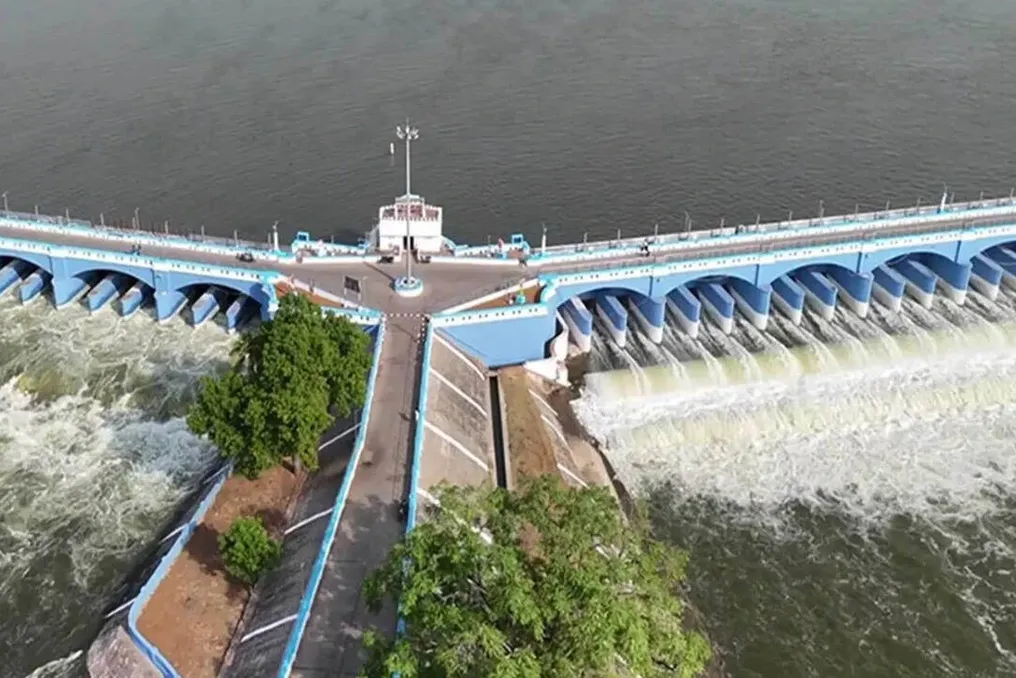
The Cauvery Water Management Authority, following a decision by the Cauvery Water Resources Committee, has instructed the state of Karnataka to begin releasing 3500 cusecs of water from the Cauvery River into the state of Tamil Nadu daily. This requirement took effect on Thursday.
According to this directive, Karnataka must ensure the release of a total volume of 4 TMC (thousand million cubic) feet of river water to the neighboring state.
A study conducted by the organization World Weather Attribution (WWA) suggests that current climatic conditions have significantly increased the probability of large fires occurring. Scientists indicate that under the present climate, events of this magnitude are expected once every 20 years in southwestern France and once every six years in central Spain.
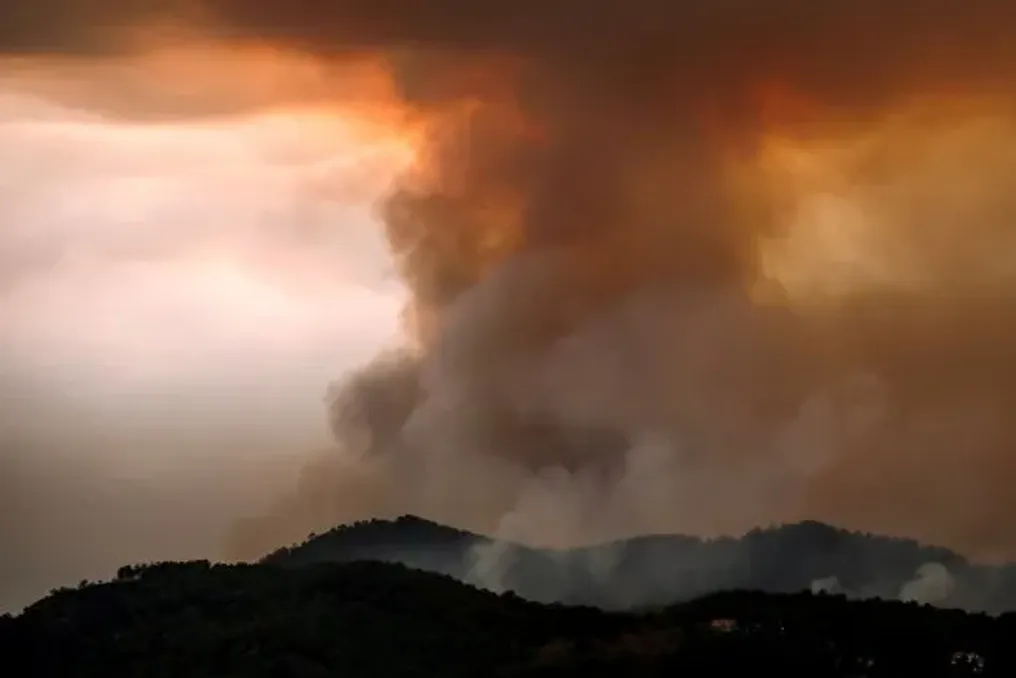
Both regions suffered from destructive forest fires in recent weeks. These events resulted in the death of three people, the destruction of thousands of homes, and forced the evacuation of 300,000 inhabitants. The fires have been classified as some of the worst ever recorded, with some generating their own weather systems and complicating firefighting efforts.
Recent analyses by WWA demonstrate that both the heatwaves recorded in June and the drought currently affecting Europe have been intensified by human-caused climate change. Furthermore, last September, the team concluded that climate change exacerbated the forest fires that occurred in the previous year in both Spain and Portugal.
WWA functions as an international scientific collaboration dedicated to analyzing and communicating the possible influence of climate change on extreme phenomena, such as droughts, storms, heatwaves, and torrential rains, involving researchers from various global universities and institutions.
Andreia Ribeiro, a climate scientist at the Helmholtz Centre for Environmental Research in Germany, commented on the analysis announcement, stating that when fires occur simultaneously in several areas, it is clear that human-induced climate change not only raises the chance of more severe fires but also their synchronicity.
Augustin Colette, from the French National Institute of Industrial Environment and Risks, warned about the vast amount of atmospheric pollutants released by the fires. This pollution increased the concentration of particles up to twenty times above the level considered acceptable for air quality in Europe, with this impact felt up to 400 kilometers from the fire hotspots.
Clair Barnes, an associate researcher in Extreme Climate and Climate Change at the Imperial College London's Environmental Policy Centre, emphasized that what is happening in France and Spain is not mere coincidence, but rather a clear indicator of the growing effects of anthropogenic warming.