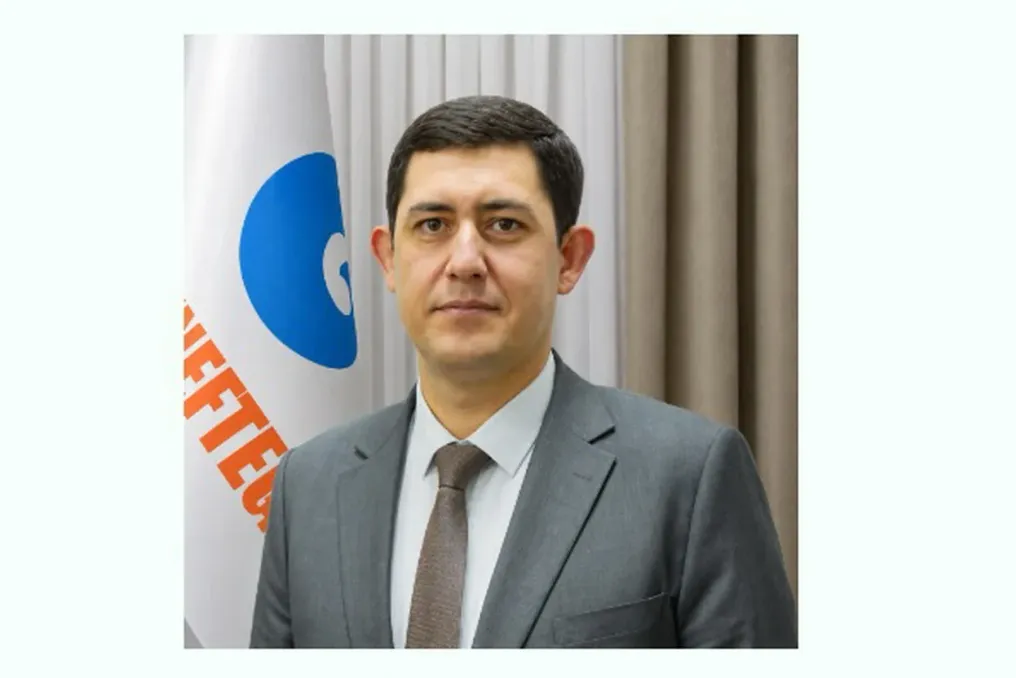
Farid Muminov has been appointed as Deputy Chairman of the Board of Uzbekneftegaz. In his new role, he will be responsible for localization, expanding industrial cooperation, and implementing information technologies.
Farid Muminov has been appointed as Deputy Chairman of the Board of Uzbekneftegaz. In his new role, he will be responsible for localization, expanding industrial cooperation, and implementing information technologies.
Prior to this appointment, Muminov headed the Commercial Department of Uzbekneftegaz.
In his new capacity, he will oversee production localization processes, promote the development of industrial interaction, and ensure the implementation of information technologies across all company operations.
Encore AI has successfully raised $30 million in a Series A funding round. These funds are designated for the global scaling of its enterprise artificial intelligence platform.
The round was led by Team8, with participation from Planven and The Garage. Other investors included Lukatz, as well as several commercial banks and insurance companies that had previously used the company's platform.
The secured financing will enable Encore AI to develop its products and increase international operations. The company plans to boost the adoption of its solutions in large enterprises and expand its presence in the financial sector and other highly regulated industries where compliance and customer engagement are critical.
Encore AI was founded in 2022 by Dr. Dvira Ginsburg. Its primary mission is to solve the problem of revenue generation, unlike other customer service AI services that focus on reducing operational costs by decreasing human interaction. The company achieves this by training intelligent agents to mimic the performance of top sales and customer service employees.
At the core of Encore AI's technology is a patented Interaction Mining mechanism. This allows for detailed analysis of behavioral patterns that consistently lead to the most desired outcomes in customer interactions across various channels. The platform transforms these behavioral models into AI agents capable of conducting interactions or augmenting the work of existing agents in real time. Encore's capabilities cover voice communication, chats, interactive voice response, and digital channels, while fully adhering to the strict regulatory and compliance standards required for operation in fields such as banking and insurance.
CEO Dr. Dvira Ginsburg noted that most enterprise AI platforms focus exclusively on cost reduction. He emphasized that Encore AI helps organizations unlock the value already present in years of customer interaction data by training AI agents to replicate the actions of their most effective employees. The company claims its platform can be deployed within weeks without requiring lengthy implementation projects. One major credit client reported a tenfold return on investment just months after launching the technology.
Currently, Encore AI serves over 40 corporate clients globally, the majority of whom are financial institutions. According to the company, annual recurring revenue has grown more than fivefold since the previous funding round less than 18 months ago. The new capital will be primarily directed towards developing the company's sales department in the United States and increasing deployments among larger financial organizations. Furthermore, Encore AI intends to continue refining its proprietary AI models and enterprise capabilities.
Team8 Partner Hadar Sitterman Norris believes that many organizations possess years of valuable customer interaction data but have not yet managed to convert it into measurable business value. She posits that Encore AI has created a platform capable of turning this information into sustainable revenue growth while maintaining the compliance architecture required by regulated industries. Planven Managing Partner Eran Westman added that successful enterprise AI companies will be defined by the long-term value they create, not just automation. He characterized Encore AI's combination of proprietary data analytics and industry expertise as a solid foundation for building a leading platform in its category. The company aims to help organizations improve sales performance, strengthen customer engagement, and scale the experience of their most productive employees through intelligent automation.
Jac Motors, which has been operating in Brazil since 2010 under the representation of businessman Sérgio Habib, announced in 2026 the arrival of its truck division to the country directly through its Chinese headquarters.
This new operation focuses on models equipped with diesel engines, utilizing the traditional supplier base. While Sérgio Habib's activities continue with the importation of Jac cars, utility vehicles, and electric trucks, including the Hunter pickup, the headquarters will exclusively handle diesel-powered trucks.
Jac Trucks has already begun distributing the first units to the dealership network, which covers 30 stores belonging to 15 different groups in major urban areas. Miguel Xun, the company's general director, stated that there are plans to manufacture the vehicles in the national territory in SKD format, in addition to implementing product engineering and development aimed at the local market, although the investment values have not been disclosed, only mentioning that they will be substantial.
To ensure credibility, the trucks use established suppliers, such as Cummins engines and ZF, Eaton, and Fast Gear transmissions. The initial line covers light and heavy segments, with Gross Vehicle Weight (GVW) capacities ranging between 9 and 25 tons.
Currently, Jac is recognized as China's largest exporter of light trucks and already has a presence in several Latin American countries, including Chile, Ecuador, Guatemala, Peru, and Mexico.
The lightest model offered is the N 9.170, which has a GVW of 9.7 tons, equipped with a 170 hp and 600 Nm Cummins B4.0 engine, and uses a six-speed Eaton ESO 6106A manual gearbox.
Just above it is the N 13.210, with a GVW of 12.5 tons, a 210 hp and 760 Nm Cummins B4.5 engine, and an eight-speed Fast Gear F8JZ95CM automated gearbox, whose rotary selector is similar to that of the Ram Rampage.
The heavy category starts with the A 18.290, which has 18 tons of GVW, a 290 hp and 1,110 Nm Cummins D6.7 engine, and features a nine-speed ZF 9AS1517TO automatic gearbox. At the top of the line is the A 25.290, with 26.5 tons of GVW, sharing the mechanical assembly of the 18.290, meaning a D6.7 engine of 290 hp and an automatic ZF gearbox.
All Jac Trucks models are supplied with full-LED headlights, fog lights, traction and stability control systems, hill start assist, and ABS. The multimedia center and 360° cameras are available as options.
Meta's shares registered a decline of over 7% on Wednesday, the 29th, following the release of second-quarter financial results. Investors were disappointed with the earnings per share that fell below Wall Street forecasts and with a modest revenue projection for the current quarter.
Although the company, owner of Facebook, Instagram, Threads, and WhatsApp, managed to exceed revenue estimates, the profit result and future outlook exerted negative pressure on stock values. Specifically, Meta achieved an earnings per share (EPS) of US$ 6.18 (equivalent to R$ 31.69), which was lower than the US$ 7.22 (R$ 37.02) projection calculated by LSEG. Conversely, revenue reached US$ 60.8 billion (R$ 311.7 billion), exceeding analyst expectations, which pointed to US$ 60.1 billion (R$ 308.5 billion).
Looking ahead to the current quarter, Meta communicated an expected revenue between US$ 61 billion and US$ 64 billion (the midpoint is US$ 62.5 billion, or R$ 320.4 billion). However, the market expected a more optimistic scenario, as LSEG analysts predicted US$ 63.1 billion (R$ 323.8 billion). The company clarified that its estimate takes into account that currency fluctuation should generate an approximate negative impact of 1% on annual revenue growth, considering current exchange rates.
Additionally, another indicator closely monitored by the market, the daily active users (DAU) number, was slightly below consensus. Meta reported that this number reached 3.6 billion, while analysts consulted by Wall Street expected 3.61 billion.
The company also adjusted its capital expenditure (capex) forecast for 2026. Meta now projects investing between US$ 130 billion and US$ 145 billion (which corresponds to R$ 666.6 billion to R$ 743.5 billion) during this period. This new range raises the minimum projected value while keeping the maximum limit unchanged from the previous range, which was US$ 125 billion to US$ 145 billion (R$ 640.9 billion to R$ 743.5 billion).
During the earnings conference, investors are paying close attention to CEO Mark Zuckerberg's comments on how Meta plans to convert its investments in artificial intelligence (AI) into new revenue streams. At the beginning of the month, the company launched the Muse Spark 1.1 AI model. On that occasion, Alexandr Wang, head of Meta's AI division, stated that this technology constitutes the 'most powerful model to date for working with AI agents and programming,' in addition to having a lower cost compared to solutions offered by OpenAI and Anthropic. Investors await Zuckerberg to detail the monetization strategy for these initiatives and justify the high investments in AI infrastructure.