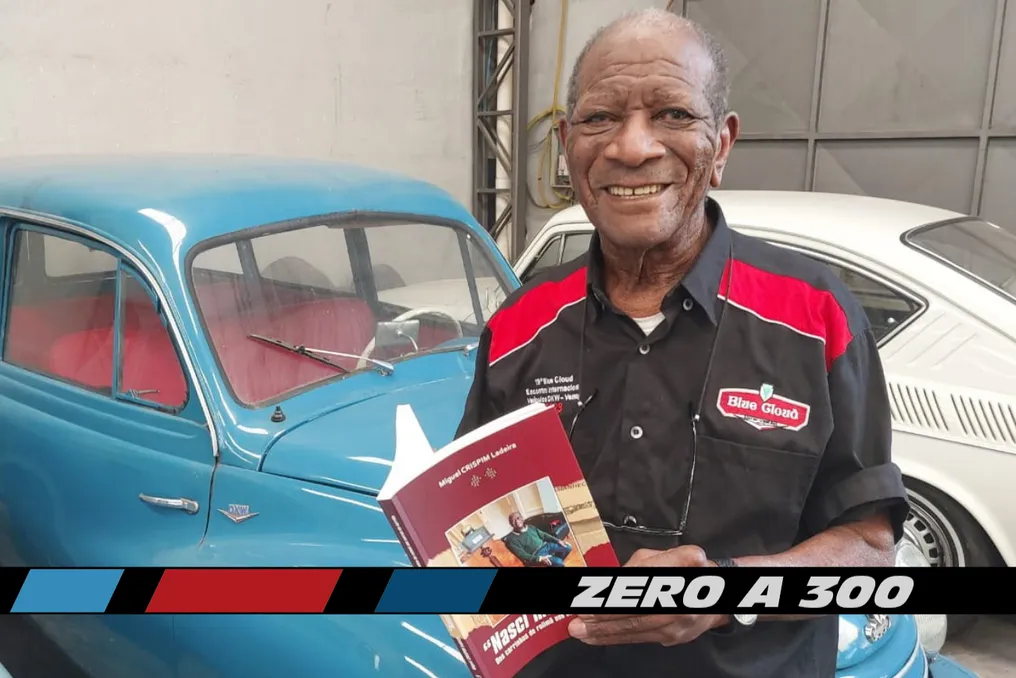
The motorsport world mourns the passing of Miguel Crispim Ladeira, known as Crispim, who died on Sunday (19th) at the age of 85 after multiple organ failure while hospitalized for an extended period.
Crispim's Legacy in Motorsport
Under the guidance of Jorge Lettri in the official Vemag team in the 1960s, Crispim achieved incredible results using small one-liter three-cylinder DKW engines. He was also the preparer of the legendary Carcará prototype, which broke the 212 km/h barrier in 1966, setting a South American speed record. This feat was a marvel of engineering, achieved while working with a piston that had already failed during training.
For decades, Crispim left his mark in Formula Super Vee, Formula Ford, at the famous Boxer workshop (alongside Chico Lameirao), and participated in the development of the national sports car Lobini H1. Recently, he published his memoirs in the autobiography 'Nasci Mecânico' (2025). The publication FlatOut extends its deepest condolences to Crispim's family and friends.
Potential Manual Transmission in New McLaren
Although manual gearboxes are becoming increasingly rare in standard cars, niche sports models can maintain their relevance, as seen with Henessey, Pagani, Porsche, and Ferrari. McLaren potentially could join this trend. According to information from The Supercar Blog, Woking employees are preparing for the presentation of their new model—the McLaren P50. Rumor has it that to satisfy a certain group of clients who value McLaren's design and performance but desire a more engaging experience, the car will be equipped with a clutch pedal.
The publication does not provide sources, limiting itself to stating 'we learned,' yet the statements made are confident, albeit sparse. It is said that the new McLaren with a manual gearbox will be more expensive than the W1, part of the line started by the McLaren F1 and priced over 2 million US dollars, and that its production will be limited to fewer than 100 units. It is also claimed that the car will be presented to the public at 'The Quail, A Motorsport Gathering' event during Monterey Car Week in California on August 14, 2026.
It is unknown whether the proposed new McLaren will have a true manual gearbox or if it will be a shift and neutral simulator, similar to what Ferrari does with the 12Cilindri Manuale. If it turns out to be the latter, it will be an interesting surprise.
New Freelander with Large Screen
Recall studies showing that multimedia screens make cars increasingly dangerous. However, it seems this will not prevent manufacturers from continuing to invest in larger and more sophisticated displays that may further distract drivers. The new Freelander 8, which will be the first model from the newly created Jaguar Land Rover sub-brand, unveiled its interior, and the most striking element was the huge 46-inch multimedia panel.
In fact, there are two panels: a central multimedia unit, which is very large in itself—15.6 inches; and a panel above it, spanning the entire width of the dashboard and functioning as the instrument cluster. It also displays additional information such as GPS navigation, clock, weather forecast, and onboard computer functions. Below the central multimedia unit is a small series of physical buttons for functions like hazard lights, windshield heating, and audio volume, but apparently, all other controls will be focused on the screens. Furthermore, a third screen is provided for rear passengers.
The technological look is complemented by the overall minimalist cabin design, with atmospheric lighting in 256 colors (similar to gaming PC RGB equipment!) and an aromatic diffuser that, according to the Freelander description, will accurately reproduce the scent of a 'traditional English manor.' It should be noted that the new Freelander 8 will be a hybrid, using the internal combustion engine solely as a range extender, equipped with two electric motors—one on each axle, providing a total output of 561 hp. A fully electric drive version is also planned. This clearly differs from the traditional Freelander, although the classic-inspired visual style, including the sloping C-pillar, looks interesting.
Volkswagen Amarok in Argentina
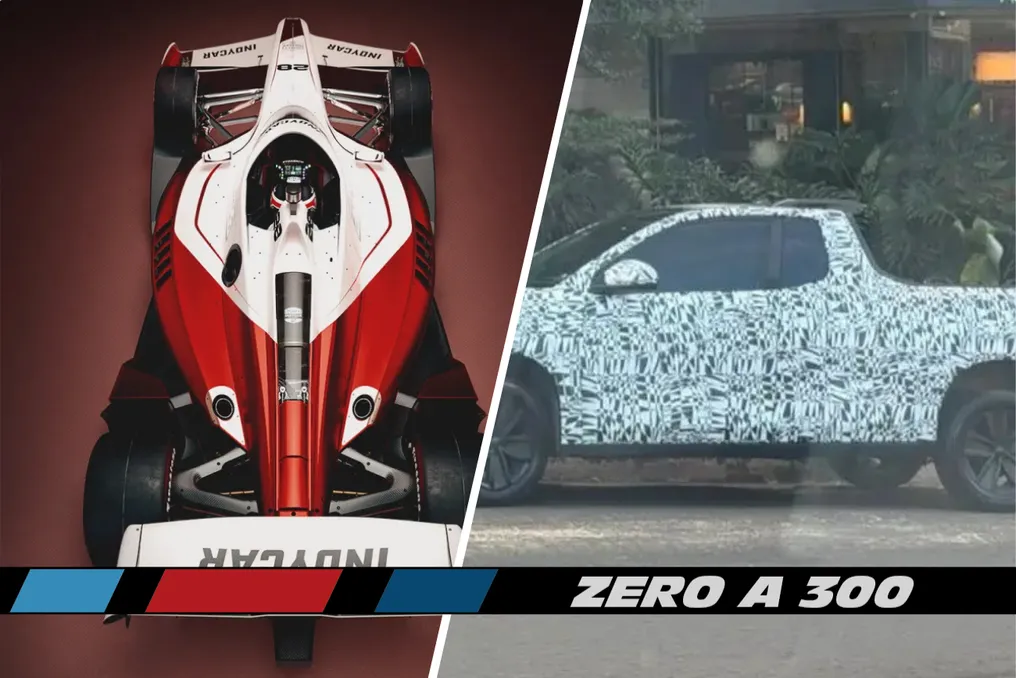
The new generation Volkswagen Amarok is approaching launch, and thus it is appearing more frequently on the streets, albeit in disguise. Recent photos published by Argentina Autoblog show that it will have a completely different silhouette compared to the usual one. If the more straight shapes, high hood, more vertical windshield, and thin pillars give it a more 'Chinese' style, it is not accidental: the next generation Amarok is the result of a partnership between Volkswagen and Chinese SAIC; essentially, it is a VW version of the Maxus Terron 9 pickup. Naturally, it retains the current VW visual identity, including dual-level headlights and a LED strip running across the front end. Nevertheless, the bumpers and taillights look identical to the Chinese model.
The shared platform means that the new Amarok will have a semi-monocoque construction, combining a frame with passenger car elements such as the suspension. While Volkswagen has not disclosed details about the powertrain, only stating that the new Amarok will be hybrid. Although specific information is lacking, Volkswagen might present the new Amarok in Barretos during the rodeo festival at the end of August. The brand has previously held promotional events during this event.
Next-Generation Toyota Hilux
A prototype of the new Toyota Hilux, in the final development stage, was spotted almost without camouflage, displaying almost the entire body, including the brand and model logos. Photos were received from the Guru dos Carros website. The pickup had sensors and a long exhaust pipe directed into the cargo bed, indicating the start of certification testing. This process should take about six months, predicting the release of the ninth generation in early 2027, depending on the production schedule at the Zarate plant in Argentina.
Although Toyota decided to reuse the proven IMV technical base and central cabin structure—including pillars, roof, windshield, and doors—the exterior front end will undergo a radical modernization. It is this deep plastic molding at the front combined with new technologies that leads the manufacturer to view the project globally as a full generational change. The main innovation under the hood is the introduction of a 48V mild-hybrid system installed on the 2.8 turbo-diesel engine. This technology uses a small 0.2 kWh lithium-ion battery and an auxiliary motor of 16 hp, which replaces the traditional generator and starter. The goal is to reduce emissions and smooth acceleration by working together with the improved start-stop system. Since the electrical assistance is localized and only operates below 1000 rpm (without direct wheel movement), maximum performance figures do not change: they remain 204 hp and 50.9 kgm of torque, always controlled by a six-speed automatic transmission. In the future, the portfolio will be supplemented by an unprecedented 100% electric version, the production of which has also been confirmed in Argentina for the Brazilian market. Plug-in hybrid versions, although often mentioned in industry rumors, remain speculative and have no release date in the country.