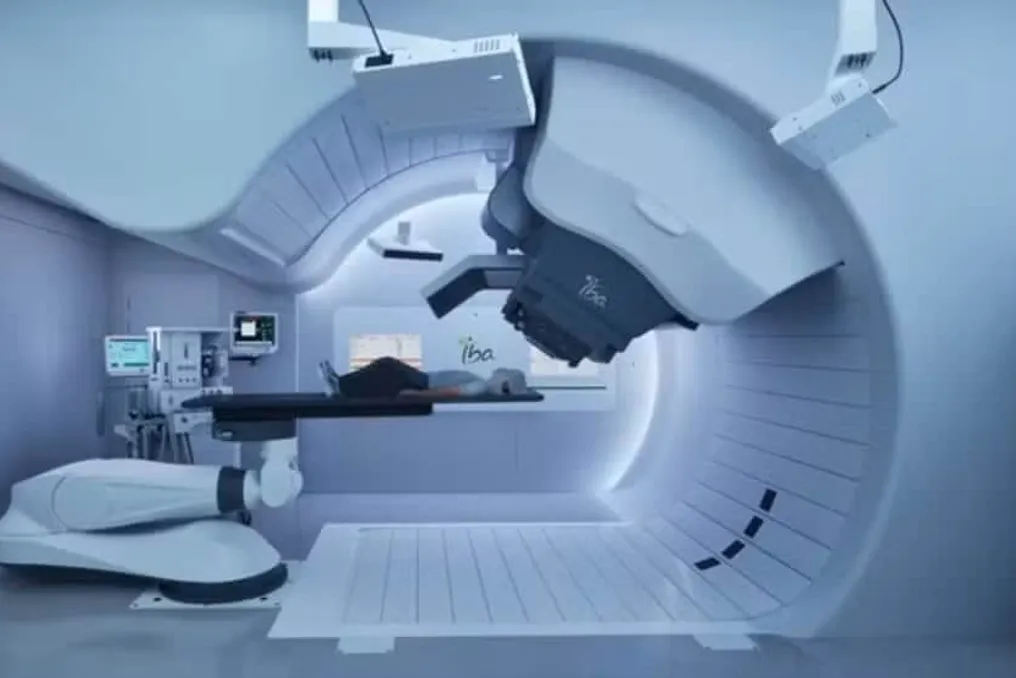
Brazil is about to inaugurate its first center dedicated to proton therapy, an advanced radiotherapy methodology aimed at combating cancer. This new center will be built in Rio de Janeiro, although treatment for patients is only scheduled to begin in 2030.
The undertaking received a financial contribution of R$ 132.6 million provided by Finep. Initially, the focus of this treatment will be directed towards children presenting with complex tumors. Meanwhile, Brazilian citizens still need to seek medical assistance abroad to access this technology.
The Mário Kroeff Proton Therapy Center will be established in Barra da Tijuca, in the city of Rio de Janeiro. Its management will be under the responsibility of the Severino Sombra Educational Foundation (FUSVE), with technical support from the National Cancer Institute (Inca). Despite the announcement, the service is not yet operational. The equipment, which will be produced in Belgium by IBA, is expected to arrive in Brazil in the second half of 2029, requiring a subsequent period for installation, testing, and obtaining the necessary approvals before the first treatment.
Currently, there is a monthly flow of 20 to 30 Brazilians who travel internationally to receive proton therapy, incurring costs that can reach R$ 1.02 million per session. There is an expectation that at least 60% of the unit's capacity will be reserved for the Unified Health System (SUS), however, effective access will depend on the inclusion of this technology by the Ministry of Health.
Proton therapy operates using protons in contrast to the photons used in conventional radiotherapy. Its great advantage lies in the ability to concentrate radiation specifically on the tumor, thus minimizing the exposure of surrounding healthy tissues. Unlike the photon, which loses intensity while traveling through the body, the proton has the characteristic of stopping exactly at the tumor site, an effect known as the Bragg peak, which gives greater precision to the radiotherapist.
This technique can be recommended in various scenarios, such as in children with tumors near the brain or spinal cord, in patients at risk of developing late radiation effects, in cases of tumors adjacent to sensitive organs, or when new irradiation is necessary. Proton therapy does not aim to replace traditional radiotherapy, but rather to offer a significant benefit in specific situations, especially among children, who are more susceptible to post-treatment complications.
According to Marcos Santos, a radiotherapist, reducing radiation exposure can prevent problems related to growth, hormonal changes, cognitive difficulties, infertility, and the emergence of new tumors. It is estimated that about 15% of pediatric oncology patients in Brazil could benefit from this approach.
Implementing proton therapy demands highly sophisticated infrastructure, including particle accelerators, specialized shielding systems, and highly qualified personnel. The monthly maintenance costs of the center are estimated at about US$ 1.2 million, which is equivalent to approximately R$ 6.1 million. Santos compared the cost of a proton center to that of twenty conventional radiotherapy services.
An expert points out that a single unit could serve about 600 children annually, focusing on patients who truly benefit from the technology. The main current obstacle lies in converting the investment made into practical access. In addition to completing construction, the country needs to establish clear guidelines for care via SUS and structure an efficient patient referral network.