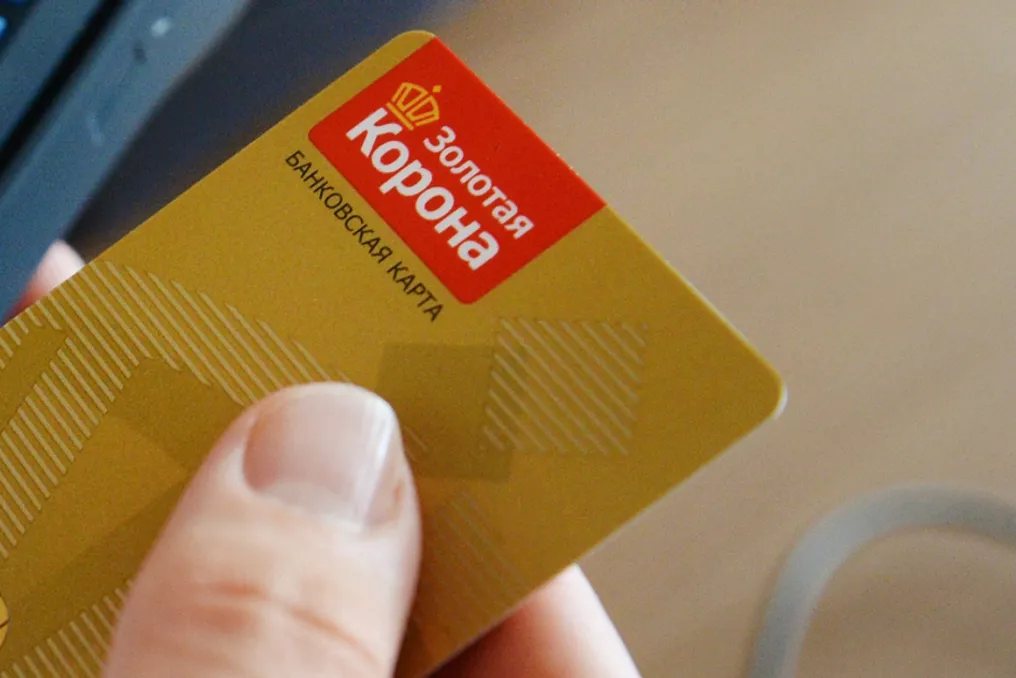

Steps are being taken in Uzbekistan to ensure the continuity of the 'Zolotaya Korona' money transfer system following the imposition of sanctions by the European Union against the bank used for these operations.
Search for a solution to continue operations
Local banks, in cooperation with the service management, are working on transitioning to a new technical operator that is not subject to sanctions. Otabek Tojiddinov, Director of the Currency Regulation and Supervision Department of the Central Bank, reported that negotiations are already underway, and it is expected that functioning through the new operator could start as early as next week.
The essence of the problem and its impact on the market
Tojiddinov emphasized that the sanctions are not aimed at the 'Zolotaya Korona' system itself, but exclusively at the bank that provided the settlements. Consequently, the current task is to replace the technical infrastructure required for making transfers.
The Central Bank noted that this situation has not led to significant changes in the money transfer market of Uzbekistan. The regulator and commercial banks are actively taking necessary measures to quickly restore the usual operating mode of the service.
Volume and sources of transfers
According to data from the Central Bank, $9.3 billion in international money transfers were received in Uzbekistan during the first six months of 2026. This figure exceeds the volume for the same period last year by 13%. The share of 'Zolotaya Korona' in this flow amounted to $2.4 billion, which is approximately one-quarter of all received transfers.
It was also clarified that the system is used to receive funds not only from Russia. Transfers are made from South Korea, Turkey, Kazakhstan, as well as from EU countries and other states.