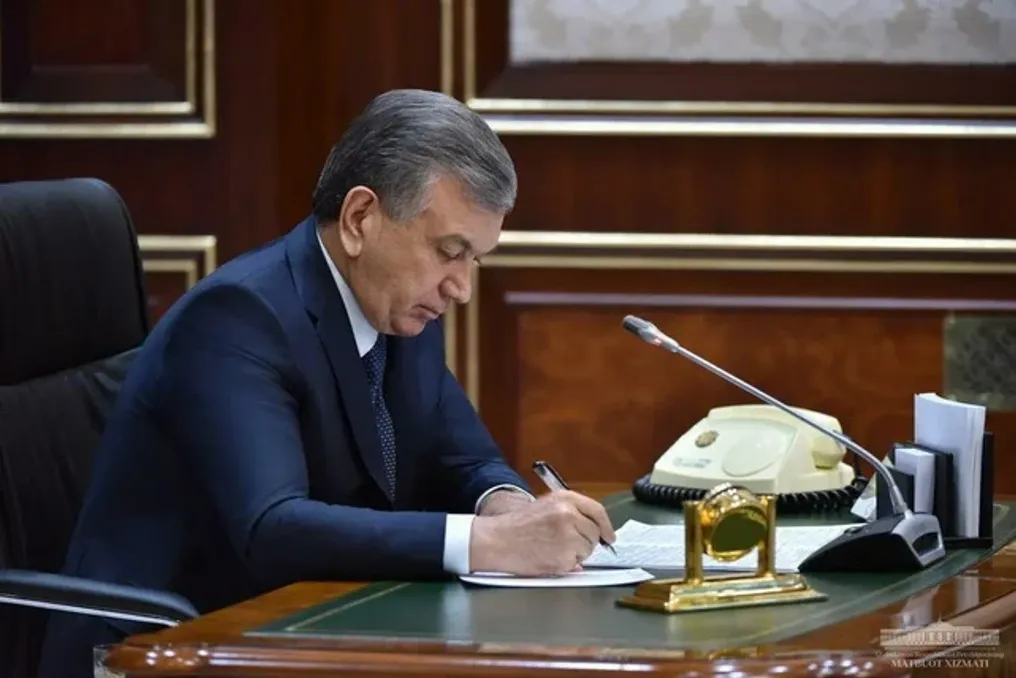
A new set of legislative amendments affecting a wide range of subjects—entrepreneurs, taxpayers, farmers, vehicle drivers, the judicial system, and state structures—will take effect in Uzbekistan from August 1st.
Changes for Business and Control
One of the most significant innovations is the transformation of interaction between regulatory bodies and the business community. From this date, all enterprise inspections, including preventive measures and official visits under criminal cases, must be recorded in the 'Yagona davlat nazorati' system using the 'Biznes himoya' (Business Protection) QR code. The use of paper logs for registering such inspections will cease.
Entrepreneurs have the right not to allow an inspector onto their premises and to refuse dialogue if the visit has not been registered via the QR code. The necessary QR code can be obtained on the portal govcontrol.uz.
Tax Administration and Finance
Concurrently, a client-orientation index is being introduced for tax authorities, which will allow taxpayers to assess the quality and speed of services provided. Tax service employees are also required to undergo professional development at least once every three years.
For owners of industrial gardens that use water-saving technologies, a preferential tax rate for water usage from drilled wells is established—1 sum for a five-year period. Furthermore, starting August 21st, loan agreements and warehouse storage agreements concluded by entrepreneurs must be mandatorily accounted for by tax authorities.
From August 1st, youth-founded farms will receive free maintenance of accounting and reporting centers for two years at district farmer councils, regardless of fee payment or crop type.
Transport, Trade, and Import
The procedure for trading liquefied gas on the exchange will change: automotive gas stations (AGS) will only be able to purchase fuel in special sections if they possess the corresponding license for its sale. The electronic exchange system will be integrated with the 'Licensing' platform. Moreover, starting January 1, 2027, the activities of AGS where personnel lack certificates for working on hazardous facilities will be suspended until deficiencies are rectified.
Starting in August, a digital procedure for returning vehicles left in impound lots will be introduced. Confirmation of the right to receive the vehicle will be made through the 'Traffic Zone' information system using a QR code.
In the field of quarantine products import, phytosanitary control is transitioning to an automated risk management system via the E-Fitouz platform, which is linked to the Customs Committee's 'Single Window' system. Decisions are based on factors such as product risk, import purpose, phytosanitary situation in the country of origin, and degree of product processing.
Agricultural and Aquaculture Support
From August 1, 2026, to August 31, 2030, aquaculture farms will receive a package of support measures and subsidies. The state will compensate part of the interest rate on loans for purchasing solar panels and cover up to 25% of the installation costs. Lump-sum subsidies for acquiring aerators, compensation of up to 50% of the cost of imported broodstock, and support for implementing closed-loop water supply systems up to 5 billion sums are also provided.
Enterprises can apply for subsidies to purchase equipment for feed production and partial coverage of labor costs for foreign-invited ichthyologists and fish disease specialists. Additionally, the industry has access to state guarantees for loans up to the equivalent of 10 billion sums and compensation for loan interest expenses.
Judicial System and Nature Protection
Starting August 1st, specialized departments for resolving labor disputes will appear in civil courts, and all new applications will be automatically directed to judges handling this category of cases. Cases initiated before July 31st inclusive will be concluded according to previous regulations.
From August 1, 2026, to January 1, 2028, a temporary ban on hunting rare and endangered wild animals is introduced. This restriction does not apply to animals kept in zoos, aquaculture farms, or farms, nor to scientific and medical needs.
Ecology, Energy, and Public Administration
As part of the air quality improvement program, requirements for greenhouse complexes in Tashkent and several districts of the region (Yukorichchiksky, Kibraysky, Yangiyulsky, Zangiatiinsky) are being tightened starting August 1st. The supply of natural gas to operating greenhouses will be completely discontinued, and previously concluded gas contracts will be terminated. Furthermore, the cost of water usage for greenhouse farms will increase fivefold compared to the tariff for industrial facilities, and previously issued environmental conclusions will be reviewed.
For greenhouses using polluting fuels, compensation payments for environmental damage will increase twentyfold. Such farms may also lose access to state subsidies and preferential lending, and the terms of existing loans will be revised.
Simultaneously, a new measure to support motorists is being launched: owners who transfer an old car under the trade-in program will begin receiving compensation for part of the auto loan interest rate when purchasing new transport under the national project 'Clean Air.'
Safety and Digitalization
Starting August 1st, citizens can report violations of industrial, radiation, and nuclear safety standards at hazardous production facilities, attaching photo or video evidence indicating the time, date, and location of the incident. These reports will be reviewed within three working days with a mandatory site visit by specialists. If the information is confirmed, the applicant will receive a reward equal to 20% of the imposed fine amount.
The process of digitizing the archival system will continue: starting in August, the registration of documents of the National Archival Fund, compilation of case inventories, issuance of archival materials to users, and formation of the nomenclature of state institution records will be fully converted to electronic format.