The real results of the reforms being carried out in the mahalla are most evident in people's living environment: in well-maintained streets, prosperous homes, high morale, and faith in the future.
The real results of the reforms being carried out in the mahalla are most evident in people's living environment: in well-maintained streets, prosperous homes, high morale, and faith in the future.
A vivid example of this can be seen in the mahalla of Uzbekistan in the Saihunobod district. The large-scale construction work underway here is fundamentally transforming the appearance of the mahalla, constantly improving the quality of life and living conditions for the population. As part of the celebration of the 35th anniversary of independence, events are being held under the 'Month of Well-being and Generosity in the Mahalla,' which strengthen the quality of life, mood, and people's confidence in the future.
President Shavkat Mirziyoyev particularly emphasized at the meeting on July 16 that the results of the reforms being conducted must be visible in the appearance of the mahalla and the daily lives of the people, and he set specific tasks to bring the improvement works in the regions to a new stage.
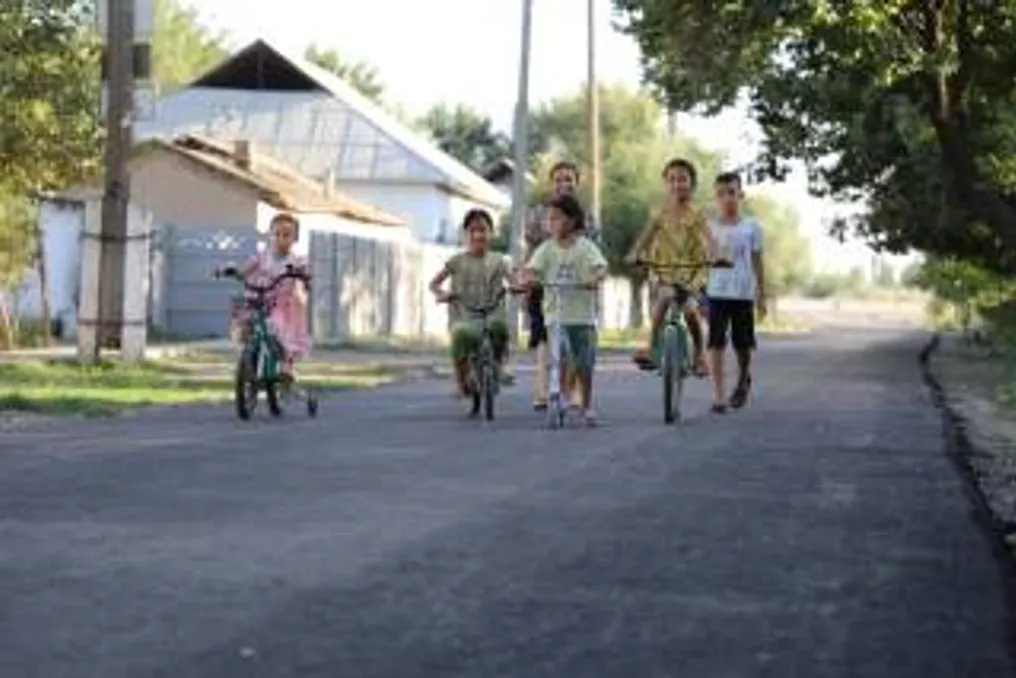
These directives are being systematically implemented in the mahallas of Uzbekistan in the Saihunobod district. Any visitor to the mahalla immediately notices the changes that have taken place. New asphalt roads, updated electrical networks, water supply facilities, and well-maintained streets have completely transformed the look of the mahalla, creating a more comfortable environment for residents.
There are 3350 people living in the mahalla. The main directions of the economy are animal husbandry and agriculture. Significant progress has been made in the effective use of land, the development of greenhouse farms, and ensuring employment for the population. This year, 121 citizens found self-employment, and 38 unemployed citizens received permanent jobs.
The work carried out as part of the 'Month of Well-being and Generosity in the Mahalla' has brought the engineering infrastructure of the mahalla to a new level. In particular, 2880 meters of new electrical network were laid and 85 reinforced concrete supports were installed, which improved the electricity supply to 70 homes. Significant steps have also been taken to improve water supply: 4.5 kilometers of a new water supply system were built under the World Bank program, and the construction of two new water treatment facilities is ongoing.
Furthermore, using funds from the World Bank, the construction of 2 kilometers and 370 meters of concrete road pavement leading to the village of Geroy has begun. This project will facilitate transport links for the population and contribute to increasing economic activity in the region. The most striking example of changes in the mahalla is undoubtedly the 'Initiative Budget' projects. Thanks to the unity and activity of the population, two projects for paving internal roads with a total length of 4.6 kilometers were recognized as winners. Currently, 2.3 kilometers of roads are fully paved, and Khurriyat, Al-Bukhari, and Vatan streets have acquired a completely new appearance. Work on paving is currently underway on four other streets.
Another important piece of news that delighted the residents of the mahalla was the inclusion in the plan to build a new 12-kilometer highway connecting the village of Geroy with the city of Guliston. After the implementation of this project, residents will no longer have to travel a circular route of 45 kilometers. This will not only save time and transport costs but also bring additional convenience to the population.
Demonstrative projects are also being implemented in agriculture. More than 35 greenhouses operate in the mahalla, more than ten of which yield crops two or three times a year. Umratum Kamoliddin, who lives on Faizobod Street, created a vineyard covering an area of 30 sotoks based on the experience of Oltariq, which has become a practical example of effective vineyard use and high income generation.
District head Bahodir Abdurahmonov noted: 'Every project implemented in our mahalla serves the interests of the people. Changes in electrical, water, and transport infrastructure have significantly eased people's daily lives. Most importantly, the population has become an active participant in these processes. Proposals submitted through the 'Initiative Budget' are being realized. This strengthens our mahalla's faith in the future. A well-maintained mahalla is a solid foundation for a prosperous life.'
Residents of the mahalla also expressed satisfaction with the new improvements. Toshbek Kharatov, a resident of the mahalla, stated: 'We are a generation that has seen a lot. Previously, we mostly saw such changes in urban and district centers. We are very happy that these updates have also come to our mahalla. Roads that had been under repair for years are now paved thanks to the 'Initiative Budget' funds. Electricity and water supply are improving. Ahead of our 35th anniversary of independence, this has become the most fitting gift for the residents of the mahalla. People's morale and faith in the future have completely changed. Most importantly, we see these changes with our own eyes and feel their benefit in daily life.'
Indeed, the construction work being carried out in the mahallas of Uzbekistan confirms one fact: the country's development begins with the mahalla. Well-maintained streets, reliable infrastructure, active and initiative population, prosperous homes—all of this is a practical expression that human value has become the highest value in New Uzbekistan. Because if the mahalla prospers, the country prospers, and if the country prospers, the people's life becomes prosperous.
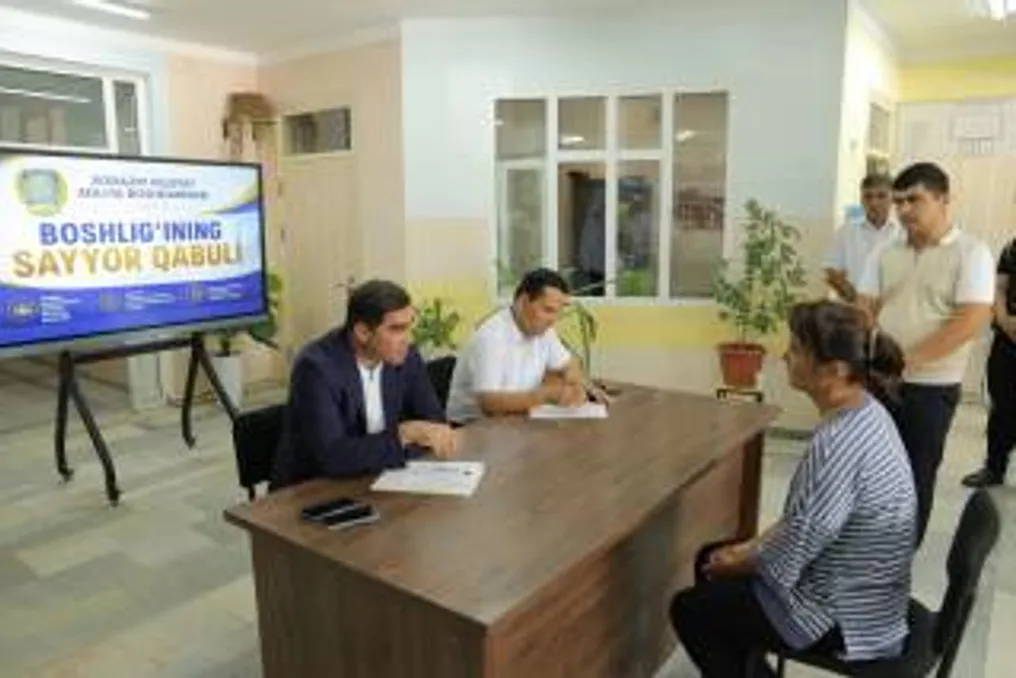
A reception by the regional justice department took place in the village of Yakkachikyr in the Tuproqqal'a district of Khorezm region.
Heads of the regional justice department, representatives of the 'neighborhood council,' and other organizations were present. During the reception, issues such as the adaptation of individuals under preventive registration, working with families in disputes, timely resolution of legal problems, and strengthening cooperation with the 'neighborhood council' in this area were discussed.
More than 30 citizens' appeals were heard during the reception. Ten appeals were resolved on the spot, and legal clarifications were provided for ten appeals. Twenty citizens received legal and state services as part of the outreach reception, and six appeals requiring investigation were accepted for work.
Citizen Ma'murjon Zhumaboyev noted that Yakkachikyr is one of the most remote villages not only in the region but also in the country. He emphasized that traveling to the regional center requires significant time and financial expenditure for the population. The arrival of the head of the justice department in their village reduces costs and facilitates citizens' appeals, as many issues are resolved directly on site.
During the reception, citizens were given direct explanations regarding new adopted laws, benefits, subsidies, and ways to protect their rights.
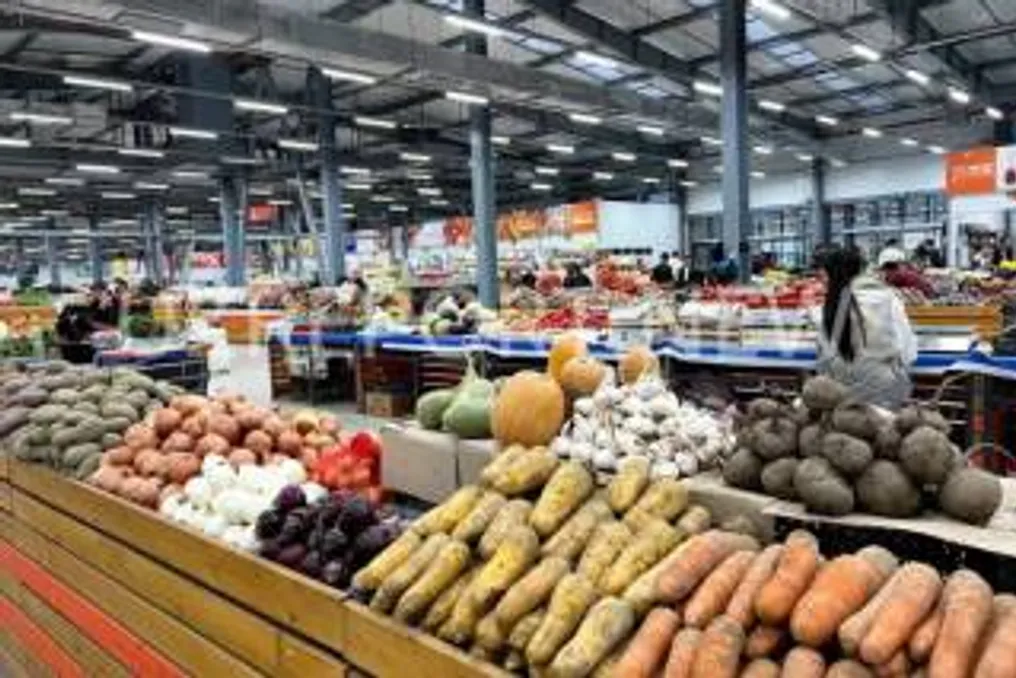
In accordance with the decision of the Cabinet of Ministers of the Republic of Uzbekistan on 'effective organization of digitization work in markets and trade complexes and measures to prevent petty corruption,' information systems implemented in markets and trade complexes will be modernized.
Within three months, the option to pay with a single QR code for temporary parking of vehicles within market zones and adjacent territories will be provided. Within two months, based on legislative requirements, business entities operating in markets and trade complexes will be equipped with fully online-controlled cash registers or have QR code labels installed for online payments.
If it is determined that electronic barriers or other devices equipped with special memory that prevent free entry (exit) of vehicles serving the information systems of markets and trade complexes, as well as services for permanent and temporary vehicle storage, are not integrated into the tax authorities' information system, a fine will be imposed in accordance with the Tax Code.
By September 1, 2026, all markets and trade complexes, as well as adjacent parking lots, will be fully digitized and integrated into the 'E-bozor' platform. By October 1, 2026, the information systems in markets and trade complexes will undergo an expert review for compliance with cybersecurity requirements jointly with the State Agency 'Cybersecurity Center.'
Starting August 1, 2026, the procedure for issuing permits for removing vehicles from storage locations will be implemented via a QR code in the 'Fines Platform' information system and sent electronically, which will only be done by the authorized body reviewing the administrative case (official) and the executive body.
For reference: as part of implementing instructions established at the expanded meeting of the National Anti-Corruption Council on March 5, 2025, measures have been implemented to digitize markets and trade complexes located in the Karakalpakstan Republic, Tashkent region, and the city of Tashkent. Measures to improve the public order and fire safety system at large markets, stipulated by the Cabinet of Ministers' decision No. 791 of November 27, 2024, were also taken into account. Previously, work was carried out to digitize over 300 markets and trade complexes in the republic to prevent corruption and hidden schemes, as well as to increase trade turnover. Furthermore, in accordance with the Cabinet of Ministers' decision No. 149 of May 25, 2011, the regulation of the process of delivery, placement, storage, and removal of vehicles detained for violating the law was improved, according to the decision No. 358 of November 8, 2023.
A spiritual and educational meeting and discussion titled 'Family is a Sacred Temple, Divorce is Not the Solution' took place in Okoltinsky District with the aim of strengthening the institution of family, preventing divorces, and promoting family values.
The event was attended by the Deputy Head of Syrdarya Region, the Head of the Department of Family and Women, the head of the district imamate, activists of the 'Oqila Ayollar' movement, mahalla heads, and representatives of relevant organizations. During the meeting, the sanctity of the family, mutual respect and responsibility between spouses, the importance of a healthy spiritual environment in raising children, and the negative consequences of divorce were discussed in detail.
It was emphasized that family disagreements can be overcome through mutual communication, mercy, and patience, as every preserved family is an important guarantee of children's happiness, tranquility in the mahalla, and societal stability.
As part of the event, individual conversations were held with families on the verge of divorce, and their problems were studied in depth. During these meetings, participants were provided with legal, psychological, and spiritual consultations, as well as practical recommendations for restoring family relationships.
Consultations were conducted with four families following the work. As a result, one family managed to restore its relationship, another family was given time to restore its relationship, and two other families were provided with legal clarifications and corresponding recommendations.
The event also included a meeting with women who had experienced pressure and violence, and who belong to the social risk group, at the 'Yangi Davr' mahalla citizen assembly. The Deputy Head of Syrdarya Region, Nargiza Tozhiboeva, personally familiarized herself with the living conditions and problems of these women, determining appropriate measures for each case.
During the meetings, women were provided with detailed explanations about the procedure for obtaining a 'Protective Order,' mechanisms for protecting their legal rights and interests, as well as measures for psychological and social support. Furthermore, information was presented about existing opportunities for women to learn crafts, secure employment, and start entrepreneurial activities.
Nargiza Tozhiboeva, Deputy Head of Syrdarya Region and Head of the Department of Family and Women, noted that the main goal of this meeting, held with the participation of the Deputy Head of Syrdarya Region, was to study the problems of families on the verge of divorce, support them in legal, psychological, and spiritual aspects, and most importantly, help in preserving families. She added that such targeted meetings allow for an individual approach to each situation, identifying the root causes of disagreements and resolving them through reconciliation. According to her, the results of today's discussions demonstrated that preventive work bears fruit, as one family was restored, and another family was given time to mend their relationship. She stressed that every preserved family is an important guarantee of children's happiness, public order, and societal stability. Therefore, such meetings and events to strengthen the family will continue consistently.