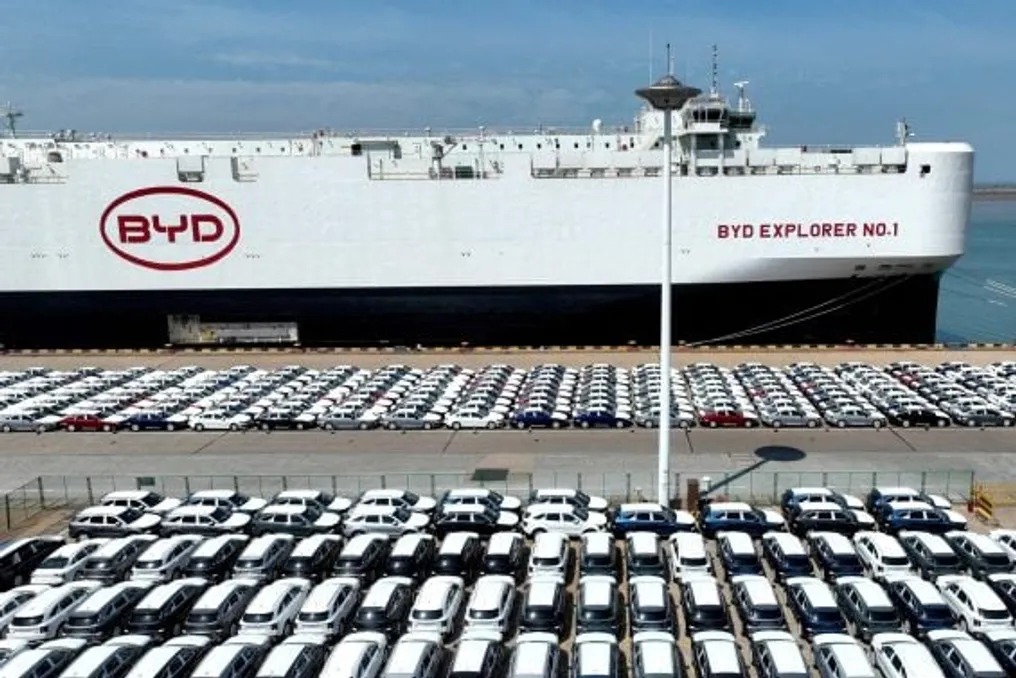
Brazil has assumed the position of the world's largest buyer of automobiles manufactured in China. In the period between January and May 2026, the country imported vehicles worth US$ 5.2 billion (equivalent to R$ 26.7 billion) from China, surpassing both Russia, which recorded US$ 5 billion, and Belgium, with US$ 3.8 billion.
Growth and Composition of Imports
According to data from Chinese customs, compiled by the newspaper Valor Econômico, this volume represents a significant increase of 146.9% compared to the US$ 2.1 billion imported in the same period in 2025. In the previous year, Brazil ranked only sixth among the main importers.
Of this total amount, US$ 4.5 billion was allocated to electrified vehicles, encompassing pure electric cars, plug-in hybrids, and conventional hybrids. In April and May alone, this category accounted for US$ 2.7 billion. The proportion of electric and hybrid vehicles in Brazilian purchases from China increased significantly, rising from 33% in 2021 to 87% in 2025.
Global Leadership and Market Details
In this segment, Brazil also leads the international ranking, ahead of Belgium and the United Kingdom, which recorded US$ 3.4 billion. A survey conducted by the Brazil-China Business Council (CEBC) indicated that, in the first half, electrified vehicles represented 15% of all Chinese imports to Brazil. Specifically, pure electric vehicles totaled US$ 2 billion, four times higher than the previous year, while plug-in hybrids reached US$ 2.79 billion, doubling the previously recorded value.
Tax Impact and Consumer Behavior
An important part of this dynamic is linked to the fiscal calendar. Starting July 1st, the import tax for foreign-made electric vehicles was raised from 25% to 35%, reaching the ceiling established in the re-taxation schedule defined by Gecex in 2023. Conventional and plug-in hybrids also had their taxes increased, reaching 35% and 28%, respectively.
With the approach of this tariff change, manufacturers accelerated shipments. Tulio Cariello, director of content and research at CEBC, commented to Valor that acquisitions intensified precisely to avoid the new tariff, now predicting a stabilization period with accumulated stock meeting domestic demand. He emphasized that the interest of the Brazilian consumer remains high, covering middle and upper-middle classes.
Automotive Sector Performance
In the first half, Brazil registered the registration of 215,023 light electrified vehicles, a 125% growth compared to the 95,493 units sold in the same period of 2025, according to data from the Brazilian Electric Vehicle Association (ABVE). This growth rate is approximately six times higher than the overall automotive market advance, which grew by 19.4%.
This strong trend reflects an asymmetric trade route: although Brazilian exports to China reached a semi-annual record of US$ 58.3 billion, they are concentrated in lower value-added commodities. Conversely, the inflow consists of electrified automobiles, which have a considerably higher profit margin.