The consortium, comprising investors from the US and Saudi Arabia, is in the final stages of selecting a country in the Persian Gulf region to implement a planned integrated refinery and energy export corridor valued at $5 billion. The final decision is expected before the end of 2026.
Location Selection Process
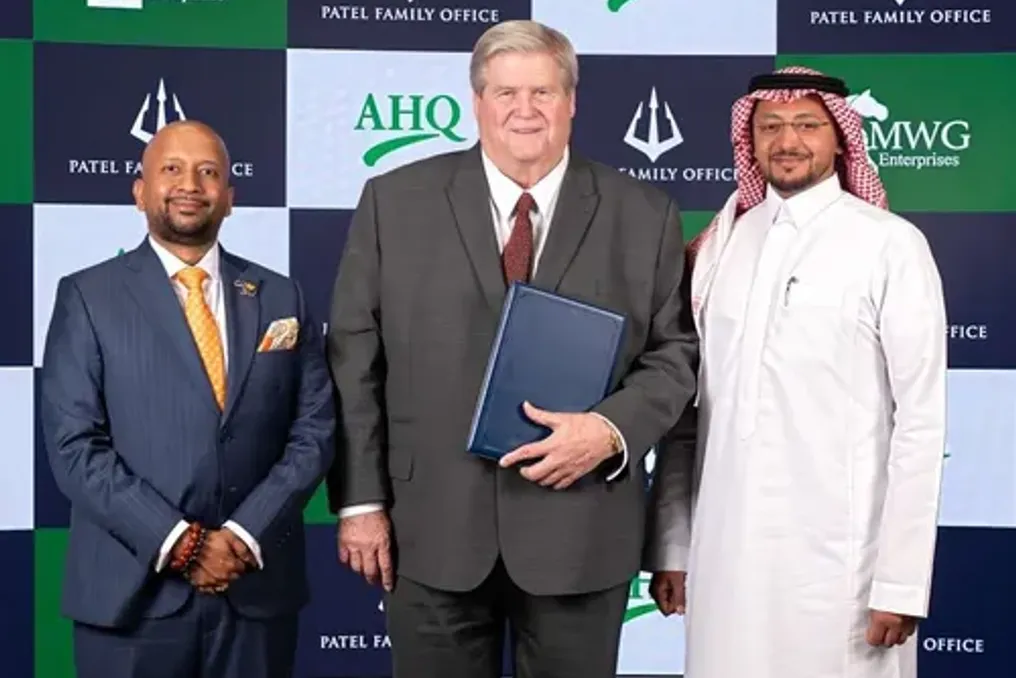
The new private consortium, MERA Oil, supported by MWG Enterprises from Texas, Patel Family Office, and PWS (an affiliate of Saudi Arabia's AHQ Group), announced on Wednesday that after three years of assessing potential sites across the region, they have narrowed their search to three jurisdictions of the Gulf Cooperation Council (GCC) located outside the Strait of Hormuz.
The consortium noted that discussions with the three selected jurisdictions have advanced significantly over the past two years, but it retains the option to consider one more GCC country if it offers a stronger solution meeting infrastructure, route sustainability, and development timeline requirements.
Project Characteristics
The project involves constructing an integrated refinery complex with a capacity of 200,000 barrels per day. It will be connected to deep-water port infrastructure, large-scale crude oil and petroleum product storage facilities, and marine export terminals. Its location outside the Strait of Hormuz allows the consortium to create an export platform with direct access to international shipping routes while reducing dependence on one of the world's most strategically sensitive maritime chokepoints.
Furthermore, the project aims to strengthen regional production, logistics, technical expertise, and energy security by establishing a long-term industrial base. Mark U. Gunderson, founder of MWG Enterprises, stated that the consortium has reached a critical stage, noting that 'three years of assessment across the region and two years of detailed engagement with three outstanding locations have brought us to a clear decision point. The sponsors' partnership is formed, the development concept and capital strategy are defined, and now we are selecting our host jurisdiction.'
Financial and Operational Details
The first phase of the project, estimated at up to $5 billion, is designed as an energy-efficient refinery complex, incorporating advanced emission control systems. The consortium is also considering future integration of joint processing of sustainable aviation fuel and carbon management technologies. According to the consortium, the preliminary feasibility study, covering refinery design, product range, logistics, capital expenditure, and phased implementation, has reached an advanced stage.
Following the selection of the host country, the transition to final site verification and design is expected. Mechanical completion of the first phase is planned for the end of 2029, followed by commissioning and the start of commercial operations. The refinery is expected to produce high-quality middle distillates, including ultra-low sulfur diesel and aviation fuel, intended for import-dependent markets in the United States, the Atlantic basin, the Persian Gulf region, and other international destinations, depending on final engineering specifications and purchase agreements.
Contribution to Regional Economy
According to Abdulmalik Al-Qahtani, CEO of AHQ Group, the project is intended to provide long-term industrial benefits beyond refining activities. He emphasized that 'expanding domestic value addition remains one of the Gulf's most important industrial opportunities.' Al-Qahtani added that over seven decades of experience in the Kingdom have shown that such a project should leave behind jobs, local suppliers, technical skills, and industrial potential that align with the region's national visions.
The development will require 1,200 to 1,500 acres of industrial land adjacent to the port and is intended to support local supply sources, engineering services, workforce development, and industrial capacity within the Gulf countries' 'In-Kingdom Value' programs. Preliminary estimates suggest that during construction, commissioning, and operation, the project will create up to 3,000 direct jobs, plus an additional 15,000 indirect and induced jobs.
Lakshmi Narayanan, Vice Chairman of Patel Family Office, reported that the consortium is attracting sovereign funds and institutional investors to support long-term financing. He noted that 'this is multi-generational infrastructure, and it must be structured according to institutional standards from the outset: robust governance, a balanced, decades-long capital structure, and transparent partnership with the host government.'