The new edition of South Africa's national artificial intelligence policy will not establish rigid rules for industries. Instead, individual sectors will be able to develop their own AI strategies based on a set of general national recommendations.
The new edition of South Africa's national artificial intelligence policy will not establish rigid rules for industries. Instead, individual sectors will be able to develop their own AI strategies based on a set of general national recommendations.
According to Jannette Morweyn, the current Deputy Director-General of the Department of Communications and Digital Technologies, the review will be conducted with a deliberately soft approach. She explained that the policy's goal is to provide guidance so that sectors can begin creating their own AI strategies, as they better understand their industry architecture. Thus, the policy should only offer national guidelines for use.
One of the most controversial elements of the initial draft—the proposal to create seven new institutions, including the National AI Committee, the AI Ethics Council, the AI Insurance Fund, and the National AI Security Institute—is also being reviewed. When asked about the fate of this structure in the new version, Morweyn replied that they are considering the issue but cannot give a final answer yet.
Parliament has already expressed its position: members prefer a more concise design based on South Africa's existing regulators. Khusela Diko, chairperson of the Portfolio Committee on Communications and Digital Technologies, stated that creating numerous new bodies is unnecessary. Instead, existing institutions should be strengthened and their mandates clearly defined.
Diko mentioned regulators such as Icasa, the Information Regulator, the Competition Commission, and the National Consumer Commission. She paid special attention to the Forum of Regulators on Information, Information Technology and Media, established in 2024, as an important coordination mechanism. She expressed hope for a simpler policy compared to the first version, especially regarding institutions. In her view, the policy should go beyond principles, as the constitutional structure already provides a foundation, and regulations need to be implemented to facilitate business innovation and economic development.
The revised policy is planned to be presented to the cabinet in November, with a backup deadline of January 2027, which was communicated to parliament in May. Morweyn clarified that due to holidays, the deadline might be pushed to January, although it is likely to happen sooner, depending on the cabinet's schedule. Broader consultations will follow the adoption of the policy.
The initial draft was withdrawn by Minister of Communications Sulli Malatsi in April after it was discovered that at least six out of 67 items in the bibliography were fictitious, likely generated by an AI tool without verification. Subsequently, an independent expert group led by AI researcher Benjamin Rosman from the University of Witwatersrand was appointed to restore the document.
Despite the withdrawal, the core ideas of the original document remain. Morweyn noted that the principle of training AI on local languages to prevent exclusion remains unchanged. The task is to create governance structures to mitigate AI risks while ensuring its optimal use to boost the economy and national productivity.
Morweyn also reported that South Africa has signed an agreement to establish a World Organization for AI Cooperation, an intergovernmental body initiated by President Xi Jinping and created in Shanghai in mid-July. This pact will focus on creating indigenous AI innovations and tools, rather than solely relying on foreign solutions.
At the event, Diko emphasized that the analysis of international AI regulation revealed a gap that South Africa's own policy must address—the space between data entering AI systems and the decisions emerging from them. She warned that AI must not be a 'black box' but a 'glass box,' open to scrutiny, so that 'discriminatory laws of our past do not appear in digital form.'
Sulli Malatsi, who was supposed to open the symposium, apologized and did not attend. Diko added that the committee has had no further contact with him regarding the review since the expert group was announced. Until the revised policy is officially published, South Africa lacks a formal national framework for AI regulation, even though this technology is increasingly integrated into hiring, lending, and public administration, and the consequences of unregulated implementation are already being felt within the government.
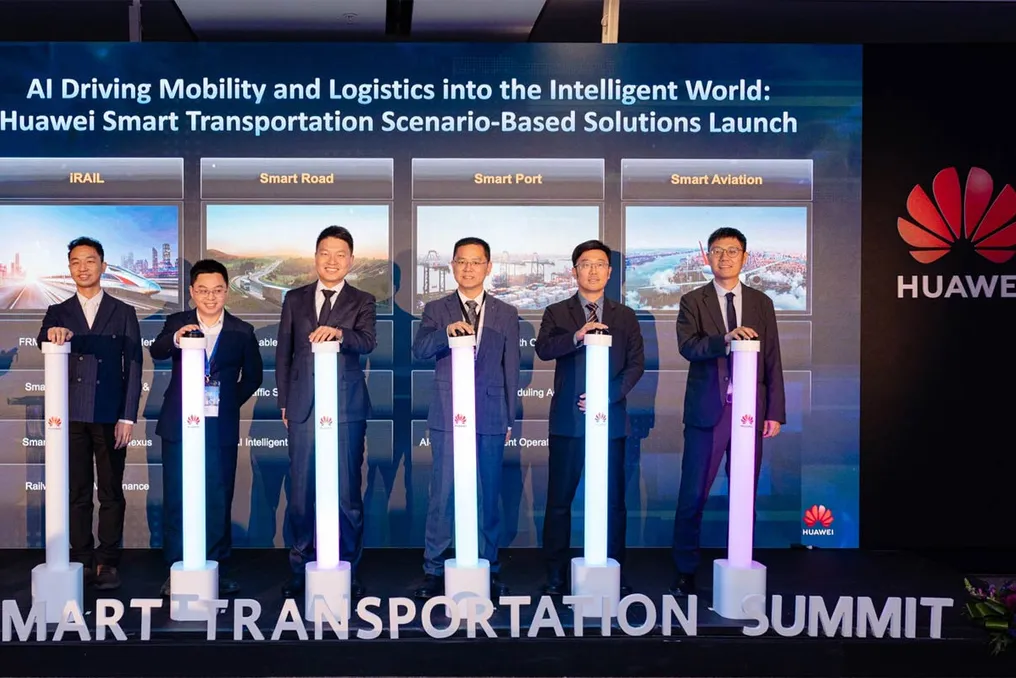
Huawei held a meeting with partners and clients at the Smart Transport Summit in Johannesburg. The event was part of the Huawei South Africa Connect 2026 and focused on how intelligent technologies can enhance the safety and efficiency of South Africa's transport system.
The summit was held under the slogan 'Moving mobility and logistics into the intelligent world.' During the event, Huawei presented twelve solutions covering four transport sectors: rail, road traffic, ports, and aviation.
Sam Tang, Huawei's Technical Director for South Africa, opened the summit by emphasizing the economic importance of the country's transport network. He noted that this network is the backbone of the economy, connecting mines, farms, and factories to the global market, and also transports millions of people to work daily. According to him, the necessary intelligent solutions are already mature, real, and ready for scaling.
The Ministry of Transport has set ambitious goals for 2030, including increasing rail freight to 250 million tons annually and halving road fatalities. Tang pointed out that there is potential for improvement in real-time data exchange, which can lead to delays such as ship waiting times at sea or truck queues at ports. Furthermore, transitioning to earlier maintenance intervention will help reduce costs and prevent rare but serious safety risks associated with untimely repairs.
He concluded that addressing these gaps requires building a robust digital foundation capable of lowering logistics costs across the country, an area where Huawei intends to provide support.
The 12 presented solutions are distributed across four areas. In rail transport, Huawei introduced four solutions within its iRAIL framework, concerning train communication, planning, station operations, and maintenance. For road traffic, the intelligent transport system includes tools such as AI-powered drones for rapid incident clearance and signal management systems that react to current conditions.
In the port industry, solutions integrate data from all port operations to enhance safety and optimize daily activities. Regarding aviation, the focus is on accelerating aircraft turnaround times and improving the efficiency of ground operations at airports. All these solutions utilize a common connectivity foundation and cloud technologies, allowing functionality to be applied across various modes of transport.
Tang concluded his speech by calling for increased collaboration across the entire transport sector, addressing leaders and partners with a simple message: work together, overcome barriers, and create a safer, faster, and smarter transport ecosystem for South Africa. Aaron Chen, Director of Transport Department at Huawei South Africa, thanked clients and partners and stated that Huawei will continue to work with the transport sector to support its digital transformation.
Huawei's technologies are already deployed in over 100 ports and more than 210 airports and airlines worldwide, as well as in railway and road networks spanning hundreds of thousands of kilometers. The main objective is to build a digital foundation upon which transport and logistics operators depend, aiming to facilitate travel for people and ensure efficient movement of goods across the country.
The European Union has unveiled a plan allocating 10 billion euros to finance the construction of seven artificial intelligence gigafactories within the European bloc. This initiative aims to increase the region's computational capacity and strengthen its position in the global technology competition.
The European Commission will be responsible for managing this project, with the goal of attracting an additional contribution of at least 20 billion euros from private investments to supplement public funds. These new facilities will be distributed among member states and must integrate processing, storage, and AI system development infrastructure.
This strategy arises in a context of intense international competition for technological capacity, where the European Union seeks to reduce the existing disparity compared to the United States and China. The seven new units will be added to the 19 artificial intelligence factories already operating in various European countries.
The so-called gigafactories will consist of large-scale complexes dedicated to AI development, encompassing advanced processors, software, cloud services, high-speed connections, and data centers. The European Commission clarified that the number of units was increased from five to seven after receiving expressions of interest from the bloc's governments.
Henna Virkkunen, Executive Vice-President of the European Commission responsible for Technological Sovereignty, Security, and Democracy, emphasized that access to vast processing capacity has become a crucial strategic factor for European progress in the field of AI. She stated in an official communication that access to the raw scale of computational power in the AI Gigafactories is a strategic necessity for Europe, given the accelerated pace of AI development.
Groups composed of technology companies, cloud computing providers, public entities, and investors can participate in the project. These consortia must submit their proposals during the selection process coordinated by the European Commission. The deadline for submitting applications is November 12, and selected projects are expected to be announced in early 2027, with the structures projected to be operational up to 18 months after contract signing.
Additionally, the initiative received initial support from major semiconductor manufacturers. AMD, Nvidia, and Qualcomm signed letters of intent with the European Commission to supply the necessary chips to the groups involved in creating these new facilities.
Speko, an Uzbek startup specializing in artificial intelligence and founded by Beknazar Abdikamalov, has been accepted into Y Combinator, one of the world's leading startup accelerators.
Previously, during a visit to Karakalpakstan, the President of Uzbekistan Shavkat Mirziyoyev visited the new IT Park building and reviewed Abdikamalov's developments. The President noted the entrepreneur's achievements, mentioning that his previous startup received its first investment from Meta in Asia and was featured by Forbes. He wished Abdikamalov continued success.
Speko is an intelligent platform designed for routing voice AI models. It automatically determines the most effective combination of speech recognition, large language models (LLMs), and speech synthesis technologies based on the language, use case scenario, and required performance. The founder explained that the idea arose after years of testing various combinations of voice models.
According to the creator, existing solutions quickly become obsolete as new technologies emerge. Speko constantly evaluates models, taking into account parameters such as recognition accuracy, processing speed, time to generate the first response, and cost, automatically selecting the optimal option. Furthermore, the platform publishes comparative reviews of voice AI models on the specialized resource benchmarks.speko.ai. Developers can integrate their existing voice AI agents through a unified API, while the system itself updates the routing when more efficient models appear, eliminating the need to change source code.
The project founders called on developers from Uzbekistan to create startups focused on international markets, expand the export of digital products, and establish development teams and service divisions in the country to create new jobs.