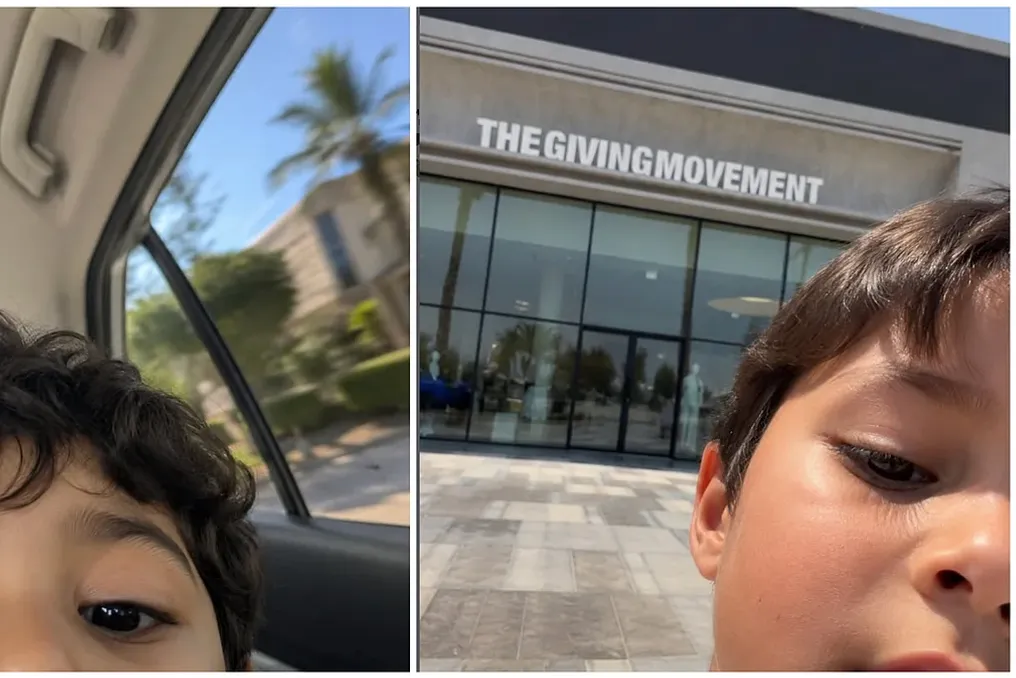
In recent days, Instagram users have noticed an unusual phenomenon: major brands in the Gulf Cooperation Council (GCC) countries have started publishing content that appears to be managed by children. These posts include careless selfies, pictures with fingers covering the camera, blurred shots, and random close-ups that have appeared in the feeds of companies such as Uber UAE, Visit Abu Dhabi, and du.
How the trend emerged
According to the participating brands, it all started when the Saudi abaya brand Sahaba Abaya uploaded a photo taken by the owner's child. This image, accompanied by a nonsensical caption, looked as if a young child had accidentally posted on Instagram. Instead of deleting the post, the brand left it up, and users reacted positively.
Comments quickly turned into part of a joke: some users wrote 'Give the phone back to mom,' while others joked, 'Tell mom to give us a discount,' addressing the child who held the account directly. Soon after, other Saudi brands began intentionally replicating this format by posting their own children's photos. The trend quickly spread across the GCC, with each brand adding its unique touch.
Application of the trend in marketing
Soon, companies including Uber UAE, Visit Abu Dhabi, du, the UAE Ministry of Energy and Infrastructure, and several creative agencies adopted this trend, turning what seemed like a mistake into one of the region's latest viral marketing moments.
Reasons for the content's popularity
The appeal of this phenomenon lies in its authenticity. For a long time, brands spent significant amounts of money on flawless photography, carefully curated Instagram feeds, and high-quality advertising campaigns. However, today's audience, especially Generation Z, is more inclined to engage with content that seems spontaneous, imperfect, and natural for social media.
Many brands also used this trend to convey marketing messages or promote campaigns through the 'voice' of a child. Instead of polished advertising copy, the posts often feature playful captions, simple observations, or humorous messages, creating the impression that they were written by a small child, which makes the promotional content look less like advertising and more like entertainment.
Not all children featured in these posts are real. Many brands used AI-generated images to recreate this aesthetic, while others shared real photographs, adding another layer to a trend that combines artificial intelligence, storytelling, and social media humor. Children's photos perfectly convey this feeling: they look random, playful, and human, standing out among feeds filled with professional advertising. In many cases, the images are accompanied by deliberately random captions, reinforcing the illusion that a child actually posted them. Regardless of whether the trend lasts a week or a month, it demonstrates how quickly social media culture can evolve.