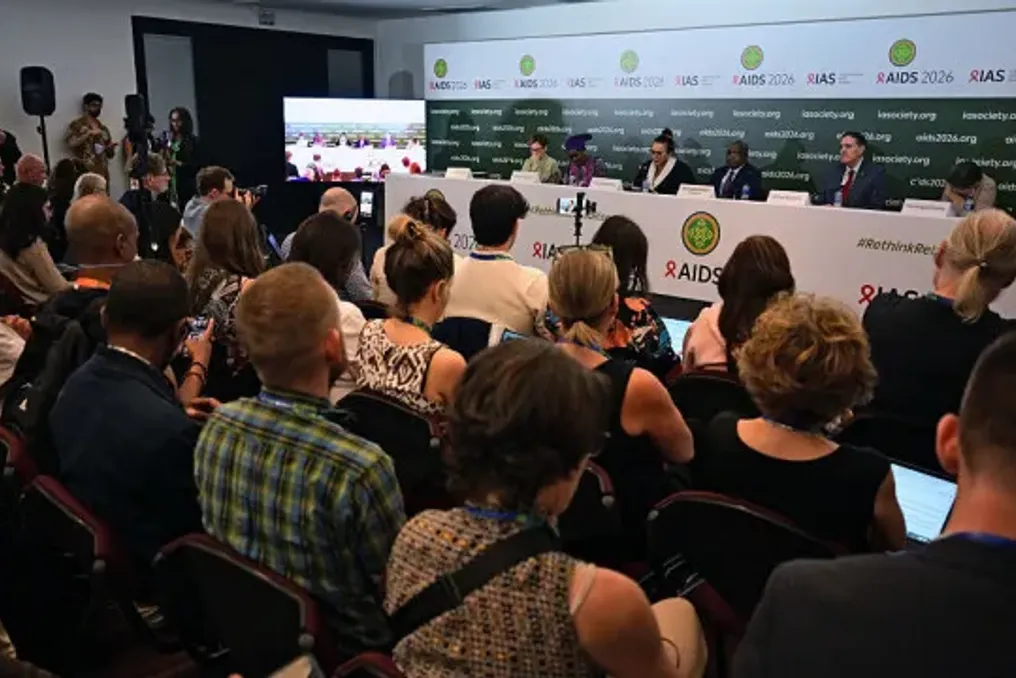
The global community risks failing to meet the United Nations' goal of eradicating AIDS as a public health issue by 2030. The main barriers to this goal are the reduction in international financial support for HIV control programs, lack of funds, and ongoing discrimination among vulnerable populations.
UNAIDS Report on the AIDS Crisis
These findings are contained in a special document from the Joint United Nations Programme on AIDS (UNAIDS) titled 'United to End AIDS,' which was presented at the 26th International AIDS Conference. According to UNAIDS data, external aid to developing countries decreased by 18% in 2025, and the annual funding deficit for HIV control reached a substantial amount of $4.3 billion.
Consequences of Financial and Social Problems
The reduction in funding has led to disruptions in prevention, testing, and medical care provision in many countries, especially in programs managed by local non-governmental organizations. Experts also emphasize that stigmatization and existing legal restrictions prevent millions of people from accessing treatment and preventive measures, thereby contributing to the further spread of HIV.
In several countries, laws exist that impose criminal liability for actions such as sex work, drug possession, or homosexual relationships. Because of this, representatives of these groups often fear seeking medical help or participating in prevention activities.
Epidemic Geography and Statistics
The organization estimates that 49% of all new global HIV infections affect key population groups and their partners. Against this backdrop, the epidemiological situation is worsening in Eastern Europe, Central Asia, Latin America, and the Middle East. In Sub-Saharan Africa, where half of all new infections are recorded, women and adolescent girls account for 60% of those infected, yet only 55% of children living with HIV receive treatment.
Currently, about 41 million people live with HIV, of whom 32.1 million are undergoing antiretroviral therapy. Only 1.2 million new infections were registered in 2025, and 570 thousand people died from AIDS-related causes. The report authors point out that these figures demonstrate a significant lag behind planned targets. Compared to last year, the number of new infections exceeded the target by approximately one million, and mortality was 400 thousand cases higher than expected.
Solutions to the Crisis
To overcome the current crisis, the report authors propose relying on the updated Global Strategy for 2026–2031 and the UN Political Declaration. These documents aim to ensure the full integration of specialized medical services into national healthcare systems, increase the number of people receiving treatment to 40 million, and introduce modern long-acting injectable drugs, such as lenacapavir, which is administered only twice a year and provides near-complete protection against HIV.