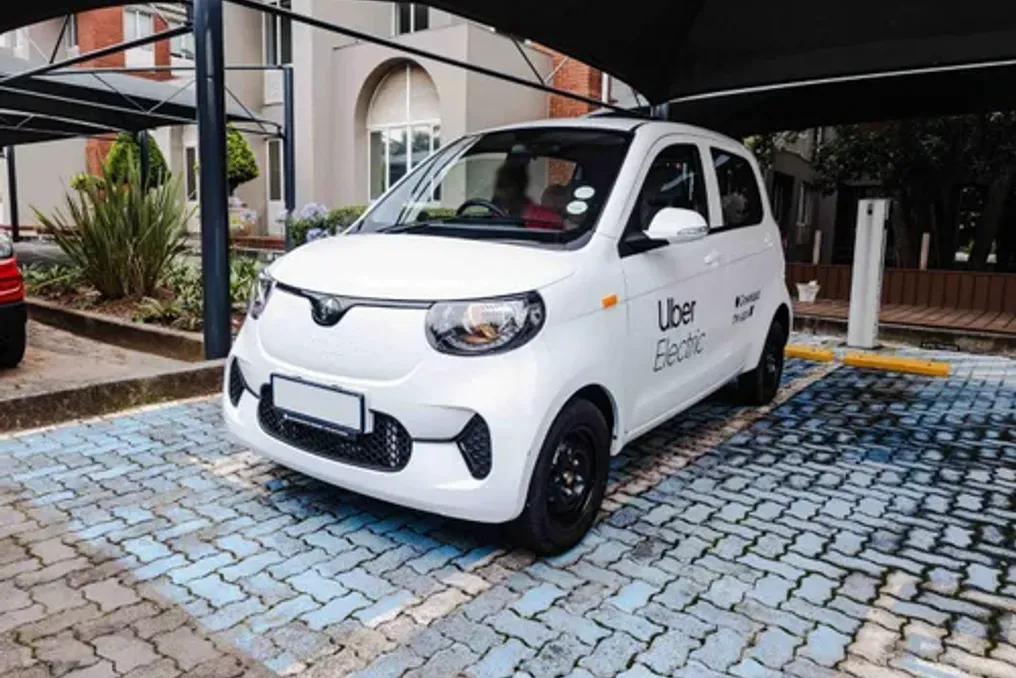
An Uber Technologies Inc. partner, as part of the first African offering of affordable electric vehicles, noted that the military conflict between the US and Iran, along with rising fuel prices, is increasing the need for branded vehicles.
Pilot project in Johannesburg
The Durban-based company Valternative is implementing 360 vehicles in Johannesburg. This pilot project is planned to be expanded in the country's largest city before offering services in other megacities.
The startup's co-founder, Mohamed Jeewa, shifted his focus from selling shoes to electric delivery bicycles in 2022. He was inspired by the boom in delivery services during the Covid pandemic and China's rapid electrification.
Motivation for switching to electric
According to Jeewa, the situation caused by the conflict is having the same impact on South Africa's electrification as the Covid pandemic did on the delivery sector. He believes that once South Africans, whether Uber drivers or consumers, try electric vehicles, they will not return to previous methods.
Although Uber previously promoted its electric vehicle options as a more environmentally friendly alternative for passengers, in South Africa, the main driving force for customers and the company itself is cost savings. The pilot was launched in November after Bolt Technology introduced affordable rides using a gasoline-powered Bajaj Auto quadricycle.
Competition and technical details
Jeewa's company uses the Henrey EV4 model, manufactured by Beijing Henrey Automobile Technology Co. Jeewa reported that Uber suggested they look for a vehicle capable of competing with Bolt's Bajaj based on pricing policy while meeting standards for a more comfortable ride.
Valternative is primarily owned by Jeewa and his co-founders, as well as family offices of wealthy South Africans who preferred to remain anonymous. In South Africa, where private electric vehicles remain rare, there are serious obstacles: weak charging infrastructure and high acquisition costs for Uber drivers, including a 25% customs duty on imported electric vehicles compared to 18% for gasoline and diesel cars. Furthermore, the country has a large automotive industry, and the duty does not apply to local models, as the country does not manufacture fully electric cars.
Infrastructure challenges and operating costs
Uber acknowledged in response to inquiries that 'the biggest problems still relate to infrastructure and the high cost of electric vehicles.' Although the Qute costs around R105,000, Valternative, together with Henrey, reduced the cost to approximately R190,000 by removing heaters and other optional features.
Jeewa emphasized that the main problem is infrastructure, explaining why Uber chose a fleet option, and stated that his company is forced to install charging stations in three locations in northern Johannesburg where the pilot takes place. He said: 'We are pioneers in this field.'
Nevertheless, the cost of rides on Uber Electric is higher than on Bolt's Bajaj. For example, a 5.9-mile trip is estimated at R49 on Uber Electric, whereas it costs R88 on Uber Go, and R82 on Uber Electric. However, Henrey allows transporting two passengers, unlike the single passenger capacity of competitor Bolt. Jeewa noted that the charging fee of about R160 provides Henrey with the same range as R400 of fuel in a similar Suzuki S-Presso.
Driver life and development prospects
Cost reduction and limited infrastructure affect drivers and customers. Drivers complain about the lack of heating in a city where winter temperatures can drop below zero, and the drivers themselves note that charging consumes valuable working time. Tandive Mlindjana, a driver from Johannesburg, reported spending a lot of time at the charging station waiting for other cars to charge, which results in losing an hour of work instead of completing trips.
The Uber Electric service is currently limited to the northern suburbs and does not accept lucrative fares, including trips to the city's main airport and neighboring Pretoria. Drivers pay a weekly rent of about R2,500, which includes maintenance and insurance. Mlindjana reported that her best weekly income was around R6,200, but after deducting rent and charging costs of about R1,100, the net income was around R2,600. She added that it would be 'ten times better' if they were offered the option to buy electric vehicles instead of renting.
This model differs from Dubai, where a developed electric vehicle ecosystem includes nearly 48,000 registered electric vehicles, over 1,800 public charging stations, and a policy to transition all taxis to hybrid, electric, or hydrogen models by 2027. Uber has set a goal of a complete transition to zero-emission vehicles by 2040. However, in South Africa, although electric vehicles eliminate exhaust fumes, they are powered by a grid that is mainly supplied by coal-fired power plants.
Over the next year, Valternative plans to add six to seven charging points monthly, introduce solar-powered charging hubs, and equip the existing fleet with cabin heaters. Jeewa expressed hope that the company will eventually be able to scale this model to eight African countries, starting with Egypt, Morocco, Ghana, and Côte d'Ivoire. In South Africa, plans include offering larger vehicles for long-distance travel and more expensive Uber categories.