The Committee for Religious Affairs in Tajikistan issued a statement denying reports about the introduction of a ban on wearing hijabs, long beards, and other clothing allegedly contradicting national customs.
The Committee for Religious Affairs in Tajikistan issued a statement denying reports about the introduction of a ban on wearing hijabs, long beards, and other clothing allegedly contradicting national customs.
Previously, information based on anonymous sources circulated in various media outlets that the country's leadership had made a legislative decision to prohibit women from wearing hijabs and men from having long beards. Furthermore, it was reported that control measures for adhering to these norms were being tightened.
Media publications claimed that such restrictions were being introduced as part of the fight against religious extremism and to promote traditional Tajik clothing. However, representatives of the Committee for Religious Affairs categorically stated that all this information is unreliable and emphasized the absence of any legislative ban on the specified elements of appearance.
As a reminder, a tragedy occurred in the city of Ghor in Afghanistan in June: two people died during the dispersal of a demonstration that began after the detention of women demanding adherence to hijab wearing rules.
A video that went viral on social media shows a pilgrim who has been undertaking a pilgrimage to Amarnath for 413 days. This Shivbhakt is from the state of Uttar Pradesh.
Sunil's method of travel surprises people. He does not walk or use transport; instead, he slowly progresses towards the Amarnath cave, lying face down on a piece of styrofoam. The video of this arduous journey quickly spreads across social media.
According to officials, his 413th day of the journey concluded on Monday. He was seen moving along the Jammu-Srinagar National Highway, lying on a piece of styrofoam. Although his journey is very slow, it is evident that his faith and determination remain unwavering.
When thousands of pilgrims passed along this route for the Amarnath Yatra, many stopped upon seeing Sunil. Some filmed him, while other pilgrims bowed to him in respect for his devotion. Security personnel also accompanied Sunil on the Jammu-Srinagar Highway to ensure the safety of his journey.
During the Amarnath Yatra, pilgrims arrive at Baba Barfani using various methods according to their beliefs. However, Sunil's journey is unique because he moves continuously forward under extremely difficult conditions for over a year. This asceticism has become a topic of discussion on social media, where people highly praise his endurance, patience, and unwavering faith in Lord Shiva.
The Amarnath Yatra is considered one of the most sacred pilgrimages in Hinduism. Millions of pilgrims arrive annually from different parts of the country to undertake the difficult ascent in the Himalayas and see Baba Barfani. Thanks to Sunil's unique journey, this religious trip has gained special recognition.
The country is implementing systematic reforms aimed at ensuring transparency in foreign economic activities, protecting state economic interests, and fully collecting customs payments. Special attention is paid to enhanced customs control at state borders, which allows for thorough verification of the legality of each cargo batch and the accuracy of accompanying documentation.
This strengthens the prevention of economic offenses and the timely suppression of illegal actions by participants in foreign trade. Thanks to such prompt and effective control measures, a recent attempt at a violation was uncovered at the 'Olot' customs post in the Bukhara region.
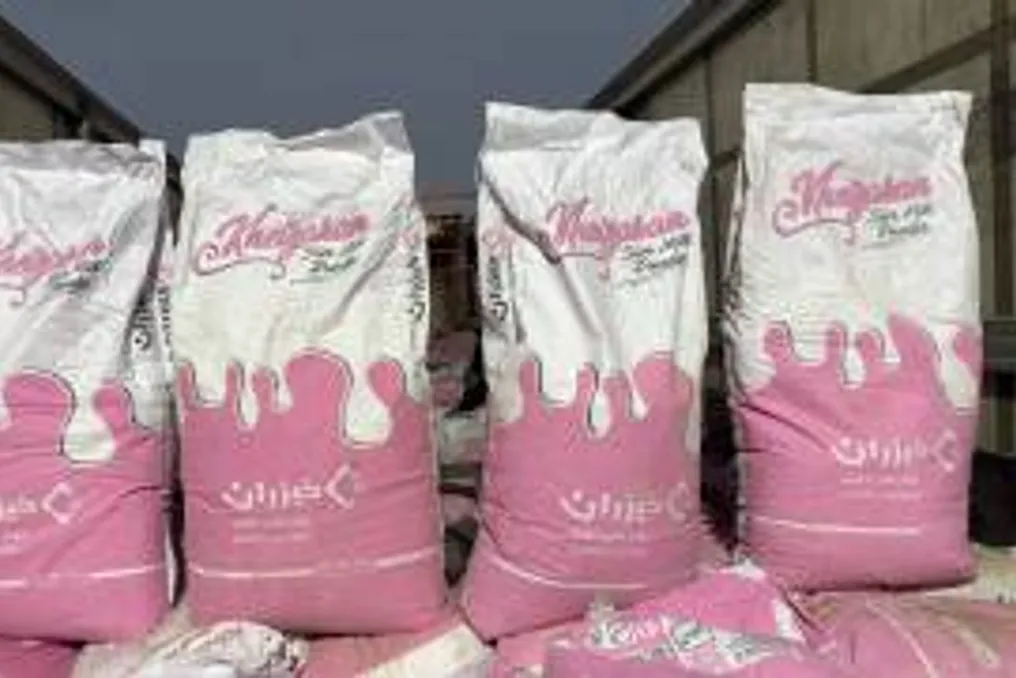
According to available information, the accompanying documents for the imported goods indicated that they were powdered dry milk. However, customs inspectors suspected something was amiss regarding the actual composition of the cargo and conducted an inspection according to established procedures.
During the thorough inspection, it was established that the information provided in the documents was not accurate. The inspection revealed that the cargo actually consisted of 25 tons of dry milk. Thus, an attempt to reduce customs payments by changing the product name and evading the payment of funds due to the state budget was prevented.
This is another practical proof that customs authorities effectively use risk analysis methods, in-depth document study, and modern control tools. The total value of this batch of goods corresponds to initial estimates of 875 million soums. Investigative measures are currently underway in this case, and appropriate measures will be taken in accordance with established legal norms.
Today, the main task of customs authorities is not only to process goods but also to ensure economic security, protect state interests, and create equal competitive conditions for honest entrepreneurs. Therefore, any identified violation is considered an important result in strengthening economic order and protecting the interests of the state budget.
This case, discovered at the 'Olot' customs post, once again confirmed the high responsibility and professionalism of customs service employees, allowing a major economic offense to be prevented. Effective control measures at state borders continue to play an important role in ensuring the country's economic security, strengthening the rule of law, and guaranteeing the legality and transparency of every foreign trade operation.