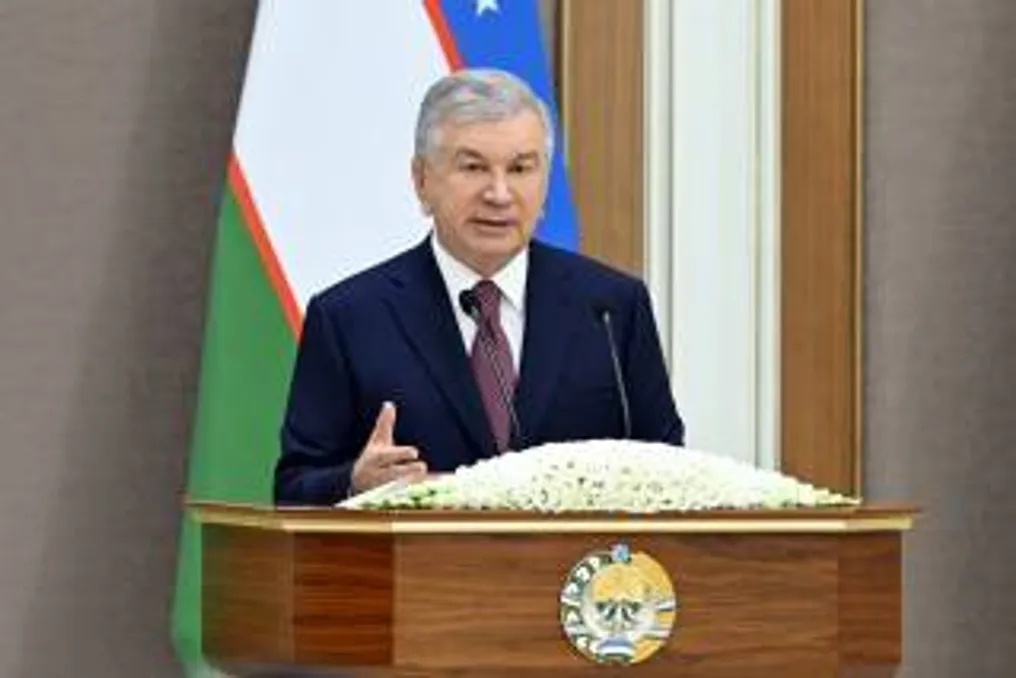
During the video selection meeting chaired by President Shavkat Mirziyoyev, achieved results for the first half of the current year and key tasks that must be completed by the end of the year to ensure growth in regions and industries were discussed.
Economic Indicators and Goals
At the beginning of the year, the country's economy showed growth at a rate of 8.5%. In industry, growth was noted at 8%, in the service sector at 16.9%, in construction at 13.8%, and in agriculture at 4.7%. The volume of investments reached 28 billion dollars, and exports amounted to 14.4 billion dollars. International rating agencies 'Fitch' and 'Moody's' improved the country's sovereign credit rating by one level.
The President emphasized the need to achieve economic growth rates of 9-10% to improve the lives of 40 million people. For this, it was noted that regional and industry leaders must fully utilize available opportunities and achieve concrete results for every project and enterprise.
Analysis of Plan Execution
A critical analysis of the six-month plans of regional and industry leaders was conducted at the meeting. It was recorded that in some regions, reserves were not fully mobilized regarding gross regional product, construction, investments, industry, and exports. It was established that the responsibility of leaders who failed to meet monthly, quarterly, and annual plans will be increased.
The head of state stressed that any results that are not felt in people's lives or do not ease the burden on entrepreneurs are merely 'numbers on paper'. Therefore, work on infrastructure development, employment, entrepreneurship, and increasing people's income must be organized at a completely new level.
Socio-economic Initiatives
Special attention at the meeting was paid to the issue of updating the activities of 'mahalla yettiligi' (public associations at the microdistrict level). The 'Dolzarb 40-day' campaign was announced, within which a new system began to be implemented in the most problematic microdistricts. Akims are personally responsible for timely resolution of issues related to electricity, gas, roads, and water in these areas.
The employment system is working on training, employing needy populations, and increasing incomes depending on the region. An reassessment of the activities of banks and public associations at the microdistrict level was also conducted, and they were assigned a three-month period of practical certification. Specific tasks were set to improve well-being, freedom, and quality of life in microdistricts.
Business Support and Foreign Trade
Issues of supporting entrepreneurship and improving the business climate were discussed. It was noted that 51 ministries and departments have the authority to impose financial fines in 322 areas, and nearly 3 trillion sums in fines were imposed in 2024–2026. The President emphasized that regulatory bodies must first provide entrepreneurs with opportunities and show them the right path.
In conditions of growing competition in external markets, it was noted that it is necessary to reduce costs for payment, collection, and excessive expenses for exporters. All ministries and departments were instructed to submit proposals for reducing bureaucracy, fines, payments, and fees in their systems for further improvement of the business climate.
Industry and export indicators were also critically analyzed. A slowdown in industrial growth and the absence of expected changes in exports in some districts and cities were noted. It was ordered to check the activities of akims who are not showing results and take decisive measures against responsible leaders if changes do not occur by the end of the ninth month.
Infrastructure and Finance
Analyzing the expenses of strategic enterprises revealed an increase in the cost of production at some large enterprises. Furthermore, the need to improve the efficiency of electricity and gas distribution due to high losses in energy grids was emphasized. The task was set to increase the market value of large companies, prepare them for IPO processes, and enhance their attractiveness to foreign investors.
Despite tax revenues increasing by 27% since the beginning of the year, exceeding 130 trillion sums, the insufficient volume of the annual plan for additional revenues was criticized.
Important tasks for production restoration and privatization were defined. It was indicated that due to the downtime of some textile enterprises, opportunities worth 5 trillion sums of products and 400 million dollars of exports are being lost. The situation where 57 industries and 76 regional enterprises reduced production by 11 trillion sums since the beginning of the year was also criticized.
Leaders were instructed to conduct an individual analysis of non-operating enterprises to restore their activities. Additionally, it was decided to put up for sale real estate, land plots, and state shares worth 100 trillion sums under the new privatization program, as well as to facilitate payment terms for entrepreneurs who received state assets.
Logistics and International Cooperation
Over the past three years, 509 export-oriented capacities worth 11 billion dollars have been launched, but 208 of them are still not operating for export. It was noted that if the products of these enterprises are directed to external markets in an amount of at least 30-40%, this could provide an additional inflow of currency amounting to 1.5-2 billion dollars.
The situation where there was no export whatsoever in 29 out of 47 special economic zones since the beginning of the year was criticized. Leaders were instructed to create 'operational teams' to promptly resolve issues related to certification, working capital, markets, and logistics for enterprises and special economic zones that are not exporting.
Tasks were set to support national brands. Over the past two years, financial assistance of 15.5 billion sums has been provided in this area, but one of the three local companies that registered its brand has still not entered the export market. Therefore, a program will be developed to bring local brands to external markets and protect them from dumping and counterfeiting.
70% of foreign trade volumes are transported by rail, but numerous objections from entrepreneurs regarding this direction were noted. Logistical difficulties arise due to a shortage of wagons and high congestion of some railway lines. Leaders were instructed to attract additional wagons and reach an agreement with the World Bank to attract 200 million dollars for railway infrastructure.
Diplomacy and Food Security
The issue of implementing agreements reached during high-level visits was also considered. Over the past years, 1617 investment projects worth 213 billion dollars were agreed upon during 52 visits. Now, the implementation of these 'roadmaps' is under strict control of the Audit Chamber and the Ministry of Foreign Affairs.
It was instructed to have the Deputy Chairman conduct weekly discussions on project implementation in the format of interstate meetings with industry leaders, akims, and ambassadors. The Presidential Administration was also tasked with reviewing the activities of diplomatic missions in the field of economic diplomacy, investment, and exports, and recommending young and progressive personnel to replace leaders who are failing in their duties.
The meeting also discussed issues of curbing inflation and ensuring food security. Although regional governors aimed not to exceed inflation by 3% in January-June, most regions did not achieve this goal. Due to the rise in meat prices, 300 billion sums were allocated to cover the costs of air transport of imported meat.
It was emphasized that agricultural accounting results show the real picture of animal husbandry. Additional funding will be directed to support livestock projects, and the task was set to import 100 thousand head of cattle and 150 thousand head of sheep by the end of the year.
Specific measures were defined for forming reserves of fruits, vegetables, and potatoes, building cold storage warehouses, and replenishing food stocks. The task was set to commission 340 cold storage warehouses with a capacity of 87 thousand tons by the end of the year.
Prospects in Conditions of Uncertainty
The head of state noted that no one can say in advance how long global economic uncertainties will last. He warned that the slowdown in economic activity in major partner countries may affect local enterprises, especially exporters.
In this regard, it was emphasized that all leaders must be ready to mobilize their reserves, taking into account any risks. Together with 'centers of wisdom' created in industries and regions, scientifically sound proposals must be developed by August 15. These proposals will be aimed at developing an interconnected chain of 'resource – infrastructure – project – production – budget revenues – export'. Macroeconomic parameters, budget, and export programs for 2027 will be prepared based on the new approach—the 'mobilization scenario'.