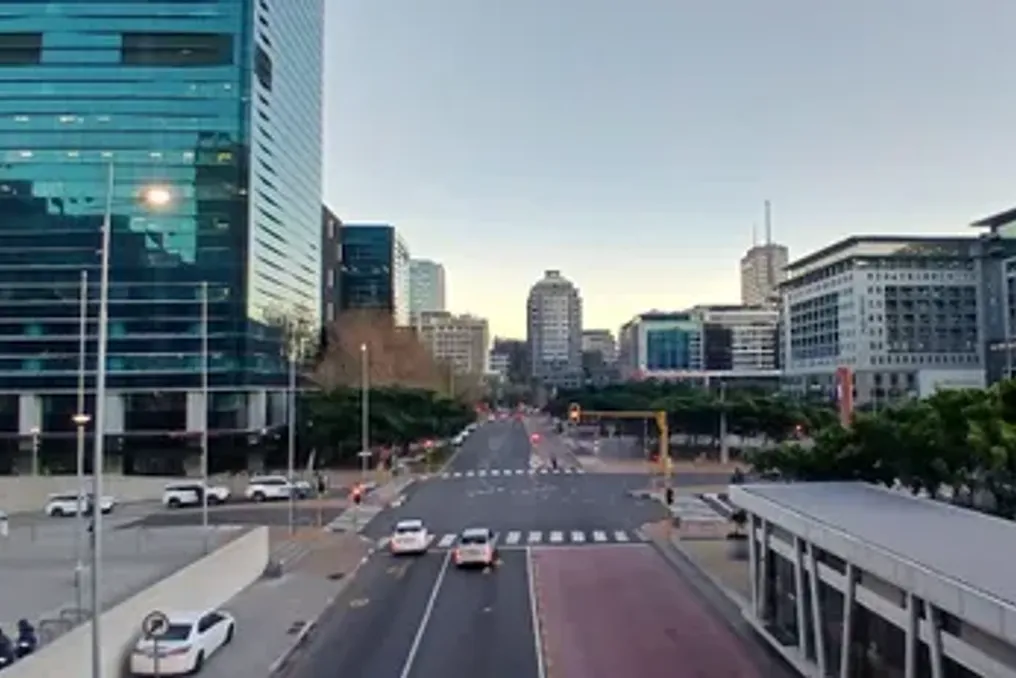
The total official value of all real estate in Cape Town's Central Business District (CBD) is R42.6 billion, according to a property valuation conducted by the Cape Town City Council in 2022.
Growth in CBD Investments
The total value of real estate development projects in Cape Town's CBD exceeded R12.8 billion in the 2025/26 period, which is 41% more than the R9 billion registered in 2024. This growth indicates a sharp increase in investor confidence in South Africa's official parliamentary capital.
According to the key findings of the latest edition of the Cape Town City Centre State of the City Report 2025 — Year in Review (SCCR), published annually by the Cape Town City Centre Improvement District (CCID), the internal economy has also benefited from the stable operation of key sectors, including Business Process Outsourcing (BPO), business and leisure tourism, and the development of the creative economy.
Expert Opinion and Area Attractiveness
Rob Cain, Chairman of the CCID Board and CEO of Boxwood Property Fund, noted that 'it is striking to see development of this scale, but the real story is that these figures not only reflect but also inspire investors. And more importantly, what happens when confidence concentrates in one place.'
Cain also highlighted the growing interest from international and Gauteng developers in participating in the success of Cape Town's CBD. The central district has maintained its status as a favorable business environment with sustained growth. Business confidence remained high throughout 2025, while retail showed strong results. The non-retail sector was dominated by the legal, medical, and financial sectors.
Residential Property Market and Report
The residential market experienced a boom: the median price of sectional units sold in the CBD increased by 5.4%, reaching R1.92 million. The study presented in the 14th edition demonstrates that the CBD economy is in excellent shape, building on the achievements of 2024. The main publication by CCID focuses on a geographical area of 1.74 km² in the Central City—the country's most economically resilient urban centre.
This 84-page report was presented to prominent Cape Town business and property leaders on Wednesday. Its research is considered a valuable tool for investors, developers, as well as business and property owners looking to invest in South Africa's most favorable business centre.
Real Estate Project Breakdown
The extreme results in real estate investment show that 29 projects are under development in 2025/26: eight have been completed (valued at over R1.9 billion); 14 are under construction (valued at over R5.4 billion); five are in the planning stage (valued at R5.4 billion), and two are proposed, with their value yet to be confirmed.
Focus on Affordable Housing
More than half of the projects in the pipeline are residential properties valued at R6.2 billion. Affordable housing also plays a significant role: the Western Cape government has paved the way for the implementation of two projects conservatively valued at R2.9 billion, and the City of Cape Town has allocated public land for a future affordable housing complex.
Impressive new architectural structures are emerging in the form of four mixed-use buildings (including apartments) valued at R3.8 billion. One of the most significant is a R1.2 billion project to convert the iconic Golden Acre office building on Adderley Street into a residential and retail complex with 450 apartments.
Another gem among the mixed-use developments is City Park—the redevelopment of the former Christiaan Barnard hospital on Bree Street, valued at R1.3 billion. A key element of this project is the inclusion of Africa's first Mama Shelter hotel. The international brand, opening in spring, will also feature residential units in a stunning building reimagined by dhk Architects. Furthermore, another luxury hotel offering, One on Bree, valued at R1.1 billion, is located at the bottom of Bree Street, adding over 500 rooms to the CBD's hotel stock and more than 279 residences.
Economic Boom in the City Centre
Strong investor confidence in the CBD is the result of 26 years of consistent efforts by CCID to create and maintain a safe, clean, and more attractive city centre, notes Cain. He also points out that 'Mayor Jordyn Hill-Lewis of Cape Town played an important role in boosting confidence and helping to create an environment where investment can thrive.'
In 2025, the number of both retail and non-retail businesses operating in Cape Town's CBD grew by at least 12 out of 21, totaling 3,547. The two largest non-retail sectors, legal and medical professions, both expanded in 2025. Other growing sectors include finance, investment, and insurance; ICT, BPO, and telecommunications; accommodation; architecture; as well as property and commercial real estate.
One of the key sectors, retail—accounting for 1,495 out of 3,547 businesses operating in 2025—has once again expanded its presence, opening 172 new retail outlets. According to the CCID Business Confidence Index, 98% of surveyed retailers reported favorable business conditions in the fourth quarter of 2025, significantly higher than the 92% recorded in 2024.
According to the Cape Town City Centre State of the City Report 2025, retail was characterized by high occupancy rates, maintaining a stable employment level of 88% by the end of the year across the four CCID districts. Of the 1,704 available retail spaces, 1,495 were occupied and actively trading, with vacant spaces accounting for 12.3%.
Additional SCCR Findings
Other key SCCR findings include: the office vacancy rate in the Cape Town metropolitan area reached 6.1% by the end of 2025, increasing to 6.2% in the second quarter of 2026. This is the lowest office vacancy rate in South Africa. Premium-class office rental rates in Cape Town's CBD are among the most competitive in the city. Furthermore, the CBD still accounts for the largest share (39%) of the total office space in Cape Town, according to the South African Property Owners Association (SAPOA).
Report Contents
Unique features of the report include a map of real estate investments detailing 29 completed projects, current construction sites, as well as planned and proposed projects; an overview of outstanding economic sectors in 2025; a report on the tourism economy and hotel occupancy rates in 2025, as well as the growing contribution of the creative sector to the daytime and nightlife economy of the Central City; an analysis of challenges and opportunities for global cities and CBDs; an in-depth analysis of the quarterly CCID Business Confidence Index results, tracking business owner confidence levels across the four CCID districts; and a section on how the four districts comprising the CCID geographical zone of 1.74 km² performed in 2025 in terms of business, property, economic, and lifestyle trends.
Peter Jansen van Rensburg, CEO of Times Squared Marketing Pty Ltd, notes that Cape Town has a smaller population and a smaller economy compared to Johannesburg. He argues that formally Gauteng should win, but in practice, the Western Cape has surpassed it year after year. According to him, using January 2010 as a base of 100, the Cape Town City Council housing price index is currently 272.5. The entire Western Cape is 279.6. This means that average property in the province costs almost 2.8 times more than sixteen years ago, according to economist John Louw.
Compared to the rest of the country, housing prices in the Western Cape have risen by 179.6% between January 2010 and September 2025. Gauteng reached a rise of 79.7%. KwaZulu-Natal—76.7%. The Western Cape has more than doubled its closest competitors. The Western Cape records the shortest sales periods in South Africa. A correctly valued home in Cape Town now sells in approximately 70 days, compared to 80 days at the end of 2023. In Johannesburg, this period is closer to 100 days. Well-priced homes receive multiple offers and sell quickly, often at a price equal to or exceeding the asking price. Power has finally shifted to sellers. Approximately 63% of recently sold homes achieved 90% or more of their asking price. The average deal closes at 94% of the asking price. Overvalued homes remain on the market. Correctly priced ones do not.