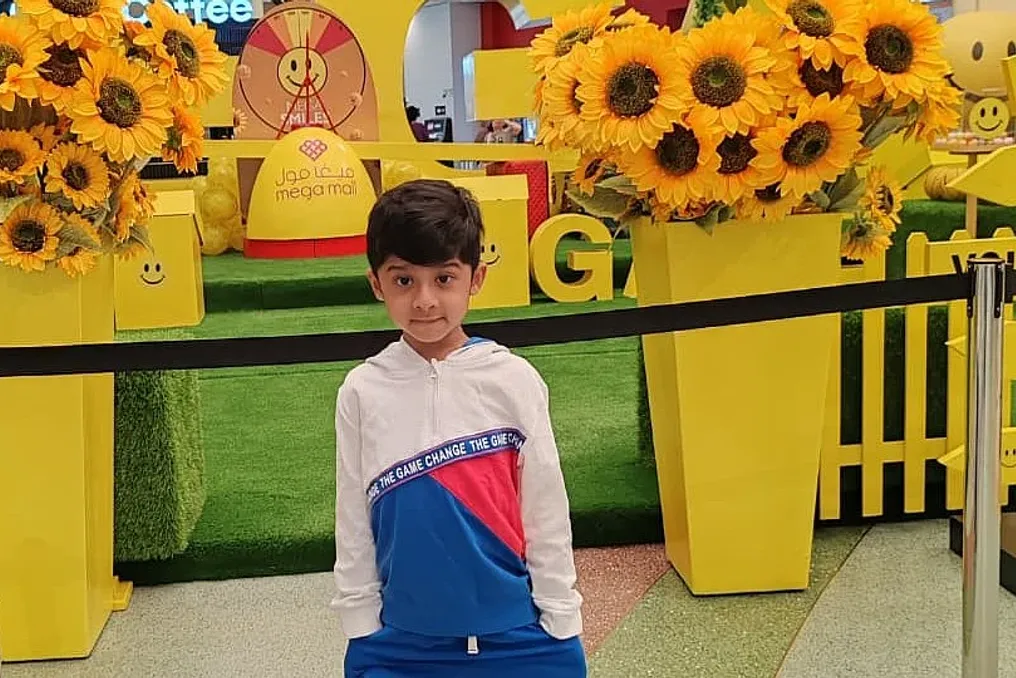
A family of Indian expatriates in the United Arab Emirates (UAE) is facing difficulties raising over 10 million dirhams for the treatment of their seven-year-old son, Zayan.
Diagnosis and Deterioration of Condition
When people first meet Zayan, they see a cheerful seven-year-old boy with a warm gaze and endless curiosity. He loves watching landscapes from the car window, exploring the world, playing with his sister, and enjoying small things. However, for years, his parents, Indian nationals Jagfar and Jasmine Jagfar, watched as their son struggled to reach all developmental milestones.
His younger sister, Izza, quickly surpassed him, and people often wondered if she was the older child. Jagfar told Khaleej Times in an interview that they visited many doctors and specialists, but no one could determine the cause of the problems.
Diagnosis
By the end of 2024, Zayan's condition sharply deteriorated: he stopped climbing stairs and stumbled while trying to board the school bus. This moment was a turning point, after which the family from Sharjah decided to consult a neurologist at Rashid Hospital in Dubai. Jagfar noted that the doctor identified the problem during the very first visit.
The diagnosis was Duchenne Muscular Dystrophy—a rare, progressive genetic disease causing irreversible muscle degeneration. Without intervention, children who once ran, jumped, and climbed eventually lose these abilities. They may also develop heart and respiratory problems in the future.
Search for Treatment and Financial Difficulties
Although there is currently no cure for DMD, there are treatments that slow the progression of the disease and help children manage symptoms. The treatment involves the gene therapy Elevidys®, which is administered once and is designed to deliver a functional form of dystrophin protein necessary for muscles. This is one of the most expensive types of treatment in the world.
The preliminary cost quoted by Al Jalila Children's Specialty Hospital was 10,654,465 dirhams. The family spent months searching for a way to solve this problem. They conducted crowdfunding in India but failed to raise funds in the UAE. Two months ago, when Zayan turned eight in September and his condition continued to worsen, the Al Jalila fund intervened, lifting regulations and granting official permission to raise funds in the UAE. Since then, the family has managed to raise 1.5 million dirhams, but time is critically limited.
Jagfar reported that Zayan recently developed cataracts, and they have little time left. The family emphasized in their appeal that if Zayan loses the ability to walk and ends up in a wheelchair, the gene therapy will stop working, and every day without treatment weakens Zayan's body.
Mother's Role in the Campaign
Despite all the difficulties, a figure emerged as an unexpected advocate in this situation—Zayan's mother, Jasmine. Before the diagnosis, she was a quiet homemaker, rarely appearing in public. Today, driven by love for her son, she leads the information campaign, manages his social media, creates videos, coordinates collaborations, and appeals to journalists, influencers, and philanthropists.
Jagfar noted that her determination helped Zayan's story reach thousands of people, stating: 'A mother's love can inspire incredible courage.' Jagfar and Jasmine express a simple hope: 'We hope he can keep walking,' said Jasmine. 'We hope he can keep laughing. We hope he can keep learning. We hope he can keep dreaming.'
>