According to a Goldman Sachs report, generative artificial intelligence (Gen-AI) is capable of automating up to 17% of tasks performed by India's non-agricultural workforce. However, AI is more likely to enhance jobs rather than eliminate them. The bank estimates that nearly half of India's workers will be able to use AI as a productivity tool, while only 8–12% of jobs are at significant risk of replacement.
Potential for Task Automation
The investment bank forecasts that 42–48% of non-agricultural employment in India will likely be augmented by AI. The rest of the workforce, according to projections, will remain largely unaffected. Instead of causing mass job losses, Goldman Sachs expects AI to change how Indians work over the next decade by automating routine operations and directing workers toward more valuable activities.
Detailing the Impact of AI
Goldman Sachs estimates that AI could automate between 9% and 17% of all tasks performed by India's non-agricultural workforce, depending on the pace of technological development. Under a base case scenario, about 13–15% of tasks are subject to AI automation. The report focuses on tasks, not entire professions, suggesting that most occupations will combine operations that AI can perform with those that still require human judgment, creativity, or physical labor.
Expert Assessment of AI's Influence
Santanu Sengupta, an economic analyst at Goldman Sachs, stated: 'We estimate that Gen-AI can perform 9–17% of tasks performed by India's non-agricultural workforce, depending on assumptions about the complexity level of the tasks it can perform. We further classify professions by the proportion of task content affected by Gen-AI: highly impacted professions are likely to face replacement, while those with moderate impact are likely to be augmented. Weighting these professions by employment across sectors, we estimate that 8–12% of non-agricultural employment is at risk of replacement, while 42–48% of non-agricultural employment is likely to be augmented, and the remainder will remain largely unaffected.'
Sectors with the Greatest Benefit
Knowledge-based sectors stand to gain the most from AI. According to the report, education, healthcare, media, and financial and professional services show the highest susceptibility to AI influence, as employees in these fields spend most of their time analyzing information, creating content, and making decisions that AI can support.
In contrast, industries such as construction, manufacturing, and mining remain less susceptible because their work is more physical in nature. Sengupta added that 'the impact is concentrated in the service sector: healthcare, education, and financial and professional services appear more susceptible to AI augmentation through diagnostics and data analysis, while Business Process Services (BPS) supported by IT and postal/telecom services face a higher risk of replacement due to their focus on repetitive, codified tasks. Manufacturing is less directly affected due to the more physical nature of its tasks. An important note is that the adoption of Gen-AI, like in previous technological cycles, will also likely create new job categories over time, which is outside the scope of this report.'
Vulnerability of Office Work
The report identifies clerical support staff involved in paperwork as the profession most at risk of replacement, followed by some professional, technical, and customer service roles. Nevertheless, employment in manual trades, skilled crafts, and machine operation may increase, as such work remains difficult for AI to automate.
Boosting Economic Productivity
The report's forecast suggests that AI could boost India's labor productivity growth by approximately 0.4 percentage points annually over the next decade, with this increase potentially rising to 0.8 percentage points if AI capabilities improve faster than expected. The largest productivity gains are expected in the media, education, and healthcare sectors.
Resilience of India's IT Sector
Despite concerns that AI might hit India's outsourcing industry, Goldman Sachs asserts that available data suggests otherwise. Although the six largest public IT service companies in India have downsized by approximately 64,000 employees, the broader technology ecosystem, including Global Capability Centers (GCCs), has added about 700,000 jobs over the past three years, bringing the total employed to 4.4 million. The report also notes that software service exports continue to exceed pre-pandemic trends.
Infrastructure as the Main Barrier
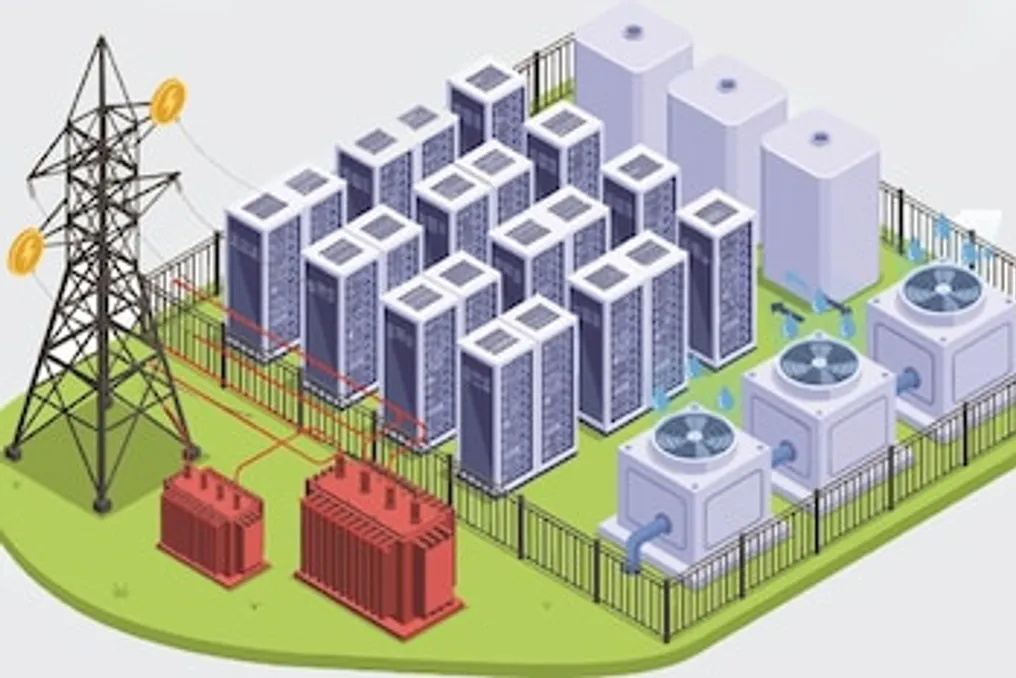
The report argues that India's main challenge is infrastructure, not skills. Currently, India accounts for only about 1% of global data center capacity, compared to 47% in the US and 25% in China. Therefore, scaling AI adoption will require significant investment in computing infrastructure, power, and data centers.
In conclusion, the report emphasizes that 'infrastructure remains a key constraint. The proliferation of Gen-AI in India will depend not only on software capabilities but also on the availability of computing, data center construction, reliable power supply, water availability, and broader digital infrastructure. With India's current data center capacity of only about 1 GW (1% of global data center capacity), scaling AI adoption will require substantial investment in both physical and digital infrastructure.'
} ]