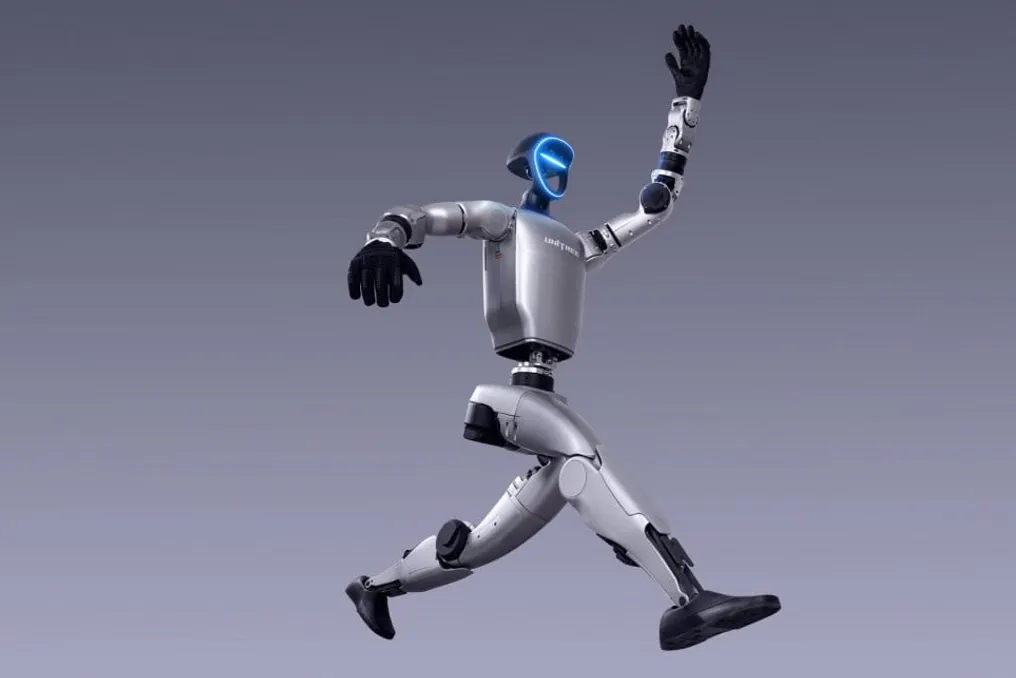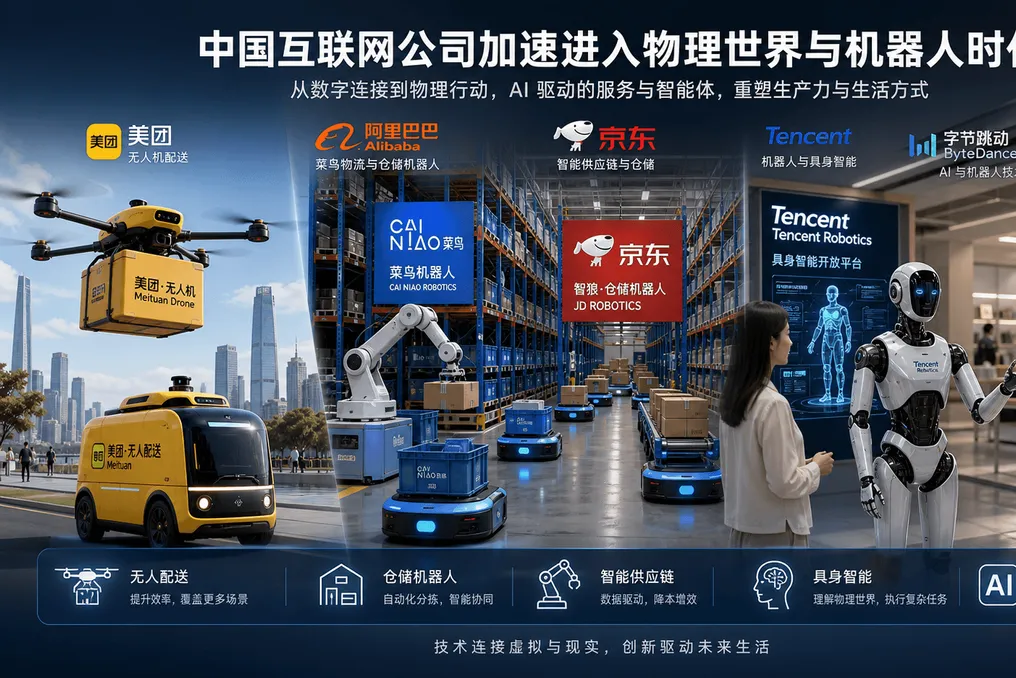
Major Chinese internet companies are actively implementing robotaxis, delivery drones, warehouse robots, and embodied AI agents across transportation, logistics, manufacturing, and service sectors.
Large-Scale Technology Adoption
These companies are bringing robots, autonomous vehicles, drones, and embodied AI to a mass level. For instance, Meituan's delivery robots have completed millions of autonomous deliveries, while JD.com has modernized its logistics using warehouse robots. ByteDance has invested in robotics startups, and Baidu's Apollo robotaxis have covered tens of millions of kilometers of autonomous driving.
Reasons for Structural Shift
This structural transition is driven by three interconnected factors. Firstly, business models initially based on digital technologies face growth limitations in pure internet markets, forcing companies to seek opportunities to create value in the physical economy, where the level of digitalization remains lower. Secondly, advancements in AI perception, decision-making, and actuation have made real-world automation technically and economically feasible on a large scale for the first time. Thirdly, the competitive advantage of internet companies—vast data sets, user engagement platforms, and capital resources—naturally transfers to physical world applications, where data-driven optimization and economies of scale are equally applicable.
Leading Companies' Strategies
Companies are not just using technology; they are building vertically integrated stacks of physical AI—from sensors and computing hardware to algorithms and operational platforms. Meituan demonstrates the most advanced example by creating a complete physical AI infrastructure that covers autonomous delivery vehicles, drones, in-store service robots, and fleet management cloud systems. Meituan's robots can navigate complex urban environments, including pedestrian zones, intersections, and building entrances, without human intervention.
JD.com has integrated robotics throughout its supply chain, utilizing autonomous forklifts in warehouses and AI-optimized routing for trucks. ByteDance maintains a distributed strategy, investing through its venture fund and internal R&D in startups developing humanoid robots, collaborative robots, and specialized industrial automation systems.
Overall Industry Trend
Beyond these leaders, Baidu offers Apollo autonomous driving, embodied AI, and Kunlun chips. Cainiao logistics robots from Alibaba and DAMO research are also mentioned, while Tencent Robotics X focuses on embodied AI. This drive is comprehensive across all major internet companies. Companies combining digital intelligence with physical operations are gaining cross-domain value. Traditional industries are feeling pressure from AI-focused companies but are simultaneously discovering partnership opportunities. The expansion of the Chinese internet into the physical world has global implications, as the combination of AI, production scale, and deployment data creates new competitive advantages.