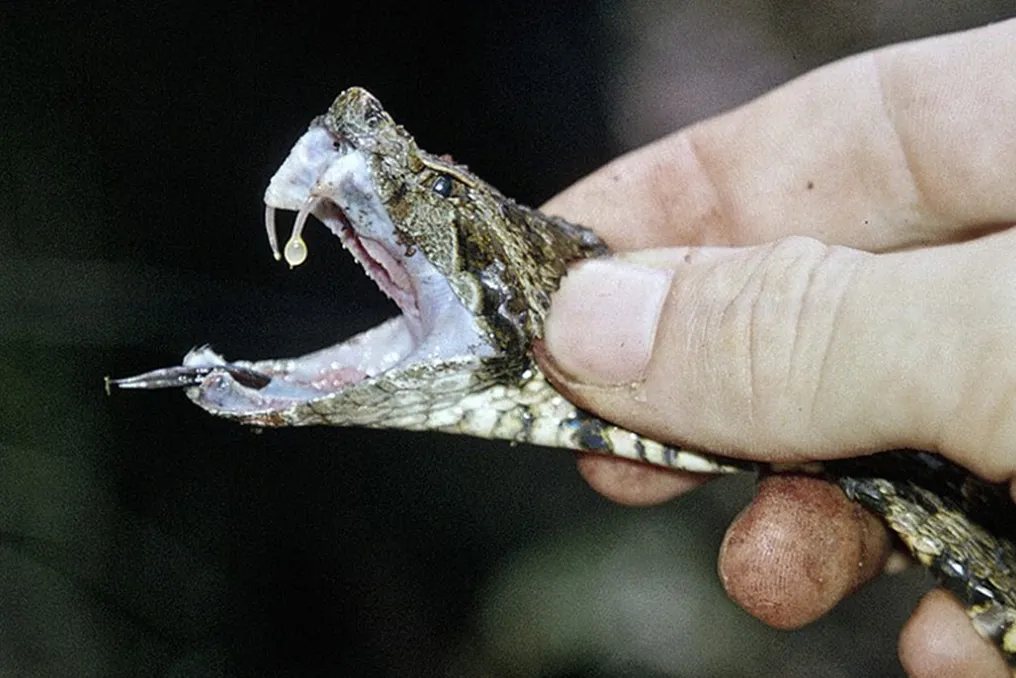
In laboratory investigations, venoms extracted from snakes of the genus Bothrops demonstrated the ability to reduce the viability, reproductive capacity, and locomotion of the parasite Schistosoma mansoni, one of the agents causing schistosomiasis. This scientific finding may support the development of new drugs to combat the disease.
Context of Schistosomiasis and Resistance
Schistosomiasis is classified as the second most prevalent tropical disease globally, affecting approximately 200 million individuals, behind only malaria. The condition, which presents acute and chronic manifestations, is caused by trematode worms belonging to the genus Schistosoma. The visceral form, popularly known as 'water belly,' affects regions of Latin America and Sub-Saharan Africa through the worm Schistosoma mansoni, the focus of this study.
Currently, praziquantel is the only available treatment for the disease, and it is used preventively in endemic areas. However, the widespread use of this drug can generate selective pressure, favoring the emergence of parasitic strains that are less sensitive or resistant to therapy.
Concern over Drug Resistance
Murilo Sena Amaral, the study leader and researcher at the Butantan Institute, points out that the reduction in S. mansoni sensitivity to praziquantel is already observed in laboratory strains and in certain populations, where patients require higher doses to achieve a cure. This suggests a high risk of developing resistance in real populations, making the search for therapeutic alternatives urgent.
Methodology and Venom Results
For this research, venoms from eight Brazilian species of the genus Bothrops were collected, including jararaca (Bothrops jararaca), caiçaca or cerrado jararaca (Bothrops moojeni), jararacuçu (Bothrops jararacussu), northern jararaca (Bothrops atrox), red jararaca (Bothrops brazili), cotiara (Bothrops cotiara), white-tailed jararaca (Bothrops leucurus), and spotted jararaca (Bothrops neuwiedi). The objective was to identify which vital processes of the parasite could be affected by these toxins and which non-coding long RNAs were involved. These RNAs have crucial regulatory functions, such as reproduction and physiological balance.
When adult worm pairs were exposed to low doses of the venoms for 24 hours, it was found that the venom of B. moojeni had the greatest impact, decreasing locomotion, attachment, and viability, in addition to almost completely stopping egg laying. The venom of B. jararacussu significantly reduced egg production.
Genetic Analysis and Sexual Sensitivity
After incubation with these two venoms, the genes expressed by male and female worms were sequenced separately. The analysis revealed a systemic collapse in males, who showed a much higher number of affected genes compared to females. The altered genes in males are linked to vital functions such as cell division and nerve impulse transmission, while in females, expression differences occurred in genes related to more specific processes, such as reproduction.
The researchers suggest that males may be more vulnerable to the mode of action of these venoms, possibly due to their larger size and greater exposure to the external environment during mating, or due to differences in tegument composition compared to females.
Next Steps in Research
This study represents a phase of basic research aimed at identifying new therapeutic targets. Subsequent steps include deepening the understanding of the function of these RNAs in parasite biology. Subsequently, it will be necessary to design synthetic molecules capable of targeting these RNAs and inhibiting their essential functions. After success in the laboratory, these potential drugs must undergo functional tests in living organisms and, finally, rigorous clinical trials in humans before being made available to the public.
Marina Zenga Carrenho and Agatha Fischer Carvalho, undergraduate students from the Institute of Biosciences (IB) at USP, are the first authors of the article. Murilo Sena Amaral, the study leader, is a researcher at the Butantan Institute. The team also included the participation of Sergio Verjovski Almeida, senior professor at the Institute of Chemistry (IQ) at USP and researcher at the Cellular Cycle Laboratory of the Butantan Institute, and Solange Serrano, a researcher at CeTICS of the Butantan Institute.