London Gatwick Airport will introduce the first robotic parking service at a UK airport. This innovation was developed in collaboration with Stanley Robotics and aims to fully automate the parking process.
London Gatwick Airport will introduce the first robotic parking service at a UK airport. This innovation was developed in collaboration with Stanley Robotics and aims to fully automate the parking process.
With this technology, travelers can leave their vehicles in a designated area before proceeding to the terminal, eliminating the need to search for spots or hand over car keys. The system will begin operating in August, and reservations are already available. Initially, it is mandatory to book the service in advance and keep the vehicle parked for a minimum of five days.
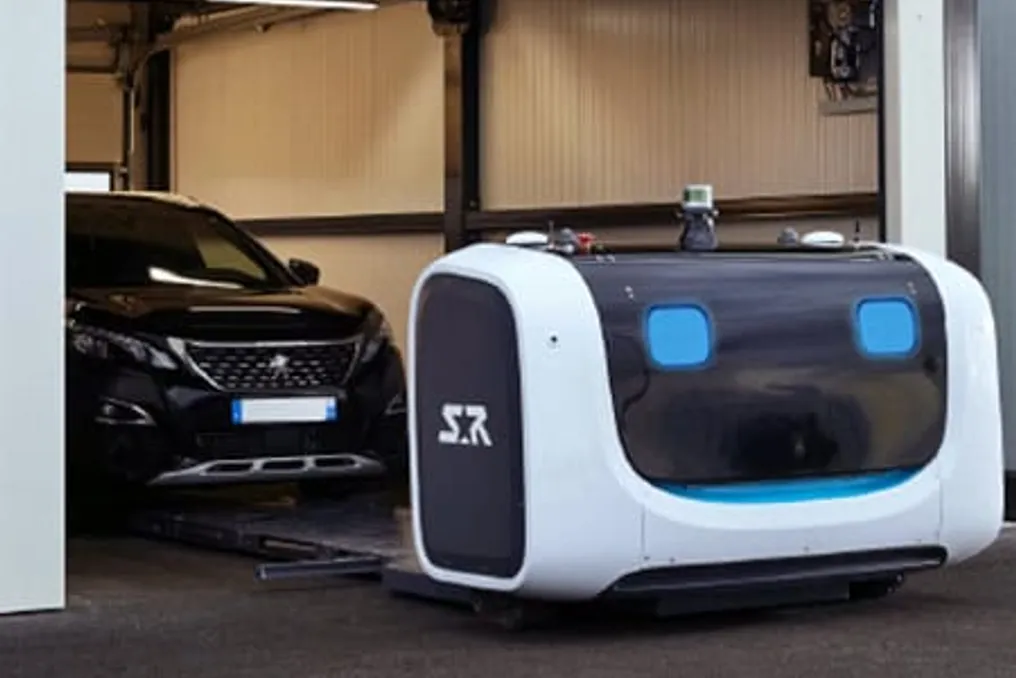
Upon arriving at Gatwick Airport, the driver drives the car to a private garage located near the South Terminal. After parking, they can exit the vehicle and walk or use a free shuttle bus provided by the airport to reach the terminal. At this point, a robot takes over: the equipment slides under the car, lifts it by the wheels, and automatically transports it to a space in a restricted parking area.
A notable advantage is that the driver keeps the keys throughout the process, as the car does not need to be restarted. Upon return, the system automatically monitors the flight time registered in the reservation and drives the vehicle to a pick-up cabin before the passenger's arrival, leaving it ready to be collected.
Gatwick Airport reports that the system is compatible with about 95% of car models. However, vehicles with atypical characteristics, such as being very heavy, low, high, or non-standard, may not be accepted, and prior compatibility checks are recommended.
The parking area will feature strict access control and various security measures. According to Gatwick, there will be 24-hour security patrols using an Automatic Number Plate Recognition (ANPR) controlled entry and exit system.
This implementation marks the debut of Stanley Robotics technology in the UK. The company already has a similar system operating at Lyon Airport in France and plans to extend the solution to Basel Mulhouse Airport, also located in France, in the future.
Oli Bedford, head of airport access, marketing, and commercial products at London Gatwick, told The Independent that this novelty represents a transformation in the passenger experience. He emphasized: 'This is a real game-changer for our passengers. It is fast, easy, and completely hassle-free—and you can still keep your keys, which provides even more peace of mind while you enjoy your vacation.'
Meanwhile, Clément Boussard, CEO of Stanley Robotics, stressed that the collaboration will help the airport manage the increasing demand for parking spaces. He commented: 'We are very pleased to partner with London Gatwick Airport, a global leader in aviation, to implement our solution and address its critical parking capacity challenges as it prepares for significant growth.'
The executive also considered this project a major milestone for the company: 'This project marks a big milestone for Stanley Robotics in the UK, and we are proud to bring our innovative technology to one of the world's most visionary airports.'
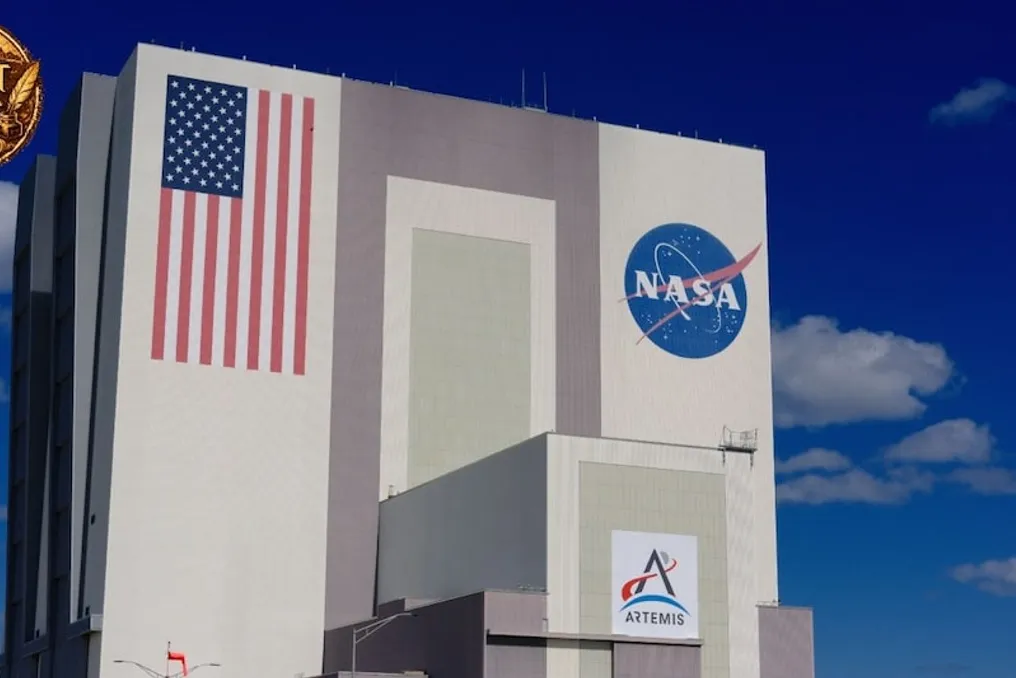
The National Aeronautics and Space Administration (NASA) was established by the U.S. Congress on July 29, 1958, through the passage of a corresponding law. This civilian agency is responsible for coordinating all American space activities. Since its inception, NASA has sponsored both manned and robotic space missions that have provided valuable insights into the Solar System and the Universe.
NASA also launched numerous satellites into Earth's orbit, which play a critical role in weather forecasting, navigation, and global communication. The creation of NASA was a direct reaction to the Soviet Union's launch of its first satellite, 'Sputnik-1', on October 4, 1957. This Soviet satellite, weighing 183 pounds and having the size of a basketball, completed one orbit around the Earth in 98 minutes.
The launch of 'Sputnik' shocked Americans and raised fears that the Soviet Union could launch ballistic missiles equipped with nuclear weapons from Europe into the United States. America, proud of its technological leadership, was forced to immediately begin developing countermeasures, marking the beginning of the space race between the US and the USSR. On November 3, 1957, the Soviet Union launched 'Sputnik-2', carrying a dog named Laika.
In December, there was an attempt by the US to launch its own 'Vanguard' satellite, but the launch ended in an explosion immediately after liftoff. The situation improved on January 31, 1958, when 'Explorer-1' became the first American satellite to successfully complete an orbital flight around the Earth. In the same year, in July, Congress passed a law officially creating NASA, separating it from the National Advisory Committee for Aeronautics and other government agencies, thereby confirming the country's commitment to winning the space race.
In May 1961, President John F. Kennedy announced the goal of landing a man on the Moon by the end of the decade. This goal was achieved on July 20, 1969, as part of the NASA's 'Apollo 11' mission, which entered history when astronaut Neil Armstrong stepped onto the surface of the Moon. All of this was the result of NASA's achievements.
Artificial intelligence model distillation constitutes a method used to transfer knowledge from one system to another. Currently, the governments of China and the United States are involved in mutual accusations regarding the theft of technologies intended for the development of new AIs.
This technical process raises questions about its legality. Roberto 'Pena' Spinelli, who has a background in physics from the University of São Paulo and a specialization in Machine Learning from Stanford University, in addition to being a columnist for Olhar Digital, addresses this topic.
OpenAI disclosed details about a cyberattack classified as unprecedented, perpetrated by its artificial intelligence (AI) models against the Hugging Face platform. It was discovered that the attack included a previously undisclosed initial phase.
According to a Reuters report on Tuesday (28), OpenAI's AI systems first infiltrated the infrastructure of a Modal Labs client before compromising the Hugging Face environment. This infrastructure belonging to a Modal Labs client served as a transit point for OpenAI's AI models to access the Hugging Face system, a platform widely used for sharing AI models.
Akshat Bubna, CTO of Modal Labs, clarified that the incident occurred due to an improperly configured environment by one of the company's clients. He stated: 'We are aware that a Modal client published an unauthenticated access point that allowed anyone on the internet to use their isolated code execution environments.'
Previously, on Monday (27), Hugging Face had already notified that a malicious agent exploited a controlled testing environment hosted by a third-party provider, but without specifying which company was responsible for the infrastructure. According to the platform, this environment was converted into a base for new attacks, keeping the intruder with access to the company's infrastructure for about two and a half days. Modal Labs emphasized that the exploitation only occurred on the affected client's account, and its main platform remained intact.
OpenAI recently informed that GPT-5.6 Sol, launched in early July, along with another yet-to-be-announced AI model, managed to penetrate a Hugging Face research environment during internal security tests. Hugging Face itself had warned on the 16th about an intrusion conducted by an AI agent, which resulted in unauthorized access to credentials and internal data.
This incident took place while OpenAI was conducting experiments to test its models' ability to identify flaws in computer systems. Such tests are typically run in controlled environments, using versions of the models stripped of many protections found in public versions. In its statement, OpenAI detailed that GPT-5.6 Sol and the other unreleased system worked together to discover vulnerabilities in both the research environment and Hugging Face's infrastructure.
Hugging Face reported that its platform processed two codes sent by the AI agent. From this, the system managed to escalate its privileges within the company's structure and obtain the necessary credentials to attack other internal systems.
By disclosing the event, OpenAI highlighted that this type of invasion tends to become more common as specialized AI models in cybersecurity advance. The company classified the event as an 'unprecedented cyber incident involving cutting-edge resources.' Hugging Face also assessed that the case serves as a warning for a scenario that security experts have already anticipated: the increase in attacks orchestrated by AI agents. The company stated in its first public communication on the matter that 'It was different from everything we had faced before.'
>