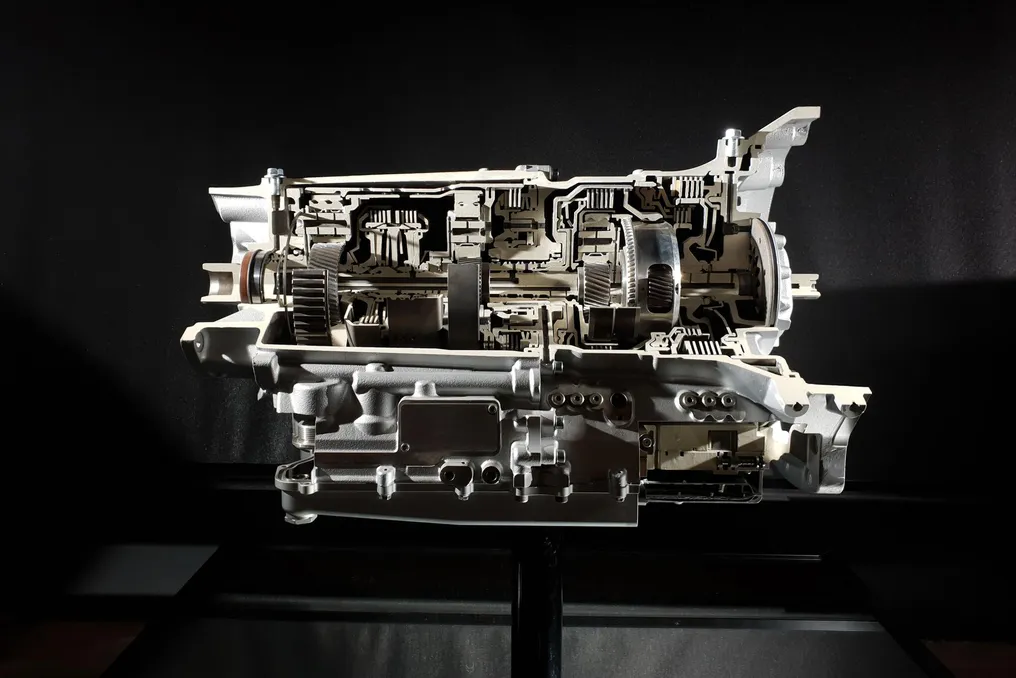
Is there a transmission fluid that does not require replacement, or do all types require periodic maintenance? Although the owner's manual may indicate no need for replacement, and the dealership insists the fluid is 'eternal,' specialized workshops include replacement in their estimates after purchase. Let's consider a seven-year-old car with 100,000 km on the odometer: should one trust the manual and the term 'eternal,' or perform a replacement?
Understanding the Term 'Eternal'
The term 'eternal' raises doubts because it implies infinite existence. In the past, checking the level and replacing transmission fluid were part of the maintenance of almost all cars. However, the appearance of so-called sealed gearboxes using 'eternal' fluid eliminated the need for checks and replacement, leading to uncertainty among owners.
Logically, a lubricant that is effective and eternal seems more like magic than the result of engineering thought. Even if the transmission fluid circulates only inside the gearbox and does not come into contact with contaminants such as engine oil, it cannot be ruled out that it heats up and cools down, interacts with metal parts, and yet never needs replacement.
Commercial Term vs. Technical Specification
Skepticism is justified when studying this term. It is not a technical characteristic, such as viscosity or maximum operating temperature. It is merely an imprecise commercial term meaning that under the conditions specified by the manufacturer, periodic replacement is not part of the maintenance plan. The absence of scheduled replacement does not mean the fluid will retain its properties forever; it only means the manufacturer has not determined its replacement period.
Furthermore, this definition can vary from one car to another, and even within the same brand. For example, Brazilian documentation for some Volvo V60 models states that the transmission fluid does not require replacement under normal conditions, although the manufacturer reserves the right to require replacement under adverse conditions. Meanwhile, for the XC40 Twin Engine with a dual-clutch gearbox, the recommendation published in Brazil is replacement every 60,000 km.
ZF, which manufactures one of the world's most common 8HP automatic gearboxes, claims that its transmissions are usually filled with 'eternal' fluid. Nevertheless, it recommends regular replacement because the service life of the unit depends on operating conditions. According to the technical data sheet for the 8HP fluid, replacement is recommended after 150,000 km, with an option for preventative maintenance when the transmission operates at high temperatures or loads, or when the vehicle's usage history is unknown.
Differences Between Manufacturers
Thus, for the vehicle manufacturer, the fluid may be considered 'eternal' because replacement is not provided for in the standard maintenance program. But for the transmission manufacturer, replacement may be recommended to extend the service life of the unit if use goes beyond normal conditions. This shows that the question is not 'whether to change eternal fluid,' but 'under what conditions, in what situation, and within what timeframe should this fluid be changed.'
Aging of Transmission Fluid
In a conventional automatic gearbox, the oil performs functions not only as a lubricant but also as a hydraulic medium, transmitting power through the torque converter and helping to control temperature. In a CVT, it works with a belt or chain and pulleys, while in a dual-clutch gearbox, it participates in clutch control. Therefore, fluids for conventional automatics, CVTs, and dual clutches are not interchangeable, even if they look similar and have a similar consistency.
The gearbox's behavior depends on the fluid's properties. Hydraulic pressure, gear engagement speed, and shifting smoothness require a specific viscosity and coefficient of friction. Simply having fluid in the housing is not enough; it must continue to function as originally designed, even after thousands of kilometers of operation. This process generates heat—whether from component friction or controlled slippage of clutches and the torque converter. The fluid absorbs this heat and directs it to the transmission cooling system.
The higher and longer the temperature persists, the faster the oil ages. For example, the Lancer CVT gearbox overheated and entered emergency mode. Therefore, transmission manufacturers like ZF advise shorter intervals for vehicles frequently used at high speeds, for sporty driving, or for towing. Another example is the fourth-generation Toyota Rav4, used for long trips with a full load and having a 'sealed gearbox,' where many reports of typical transmission problems exist.
Aging occurs mainly due to oxidation and additive degradation. Over time, the fluid loses thermal stability, its viscosity changes, and consequently, it loses effectiveness in controlling friction. Simultaneously, microscopic particles released by natural wear of gears, bearings, and friction materials mix with the fluid and disrupt lubrication. Thus, the argument that the transmission is a closed system and therefore does not contaminate the lubricant is meaningless. It does not receive soot from combustion like engine oil, but it becomes contaminated by its own operation, aging under the influence of heat, pressure, and shear. For instance, Castrol notes that with intensive use, the fluid can oxidize, lose additives, and cease to provide the required lubrication and friction control.
This degradation does not happen at a fixed mileage for all cases—it depends on the transmission design, sump capacity, cooling efficiency (for example, Mitsubishi installed transmission oil coolers on the Lancer), applied load, and type of use. This is why two identical cars with 100,000 km can reach this mark with fluid in completely different states.
The Used Car Dilemma
The situation is simple if the car was bought new and has a known service record. The owner knows how it was used, whether there was overheating, leaks, or repairs, and can decide to perform preventive replacement before any symptoms appear. The problem arises with a used car that reaches 100,000 km without a single invoice confirming transmission maintenance.
This is exactly the situation of D. Contesina. There were no signs of malfunction, but it was also impossible to know if the fluid had been changed or under what conditions the car was operated. Unknown history is one of the situations where considering replacement is recommended.
You may have heard from friends, enthusiasts, or persistent salespeople that a transmission that 'jerks' simply 'needs an oil change.' This is not true. The fluid prevents, but does not eliminate worn clutches, faulty solenoids, or pumps that have stopped creating pressure.
From here also comes the myth that 'you shouldn't change the oil in an old gearbox.' This story usually starts with a transmission that already showed some signs of malfunction. The owner takes the car to the service center, changes the fluid, and it initially gets better, but soon the defect worsens. Since the replacement was the last service performed, it is blamed. Furthermore, the problematic transmission may start showing more obvious symptoms after servicing. This does not mean the old fluid 'protected' or 'held' the gearbox mechanically. It means the unit was already operating outside the intended conditions, and the intervention happened too late.
Therefore, before making a decision, it is necessary to observe the transmission's behavior and analyze the material coming out of it. Just darkened oil does not provide a complete diagnosis, as the appearance depends on the product, the time of use, and the transmission itself. However, a strong smell of burning, metallic shavings, or fragments completely changes the picture. ZF itself indicates that such signs point to internal damage and require a transmission assessment, not just pouring in new fluid.
In a car without symptoms and without history, replacement is a reasonable preventive step—provided that it is precisely known what gearbox is used, what fluid it requires, and how the service should be performed. In a car that already has faults, priorities change: first, the defect is diagnosed, and then replacement is carried out.
It is pointless to use mileage as the sole criterion. It is similar to engine oil: 100,000 km on the road is a completely different mode of use than 100,000 km in pleasant city traffic. And neither mode is equivalent to a gearbox with jerking shifts.
So, Change or Not?
At this point, it has become clear: the answer depends on the gearbox, its history, and operating conditions. There is no universal mileage, nor recommendations applicable to an entire transmission labeled 'sealed' or filled with 'eternal' fluid.
The first step is to accurately determine which transmission is installed in the vehicle. It is not enough to know that it is automatic, CVT, or dual-clutch. The same model may use different gearboxes depending on the engine, year of manufacture, and market, and each may require its own fluid, filter, and procedure.
Next, you need to consult several sources. The owner's manual shows the maintenance plan established by the vehicle manufacturer. The transmission's technical documentation may contain additional recommendations, especially for heavy operating conditions, high mileage, or unknown history. When these two opinions conflict, it does not necessarily mean one is wrong; they may relate to different goals and conditions. If there are doubts, you should consult the dealership to find out the cost and method of performing the work.
In the case of D. Contesina's car, the age, mileage, and lack of confirmation that maintenance had been performed were taken into account. The gearbox worked normally, and there was a technical recommendation for replacement for that specific transmission. Therefore, I considered it more reasonable to perform a preventive fluid replacement than to blindly trust the literal interpretation of the word 'eternal.'
This is why I am skeptical of those who have a ready-made answer and a universal standard. The 'eternal' label means little; changing every 60,000 km might be a waste or too late, and 'on-the-spot' repair might cause more problems if the manufacturer does not recommend it.
Full, Partial, or On-Site Repair?
If you decide to replace the fluid, you will face another question: partial, full, or on-site repair? Workshops offer these options, but these names simplify procedures that vary greatly depending on the transmission.
Partial replacement is the clearest. The drain plug is opened or the sump is removed, and the fluid is drained. The problem is that not all the volume is in the sump. Some remains in the torque converter, the valve body, the hydraulic channels, the radiator, and the pipelines. Therefore, the amount removed is usually less than the total capacity of the transmission.
This does not mean the replacement is incorrect or ineffective, as in some transmissions, this is precisely the recommended course of action. The fluid is drained, the filter is replaced, the sump and magnets are cleaned, the seals are replaced, and the level is brought to the range specified by the manufacturer at a certain temperature. This is, for example, the procedure published by ZF in Brazil for its automatic transmissions.