Graphite is a tactical turn-based RPG roguelike developed by the independent Colombian studio RipRed and released via the indie.io platform. This genre implies that enemies, scenarios, and encounters change with every new game, ensuring the uniqueness of each 'run.'
Release and Gameplay Details
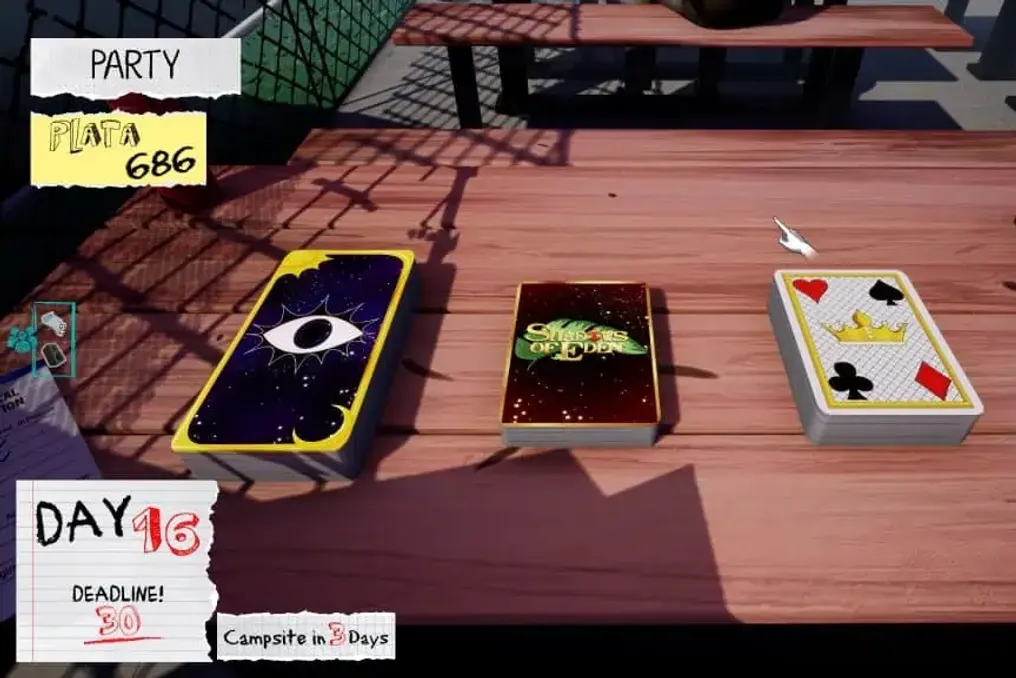
The game was released on July 27, 2026, and is available only for PC via Steam. Its standard price is R$ 29.99, but there is a 20% discount at launch, reducing the cost to R$ 23.99 until August 10. Graphite is a single-player game and includes a free demo covering Act One. The main campaign consists of four acts, each lasting about 15 in-game days, with every player action counting as one day.
The appeal of the game lies in the ability to replay it multiple times with seven different heroes to complete the entire story. Players familiar with turn-based RPGs like Final Fantasy will recognize the timeline-based combat system, where every action consumes time and affects the next turn, whether it's the player's or the enemy's. The game intentionally references memories of how people sketched characters in notebooks during lessons.
Who Is This Game For?
Graphite is recommended for those who enjoy tactical turn-based RPGs, the roguelike genre, and do not mind playing in English. Despite some bugs, the game offers creativity, engaging combat, and an emotionally resonant story for a small price. Those who require Portuguese language support or prefer a clearer tutorial should wait for updates.
Visual Style and Atmosphere
All graphics in Graphite are rendered with a hand-drawn pencil stroke in monochrome gray tones, mimicking school scribbles. Characters are presented as stick figures, but they are meticulously shaded to give them volume and individuality. At first glance, it seems simple, but the game operates across two interconnected worlds: a fantasy kingdom filled with illustrations and history, and the real world, such as a school notebook or textbook cover. This accurately reflects the process of imagination that often accompanies drawing in childhood.
Combat Mechanics and System
The combat system is easy to learn but difficult to put down. It functions on a dynamic timeline: every action takes up a slot in the queue and delays the next turn, whether it is your character's or the enemy's. The central element is the 'Break' system, which allows the player to disrupt an opponent's defense to delay or cancel their attack. It is important to note that this symmetry also applies to enemies, who do the same to your group. This mutual dependency maintains tension, forcing the player to analyze the opponent's intentions and decide when to spend a turn to stop the most dangerous attack, and when to take a risk.
Heroes and Style Diversity
Seven playable characters are available in the game: Warrior, Rogue, Hunter, Monk, Mage, Bard, and Dominator. Each possesses its own personality, story, and unique playstyle, which significantly changes the mechanics. Changing a hero is not just changing appearance, but changing the approach to solving combat challenges. This perfectly aligns with the roguelike nature of the game, as the story changes depending on the chosen hero, prompting the player to play through with all characters to get the full picture.
Artifacts and Build Depth
Artifacts serve as 'seasoning' for each run. They come in individual types, equipped by the character, and group types, active for the entire team. Since there are no limits to accumulating them, the player can choose either a methodical or a chaotic approach, betting on one strategy. This is what makes two runs completely different. One might be built around accumulating a specific effect until a critical breakthrough. However, just like in combat, enemies also acquire artifacts, so the advantage is never absolute.
Emotional Subtext of the Story
The hidden meaning of the story is revealed through the figure of a child known as the Scribe (O Escriba), who creates this paper-and-pencil campaign in his notebook while trying to cope with grief, self-doubt, and the process of growth. The irony is that the characters are unaware of their fictional nature and take all events seriously, lending emotional weight to what is merely a sketch on paper. Each character has their own voice, and the voice acting matches their personality, enhancing immersion. The theme unfolds gradually, becoming stronger as the player realizes they are trying to process this child.
Replayability and Game Pace
Although the story may seem short, it leaves a desire to know more. The four acts are well-written, but they pass quickly after mastering the mechanics. However, this foundation ensures the game's longevity: diverse builds, seven heroes, and procedurally generated encounters keep the player engaged for a long time. The duration here is determined not by the size of the campaign, but by the possibility of replaying it. Regarding pace, difficulty increases in a somewhat unusual way as in-game days progress. Some days could allow for more freedom in camp or using the event map without feeling pressured.
Issues and Technical Aspects
Although nothing compromises the gameplay itself, some points require mention, especially for a debut release. The tutorial is geared towards immersion rather than direct instruction. While the intention is good, the implemented method hinders understanding of simple mechanics. Furthermore, it is unclear how to unlock new heroes beyond the initial ones. The game mentions the need to 'befriend' a character in camp but does not explain what this means; in practice, this is achieved by repeatedly using the hero's ability in camp to increase friendship level. A simple text hint would resolve this confusion.
There are also bugs. The most irritating one occurred with a boss: the artifact was supposed to instantly activate the next ability upon breaking the enemy's defense. Instead, the defense and ability did not trigger instantly. The boss exploited this loophole by unleashing an AoE attack that wiped out the entire group. Such a bug is very painful in a roguelike.
Technical Specifications
Minimum PC requirements include Windows 10, 2.0 GHz processor, 2 GB RAM, a video card with 2 GB, and 3 GB of free space. The game runs on almost any computer. Prices and information were checked on Steam on 07/28/2026.