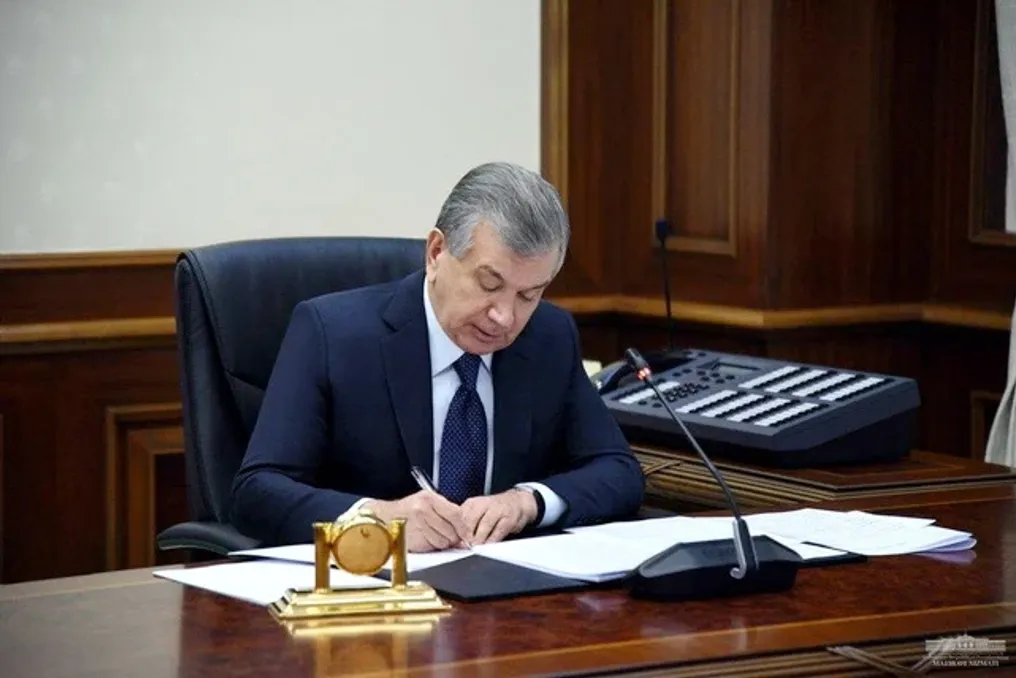
Uzbekistan has implemented additional steps aimed at improving the quality of water supply for the population and the functioning of sewage systems. These changes are enshrined in Presidential Decree No. UP-140, signed on July 24, 2026.
Uzbekistan has implemented additional steps aimed at improving the quality of water supply for the population and the functioning of sewage systems. These changes are enshrined in Presidential Decree No. UP-140, signed on July 24, 2026.
Starting September 1, all projects for the development of water supply and sewage infrastructure that are commissioned by Uzsuvtaminot JSC will be recorded on the electronic platform 'Automated Information System for Monitoring Program Implementation and Approving Address Lists'. Furthermore, to strengthen contractual relations between Uzsuvtaminot and system enterprises, contracts in highly specialized areas concerning training, professional development, and operation will be concluded directly.
New projects in the field of water supply and sewage are planned for implementation with the support of loans and grants from international financial institutions and foreign state financial organizations. Various financial mechanisms will be utilized for this purpose, including both advance and subsequent financing.
From January 1, 2027, in areas where centralized water supply is not economically viable or does not ensure cost recovery, services will be provided taking into account local conditions. Such measures include water delivery by specialized transport, the creation of water supply points, and the application of other solutions. On the same date, the authority to approve tariffs for water supply and sewage services will be transferred to the Interdepartmental Tariff Commission under the Cabinet of Ministers, which is part of efforts to improve tariff policy.
Uzbekistan is launching a large-scale reform of its environmental assessment system. Cabinet of Ministers Resolution No. 234, adopted on May 11, 2026, establishes the practical basis for implementing the revised Law on Environmental Review, which was approved a year earlier.
The main goal of this document is to simplify processes for enterprises, increase the transparency of environmental inspections, and bring national practice in line with the country's international obligations.
One of the key changes is the reduction of the number of environmental review categories from four to one. This means that thousands of small businesses whose activities have a minimal impact on the environment will no longer be required to undergo the inspection procedure. Furthermore, facilities will be classified by sectors, which is intended to eliminate ambiguities in the application of legislation that enterprises and experts previously faced.
The state process of environmental review is being fully transferred to the Unified Portal of Interactive Public Services (EPIGU), making the procedure more predictable and transparent. The resolution also enshrines legal mechanisms defining the rights and obligations of participants in the review process, procedures for collective consideration of disputed environmental conclusions, and rules for applying international instruments, including obligations arising from the Paris Agreement, the Basel Convention, and the Convention on Biological Diversity.
Another aspect of the reform focuses on public participation in decisions of environmental significance. New regulations for public hearings and public environmental reviews are designed to strengthen democratic participation while ensuring Uzbekistan fulfills its obligations under the Aarhus Convention.
The resolution establishes rules for the activities of organizations preparing project documentation, including the introduction of a rating system and the issuance of qualification certificates. Additionally, it defines requirements for organizations engaged in project development, mechanisms for assessing the effectiveness and quality of their work and project documentation, as well as qualification requirements and certification procedures for their specialists.
A separate part of the reform is dedicated to strategic environmental assessment—one of the most important tools of international environmental management. New procedures for preparing reports on strategic environmental assessment and verifying their quality aim to enhance the environmental sustainability of state programs, policy concepts, territorial planning documents, and urban development plans.
According to 2025 data, state bodies responsible for environmental review issued 49,620 environmental conclusions. Approximately 700 projects did not meet environmental requirements. The authors of the reform expect that introducing mandatory qualification certification for project developers and implementing a rating system for project organizations will improve the quality of documentation and reduce the number of projects that do not comply with environmental standards. The Cabinet of Ministers expects that integrating modern international mechanisms into the environmental assessment system will strengthen environmental protection, reduce environmental risks, and contribute to creating a healthy and safe environment for future generations.
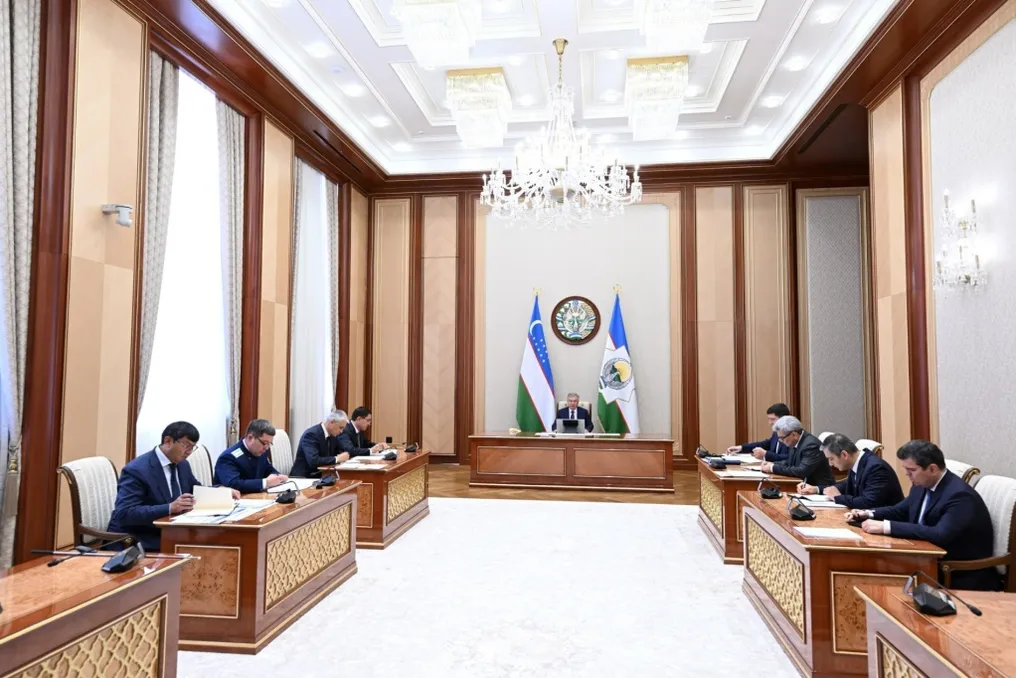
Additional funding of $1.3 billion has been planned in Uzbekistan for the further development of water supply and sewage infrastructure. The President of Uzbekistan, Shavkat Mirziyoyev, participated in a presentation dedicated to the development of drinking water supply and wastewater disposal systems.
In the coming years, state bodies aim to raise the coverage of centralized water supply to 90% and the urban sewage system to 80%. Over the past years, investments in this area have increased tenfold, reaching a volume of $2.7 billion. Thanks to these investments, the share of the population provided with centralized drinking water supply has grown from 63% in 2017 to nearly 83%.
During this period, 7.7 million residents gained access to water for the first time, the quality of supply improved for 11 million people, and 1.1 million residents were connected to the sewage system. The total length of constructed and repaired networks includes 39 thousand kilometers of water pipelines and 3,200 kilometers of sewage networks.
To achieve the set goals, additional funds of $1.3 billion need to be attracted. However, the president noted that the current system for preparing and implementing projects does not provide sufficient operational speed to solve accumulated problems. For example, 107 billion soms were recently allocated to address sewage problems in Andijan, and work has begun in the Sergeli district of Tashkent to install modern filters to combat unpleasant odors.
Special attention is paid to the project of supplying drinking water from the Tupalang reservoir. Water pipelines have already been extended to Termez, and by the end of the year, it is planned to supply Sherabadsky, Muzrabadsky, Angorsky, and Jarkurgansky districts of Surkhandarya region with water. At the meeting, the task was set to provide centralized water supply to another 513 mahallas and improve the water supply quality in 3,000 mahallas. Authorities also intend to replace 232 thousand water distribution columns with direct household connections to the networks.
By the end of the current year, projects totaling $600 million are expected to be implemented in the country. These projects include the construction of 1,600 kilometers of water pipelines and 387 kilometers of sewage networks, as well as the construction of 80 water supply facilities and 29 sewage facilities. As a result of this work, 310 thousand residents of 107 mahallas will receive centralized drinking water supply for the first time, and the water supply quality for 2.5 million people in 453 mahallas will significantly improve.
Furthermore, the president ordered the acceleration of the implementation of a $217 million project related to supplying drinking water from the Ghissarak reservoir in Kashkadarya region. After the completion of this project, residents of Kamashinsky, Guzarsky, and Karshinsky districts, as well as the city of Karshi itself, will be provided with quality water supply. It was also ordered to accelerate the signing of credit and grant agreements for projects in Fergana, Surkhandarya, and Jizzakh regions, and to complete negotiations with foreign partners on six projects totaling $317 million by September 1.
The World Bank has issued a recommendation to Uzbekistan regarding the necessity of comprehensive modernization of the country's logistics sector. The goal of these measures is to reduce transportation costs, eliminate the shortage of modern warehouse facilities, and increase Uzbekistan's attractiveness for private investment.
These recommendations are outlined in a new report by the World Bank Group titled 'Diagnosis of Uzbekistan's Private Sector.' According to this report, Uzbekistan's strategic position along the Eurasian Middle Corridor, connecting China and Europe, opens up significant opportunities for the development of international logistics. In 2022, the volume of international road freight reached 12.2 million tons, with a projected growth to 20 million tons by 2030.
Nevertheless, the existing infrastructure is not keeping pace with the growing demand. The World Bank estimates that logistics costs in Uzbekistan are 15%–25% higher than on leading Eurasian transport routes, and the shortage of Class A warehouse space is about 90%.
To enhance sector efficiency, the World Bank proposes implementing a certified carrier system, fully digitizing the issuance of permits for international road transport through the Dozvol system, and creating a unified mechanism for obtaining land plots and construction permits for warehouse infrastructure. The report authors note that implementing these steps could attract over one billion dollars in private investment and create approximately 110,000 new jobs, thereby strengthening Uzbekistan's position as one of Eurasia's key transport and logistics hubs.